In our hyper-connected world, the relentless demands of modern life have pushed our nervous systems into a perpetual state of ‘fight-or-flight.’ This chronic stress isn’t just a mental burden; it’s a physiological reality that impacts our health, focus, and overall well-being. But what if you could consciously tap into your body’s innate calming mechanism? This is where the vagus nerve, the longest cranial nerve in your body, comes into play. It acts as a superhighway connecting your brain to your vital organs, and stimulating it is the key to activating your parasympathetic ‘rest-and-digest’ system.
Improving your vagal tone, a measure of your vagus nerve’s activity, is directly linked to better physical and mental health outcomes. One of the most effective ways to gauge this is by tracking your heart’s response to these calming signals. To truly unlock your body’s ‘rest-and-digest’ superhighway, it’s crucial to understand key physiological indicators; you can learn more about What is Heart Rate Variability and how it’s measured to see how this reflects the health and activity of your vagus nerve.
This article isn’t just about theory; it’s a practical, evidence-based guide to eight powerful vagus nerve stimulation techniques. We will move beyond simply managing stress and into actively retraining your nervous system for optimal performance. You will learn actionable methods backed by scientific research that you can implement today, including:
- Controlled breathing and specialized breathwork.
- Cold water immersion and temperature-based activation.
- Vocal toning, humming, and other accessible exercises.
- Vagus nerve massage and targeted physical stimulation.
Each technique is designed to help you regulate your nervous system, enhance your resilience against stress, and reclaim a state of calm and clarity. Get ready to explore a comprehensive toolkit for cultivating inner peace and peak performance.
1. Controlled Breathing & Breathwork Techniques
Controlled, conscious breathing is one of the most direct and powerful vagus nerve stimulation techniques available. By intentionally altering your breathing pattern, you directly influence your autonomic nervous system, activating the parasympathetic “rest and digest” state. This process works because the vagus nerve is bidirectionally connected to the diaphragm; as you control your breath, you send calming signals directly to your brain.
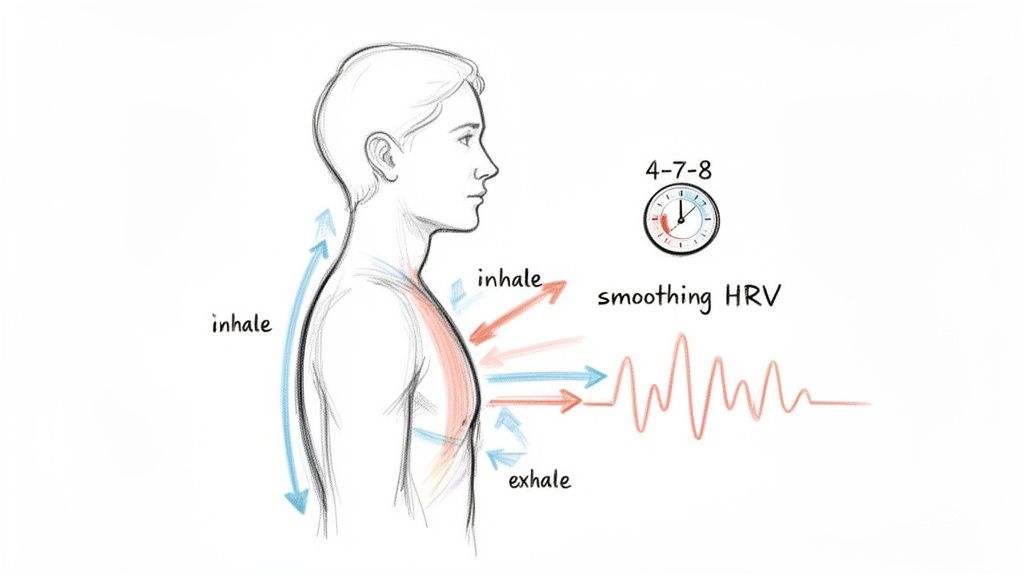
This physiological shift is the cornerstone of practices like 9D Breathwork, which leverage breath to manage stress and improve mental clarity. Slow, deep breathing, particularly with an extended exhalation, increases vagal tone. A 2018 study in Frontiers in Human Neuroscience confirmed that slow breathing techniques enhance autonomic, cerebral, and psychological flexibility. Similarly, research published in the journal PLoS One found that a regular diaphragmatic breathing practice significantly lowered cortisol levels and improved sustained attention. Finally, a 2017 study in Scientific Reports demonstrated that slow breathing practices can reduce symptoms of anxiety and depression, making breathwork a fundamental tool for mental and physiological well-being.
How It Works in Practice
The application of controlled breathing is widespread and effective. For example, corporate wellness programs often introduce box breathing (inhaling, holding, exhaling, and holding for equal counts) to help employees manage high-pressure situations. Athletes use specific breathing protocols to lower their heart rate and improve focus before a competition, enhancing performance.
- Practical Example: A project manager feeling overwhelmed before a big presentation can take two minutes to practice the 4-7-8 breath (inhale for 4, hold for 7, exhale for 8). This simple action can lower their heart rate and clear their mind, allowing them to present with more confidence.
Actionable Steps for Implementation
- Start with Extended Exhalations: Begin by inhaling for a count of four and exhaling for a count of eight. This simple action slows your heart rate and stimulates the vagus nerve. Do this for 2 minutes right now.
- Practice in Calm Environments First: Dedicate 5-10 minutes each morning to practice before you need it in a stressful moment. This builds the neural pathways for a quick response under pressure.
- Track Your Progress: Use a wearable device that measures Heart Rate Variability (HRV). A higher HRV is a strong indicator of good vagal tone and parasympathetic activity.
- Integrate Advanced Methods: Once comfortable, explore more structured practices. Learn more about the transformative potential of breathwork therapy to see how deep, guided sessions can create profound shifts.
2. Binaural Beats & Frequency-Based Stimulation
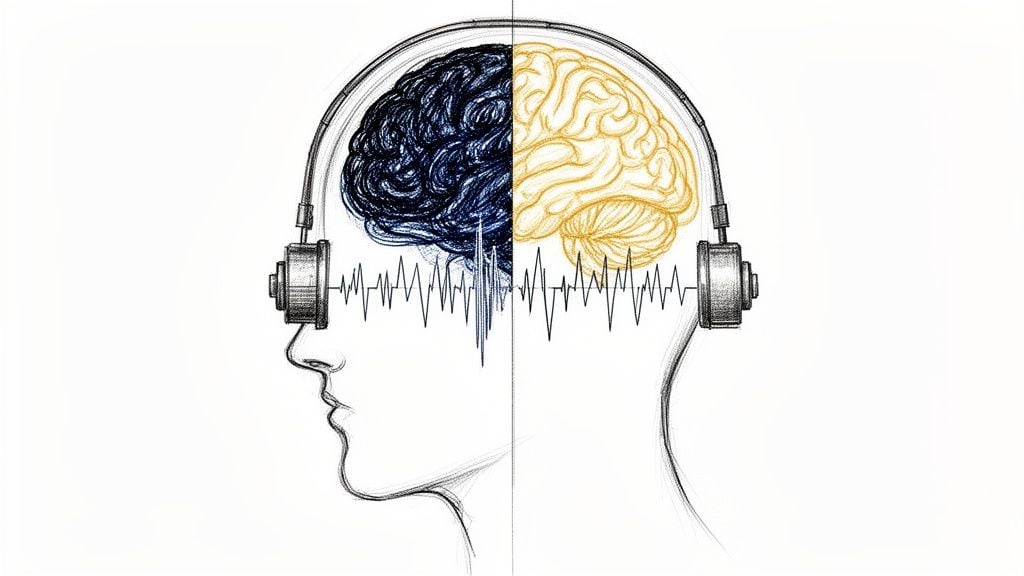
Binaural beats use a principle called neural entrainment to gently guide your brain into specific states conducive to relaxation and vagus nerve activation. This technique works by playing two slightly different frequencies in each ear through headphones. Your brain perceives the mathematical difference between these two tones as a third, rhythmic pulse, or “beat,” and begins to synchronize its own electrical activity to this frequency. This process can directly stimulate vagal pathways and promote a parasympathetic response.
This auditory stimulation is a powerful way to complement other vagus nerve stimulation techniques like breathwork, as it creates an ideal neurological environment for deep relaxation. Research from a 2018 study in Frontiers in Psychology found that listening to binaural beats can significantly reduce anxiety levels. A study in the journal Psychological Research demonstrated that listening to binaural beats could enhance long-term memory. Finally, a study published in Anesthesia & Analgesia found that preoperative exposure to binaural beats reduced patient anxiety before surgery, showcasing its potent ability to calm the nervous system.
How It Works in Practice
The application of binaural beats is increasingly common in therapeutic and performance settings. For instance, sleep clinics often recommend delta wave (1-4 Hz) frequencies to help patients with insomnia achieve deeper, more restorative sleep. Performance coaches also utilize 40Hz gamma frequencies to help athletes and professionals achieve states of peak focus and cognitive enhancement.
- Practical Example: A student struggling to focus while studying can put on headphones and listen to a 30-minute alpha wave (8-12 Hz) binaural beats track. This can help quiet mental chatter and improve concentration, making their study session more effective.
Actionable Steps for Implementation
- Pair Frequencies with Intention: Use theta waves (4-8 Hz) specifically during meditation or breathwork sessions to deepen the relaxation response and maximize vagal activation.
- Establish a Consistent Routine: Listen for 20-30 minutes daily. Consistency is key; aim for at least 21 consecutive days to help your brain establish new neural patterns for stress regulation.
- Use Quality Headphones: This technique requires stereo headphones to deliver the distinct frequencies to each ear. Noise-canceling headphones are ideal for an immersive experience.
- Deepen the Neurological Response: Combine listening with guided hypnotic suggestions or affirmations. This synergy can amplify the brain’s receptivity to positive change. Learn more about how to use binaural beats for anxiety to create a comprehensive approach.
3. Cold Water Immersion & Temperature-Based Activation
Deliberate cold exposure is a potent method for direct vagus nerve stimulation. When your body encounters cold temperatures, especially on the face and neck, it triggers an ancient survival mechanism known as the mammalian dive reflex. This reflex instantly activates the parasympathetic nervous system to conserve oxygen, slowing your heart rate and redirecting blood flow, which in turn powerfully stimulates the vagus nerve and increases its tone.
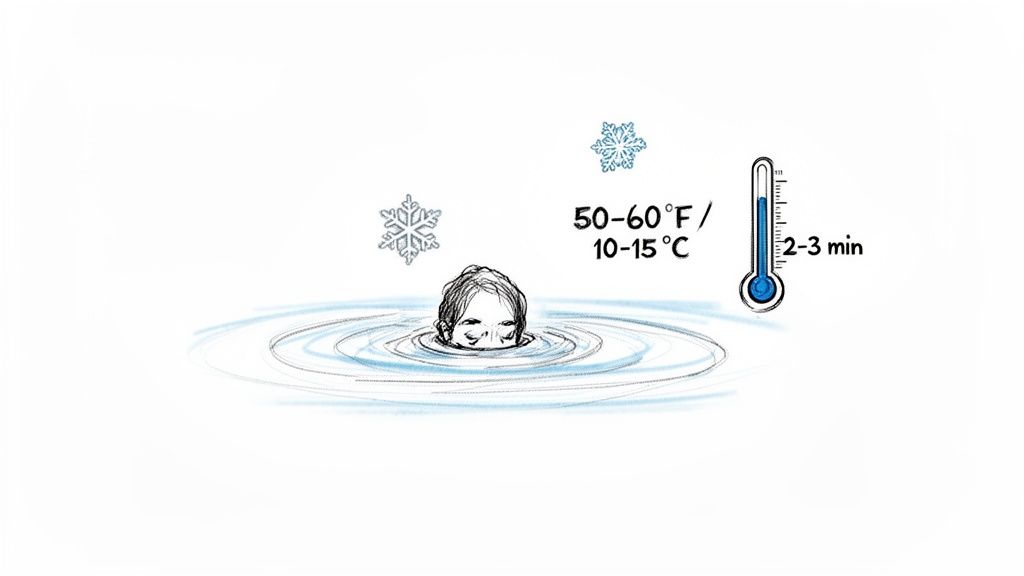
This physiological response isn’t just a survival trick; it’s a tool for building resilience. A study in the European Journal of Applied Physiology demonstrated that cold stimulation increases the release of norepinephrine, enhancing focus. A case study in the BMJ Case Reports detailed how regular cold water swimming led to a gradual reduction in symptoms of major depressive disorder. Furthermore, research in the journal PLoS One found that routine cold showers were associated with a decrease in self-reported sick days from work, suggesting a positive impact on the immune system, which is modulated by the vagus nerve.
How It Works in Practice
The application of cold therapy is popular among high-performers seeking a mental and physical edge. For instance, elite athletes and executives often use ice baths to accelerate recovery, reduce inflammation, and fortify their mental resilience.
- Practical Example: Someone feeling sluggish and unmotivated in the morning can end their shower with 30 seconds of cold water. The initial shock followed by controlled breathing triggers an immediate release of norepinephrine, providing a natural and powerful boost of energy and focus for the day ahead.
Actionable Steps for Implementation
- Start with Cold Showers: Begin by ending your regular shower with 30-60 seconds of the coldest water you can tolerate. Focus on your breathing to stay calm. Try this tomorrow morning.
- Try Facial Immersion: Fill a bowl with ice water and submerge your face for 15-30 seconds. This is a highly effective way to quickly activate the dive reflex and reset your nervous system.
- Combine with Breathwork: Before entering the cold, perform several rounds of controlled breathing, such as box breathing. This primes your nervous system and makes the experience more manageable, amplifying the vagal response.
- Build Resilience, Don’t Induce Stress: Practice cold exposure when you are in a relatively calm state. The goal is to build your capacity to handle stress, not to add more stress when you’re already overwhelmed. You can find more targeted techniques in these polyvagal theory exercises.
4. Vocal Toning & Humming/Gargling Exercises
Vocal toning, humming, and gargling are simple yet effective vagus nerve stimulation techniques that use self-generated vibrations to activate the nerve. The vagus nerve passes through the back of the throat and is intricately connected to the vocal cords and the muscles in the larynx and pharynx. By creating vibrations in this area, you directly massage and stimulate the vagal pathways, sending signals of safety and calm to the brain.
This direct physical stimulation makes it a powerful tool for shifting into a parasympathetic state. A study published in the International Journal of Yoga demonstrated that chanting “Om” can lead to a deactivation of limbic brain regions associated with stress and emotion. Research from a 2011 study in the American Journal of Critical Care found that music therapy, including humming, could positively influence physiological indicators of stress like blood pressure. Finally, a 2010 study in the journal Medical Hypotheses proposed that singing increases heart rate variability and vagal tone, making it a simple yet potent health-promoting behavior.
How It Works in Practice
The application of vocal vibration is seen across various disciplines for nervous system regulation. Kundalini yoga practitioners, for instance, have long used chanting and mantras to regulate their autonomic nervous system and achieve a state of calm focus. Speech therapists often use vocal exercises that enhance vagal tone to support both vocal health and emotional regulation.
- Practical Example: A person feeling anxious while stuck in traffic can start humming along to the radio. The simple act of creating a sustained vocal vibration in their chest and throat can physically interrupt the anxiety loop, helping them feel more grounded and calm by the time they reach their destination.
Actionable Steps for Implementation
- Start with Simple Humming: Dedicate 5-10 minutes daily to humming a single, comfortable tone. Notice the vibrations in your chest, throat, and head. Try this for one minute right after reading this.
- Incorporate Gargling: When brushing your teeth in the morning, gargle with water for 30-60 seconds. The muscular contraction in the pharynx provides a strong vagal stimulus, helping to reset your nervous system for the day.
- Practice Toning: Experiment with different vowel sounds, such as “Ohm” or “Ahhh.” Hold the tone for the full length of your exhale, focusing on the resonant vibrations.
- Use it in Real-Time: In a moment of rising stress or anxiety, step away for a moment and hum quietly to yourself. This provides an immediate, discreet way to down-regulate your nervous system and regain composure.
5. Vagus Nerve Massage & Cervical Stimulation
Direct physical manipulation through massage offers a potent and immediate method for vagus nerve stimulation. By applying gentle pressure to specific areas in the neck, you can mechanically stimulate the vagus nerve, which runs alongside the carotid artery and sternocleidomastoid muscle. This somatic technique provides direct access to the parasympathetic nervous system, initiating a calming response that can be felt almost instantly.
This approach is grounded in our physiological anatomy. A 2018 study published in the Journal of Clinical Medicine found that manual therapy, including cervical stimulation, could positively modulate autonomic nervous system activity. Research in Frontiers in Psychiatry demonstrated that massage therapy significantly reduces symptoms of anxiety by increasing parasympathetic activity. Lastly, a study in the International Journal of Neuroscience confirmed that massage lowers cortisol levels while increasing serotonin and dopamine, highlighting its powerful biochemical impact on well-being.
How It Works in Practice
Somatic therapy centers and polyvagal-informed practitioners frequently use vagal massage to help clients regulate their nervous system, especially during trauma recovery. Similarly, some massage therapy clinics now offer specific vagal stimulation protocols to address chronic stress and anxiety.
- Practical Example: An office worker experiencing tension headaches and stress from staring at a screen can take a 3-minute break to gently massage the sides of their neck. By focusing on the muscles behind the earlobes and along the jawline, they can release physical tension and send calming signals to their brain, often alleviating the headache and reducing mental fatigue.
Actionable Steps for Implementation
- Practice Self-Massage: Using two fingers, gently massage the side of your neck in a slow, circular motion, focusing on the area behind your earlobe and down along your neck. Perform this for 2-3 minutes on each side.
- Locate the Sternocleidomastoid (SCM) Muscle: Gently turn your head to one side; the large muscle that pops out is your SCM. Lightly run your fingers up and down this muscle to release tension and stimulate the underlying vagus nerve.
- Combine with Breathwork: Enhance the parasympathetic response by pairing your self-massage with slow, deep breaths. Exhale slowly as you apply gentle pressure to deepen the relaxation effect.
- Seek Professional Guidance: For a more targeted approach, consider working with a massage therapist or somatic practitioner trained in nervous system regulation. Always obtain medical clearance before attempting carotid sinus massage, as it can be risky for certain individuals.
6. Hypnotic Guidance & NLP-Based Vagal Retraining
Hypnotic guidance and Neuro-Linguistic Programming (NLP) are advanced vagus nerve stimulation techniques that work by reprogramming the brain’s subconscious patterns. These methods bypass conscious resistance to directly influence the autonomic nervous system’s baseline, effectively retraining your vagal tone from the inside out. By using guided visualization and specific linguistic patterns, these techniques can create lasting shifts in nervous system regulation.
A study in the International Journal of Clinical and Experimental Hypnosis found that hypnosis can significantly influence autonomic nervous system activity, including heart rate variability, a key marker of vagal tone. A 2016 meta-analysis published in Neuroscience & Biobehavioral Reviews confirmed that hypnotic suggestion can modulate brain activity in regions associated with attention and emotional control. Furthermore, a study in the Journal of Consulting and Clinical Psychology showed that cognitive-behavioral therapy integrated with hypnosis was more effective in treating anxiety than CBT alone, demonstrating its power to create deep, lasting change.
How It Works in Practice
The power of these techniques lies in their ability to reframe subconscious beliefs and emotional responses. For example, transformational coaching programs use hypnotic reframing to help professionals overcome career-related anxiety and unlock fulfillment.
- Practical Example: An individual with a fear of public speaking can work with an NLP practitioner to create a “resource anchor.” They might vividly recall a time they felt incredibly confident and, at the peak of that feeling, press their thumb and index finger together. By practicing this, they create a trigger they can use right before a speech to instantly access that state of confidence, calming their nervous system’s fear response.
Actionable Steps for Implementation
- Combine with Breathwork: Use hypnotic guidance or NLP techniques immediately following a breathwork session. The heightened state of suggestibility after deep breathing makes the mind more receptive to new programming.
- Use NLP Anchoring: Create a sensory “anchor” (like touching your thumb and forefinger together) while in a deeply relaxed, positive state. This creates a portable trigger you can use to instantly access a calm state in stressful situations.
- Pair with Binaural Beats: Listen to binaural beats designed for relaxation or focus during a self-hypnosis session to deepen the trance state and enhance its regulatory effects on the nervous system.
- Focus on Identity-Level Changes: Work with a practitioner to create suggestions that reinforce a new identity, such as “I am a calm and centered person,” rather than just focusing on behaviors. You can learn more about Neuro-Linguistic Programming and how it facilitates these deep-seated changes.
7. Meditation & Mindfulness Practices
Meditation and mindfulness are foundational vagus nerve stimulation techniques that work by intentionally guiding the brain into a state of present-moment awareness. This practice actively disengages the sympathetic “fight or flight” system and engages the parasympathetic “rest and digest” state, which is governed by the vagus nerve. By focusing on the breath, bodily sensations, or a chosen mantra, you reduce mental chatter and lower physiological stress markers.
A 2018 study published in Frontiers in Psychology found that long-term meditators exhibited significantly higher Heart Rate Variability (HRV), a key indicator of robust vagal function. Research from the journal JAMA Internal Medicine showed that mindfulness meditation was effective in reducing symptoms of anxiety, depression, and pain. Furthermore, a landmark study in Psychosomatic Medicine linked mindfulness meditation directly to reduced inflammatory biomarkers, a downstream effect of enhanced vagal activity.
How It Works in Practice
The application of meditation is widespread and proven. Corporate giants like Google have implemented mindfulness programs such as “Search Inside Yourself” to help employees manage stress and improve focus. In clinical settings, Mindfulness-Based Stress Reduction (MBSR) is used in hospitals worldwide to help patients cope with chronic pain and illness.
- Practical Example: A parent feeling stressed and impatient with their children can practice a “mindful pause.” Instead of reacting immediately, they take one minute to close their eyes, focus on the sensation of their feet on the floor, and take three slow, deep breaths. This small break interrupts the reactive stress cycle and allows them to respond more calmly and thoughtfully.
Actionable Steps for Implementation
- Start Small and Consistently: Begin with just 5 minutes of guided meditation each morning using an app like Calm or Insight Timer. Consistency is more important than duration when forming the habit. Set an alarm on your phone now for tomorrow morning.
- Combine with Breathwork: Before meditating, practice a few rounds of extended exhalation (inhaling for 4, exhaling for 8) to prime your nervous system for a deeper state of relaxation.
- Use Body Scan Meditations: If you find it hard to quiet your mind, a body scan meditation provides a concrete focus. Systematically bring your attention to different parts of your body, noticing sensations without judgment.
- Track Your Progress: Monitor your HRV with a wearable device. Observing the gradual increase in your HRV score can provide powerful motivation to continue your practice.
8. Subliminal Messaging & Audio-Based Subconscious Programming
Subliminal messaging delivers targeted affirmations and commands directly to the subconscious mind by embedding them below the threshold of conscious perception. This approach bypasses the critical filter of the conscious mind, aiming to reprogram deep-seated beliefs about stress, anxiety, and self-worth. When integrated with other vagus nerve stimulation techniques, it creates a powerful synergy for nervous system regulation.
A study in the Journal of Consumer Psychology demonstrated that subliminal priming can indeed influence judgment and behavior. A study published in Neuroscience Letters found that specific auditory stimuli could modulate brainwave activity, promoting states of relaxation. Finally, a meta-analysis in Psychological Bulletin concluded that subliminal messages have a measurable, albeit subtle, effect on thoughts and emotions, making them a valuable complementary tool for nervous system regulation when used consistently.
How It Works in Practice
Subliminal audio programming is increasingly used in digital wellness to enhance therapeutic outcomes. For instance, high-performance coaching programs layer subliminal tracks beneath guided meditations to help executives overcome limiting beliefs and manage pressure.
- Practical Example: Someone working to build self-confidence can listen to their favorite instrumental music or nature sounds that have subliminal affirmations like “I am capable and worthy” embedded within them. By listening daily while working or relaxing, they are consistently exposing their subconscious mind to positive messaging, which can help gradually shift their internal self-talk and reduce self-doubt.
Actionable Steps for Implementation
- Layer with Other Modalities: For maximum integration, combine subliminal audio with breathwork sessions or binaural beats. This makes the nervous system more receptive to reprogramming. The 9D Breathwork experience often includes this layering to deepen its transformative impact.
- Focus on Identity-Level Shifts: Choose subliminal programs that focus on core identity beliefs (e.g., “I am safe and calm”) rather than just symptom elimination (“I am not anxious”). This creates more profound and lasting change.
- Ensure Consistent Exposure: Neurological reprogramming requires repetition. Listen to your chosen subliminal audio daily for at least 15-20 minutes over a period of 30-60 days to allow new neural pathways to form.
- Combine with Conscious Effort: Amplify the effects by consciously repeating the affirmations throughout your day and acting in alignment with your desired state. Track changes in your HRV and subjective well-being to monitor progress.
8-Technique Vagus Nerve Stimulation Comparison
| Technique | Implementation complexity | Resource requirements | Expected outcomes | Ideal use cases | Key advantages |
|---|---|---|---|---|---|
| Controlled Breathing & Breathwork Techniques | Low | None; can be self-taught, optional wearables for HRV | Immediate parasympathetic activation, improved HRV, reduced stress hormones | Quick stress relief, pre-performance, corporate microbreaks | Portable, evidence-backed, fast effects |
| Binaural Beats & Frequency-Based Stimulation | Low–Medium | Stereo headphones, curated audio tracks, 20–60 min sessions | Brainwave entrainment (theta/alpha/gamma), deeper relaxation, improved focus | Deep meditation, insomnia, focus enhancement, complements breathwork | Enhances meditative states, scalable via apps, measurable EEG changes |
| Cold Water Immersion & Temperature-Based Activation | Medium | Cold shower/ice bath access, safety prep and gradual conditioning | Rapid vagal activation, resilience building, increased norepinephrine/dopamine, HRV gains | Resilience training, recovery protocols, short pre-presentation routine | Fast physiological reset, immune and anti-inflammatory benefits |
| Vocal Toning & Humming/Gargling Exercises | Low | None (voice), optional private space | Immediate somatic vagal stimulation, improved breath-vocal control | Individuals who resist stillness, discreet workplace practice | Simple, no equipment, immediate somatic feedback |
| Vagus Nerve Massage & Cervical Stimulation | Medium–High | Practitioner guidance or anatomical training, safe environment | Immediate parasympathetic response, transient HRV improvement | Somatic therapy, trauma-sensitive clients, spa/wellness services | Direct tactile activation, suitable for breath-sensitive people |
| Hypnotic Guidance & NLP-Based Vagal Retraining | High | Skilled practitioner or high-quality recordings, 30–60 min sessions | Lasting baseline vagal tone changes with repeated sessions, subconscious pattern shifts | Deep pattern change, chronic anxiety, performance/fulfillment work | Targets subconscious beliefs, durable change, integrates with other modalities |
| Meditation & Mindfulness Practices | Low–Medium | Time commitment, guided apps or teachers for beginners | Cumulative HRV improvements, enhanced emotional regulation, long-term baseline shifts | Long-term well-being programs, corporate wellness, clinical adjunct | Strong scientific support, scalable, synergistic with other techniques |
| Subliminal Messaging & Audio-Based Subconscious Programming | Medium | High-quality audio production, delivery platform, consistent exposure | Potential subconscious reframing and gradual baseline shifts (evidence mixed) | Scalable digital programs, clients resistant to conscious methods | Operates below conscious resistance, highly scalable, integrates with audio modalities |
From Theory to Transformation: Building Your Personal Vagal Toning Practice
You now possess a comprehensive toolkit of powerful, evidence-informed vagus nerve stimulation techniques, moving beyond abstract concepts into the realm of practical application. We have explored a diverse range of methods, from the physiological immediacy of cold water immersion to the subtle yet profound influence of subliminal messaging and hypnotic guidance. The journey from knowing what to do to consistently doing what you know is where true transformation begins.
The core takeaway is this: you hold the power to consciously regulate your autonomic nervous system. A single deep breathing session can offer temporary relief, but lasting change is forged through consistent, intentional practice. The goal is not just to manage stress in the moment, but to build a more resilient and flexible nervous system over time. This enhanced “vagal tone” becomes your physiological foundation for calm, focus, and emotional equilibrium, enabling you to navigate life’s challenges with greater ease and presence.
Weaving Vagal Toning into Your Daily Life
The key to success is integration, not addition. Instead of viewing these techniques as another task on your to-do list, consider how you can weave them into your existing routines. This “habit stacking” approach dramatically increases the likelihood of long-term adherence.
Consider these practical starting points:
- Morning Routine: Begin your day with a 5-minute diaphragmatic breathing exercise before checking your phone. Or, hum your favorite song while making coffee to gently activate your vagal pathways.
- Workday Micro-Resets: Feeling overwhelmed by emails? Step away for two minutes and practice a simple cervical massage at your desk, or listen to a short track with binaural beats to reset your focus.
- Evening Wind-Down: End your evening shower with 30-60 seconds of cold water to signal a shift from an active “fight-or-flight” state to a restorative “rest-and-digest” mode. Follow this with a brief mindfulness meditation to prepare for sleep.
The true power lies in creating a personalized protocol. Experiment with different vagus nerve stimulation techniques to discover what resonates most with your body and lifestyle. Maybe you find that vocal toning energizes you, while a guided meditation brings you profound calm. Your nervous system is unique; your practice should be too.
The Science of Consistency
This isn’t just about feeling good; it’s about neuroplasticity. Consistent practice physically remodels your neural pathways. Research has consistently demonstrated the tangible benefits of these methods. For instance, a 2018 study published in Frontiers in Psychology found that slow, controlled breathing techniques significantly increased heart rate variability (HRV), a key marker of high vagal tone and stress resilience.
Similarly, research in the journal PLoS ONE highlighted how practices like loving-kindness meditation can produce a positive feedback loop, where positive emotions improve vagal tone, which in turn nurtures more positive emotions. Furthermore, a study in NeuroImage showed that transcutaneous vagus nerve stimulation (a method that mimics the effects of some of these natural techniques) can modulate brain networks associated with mood and attention. These studies underscore a crucial point: your small, daily efforts compound over time, leading to significant physiological and psychological benefits.
Key Insight: Your nervous system is not a fixed entity. It is a dynamic, adaptable system that responds directly to your intentional inputs. By consistently applying these vagus nerve stimulation techniques, you are actively retraining your default response to stress, shifting from reactivity to resourcefulness.
Your journey toward a balanced nervous system is a marathon, not a sprint. Start small, stay consistent, and listen to your body’s feedback. Each conscious breath, each moment of mindful presence, and each cold shower is a step toward profound self-regulation and a deeper sense of well-being. You have the knowledge and the tools; the path to transformation is now yours to walk.
Ready to experience a powerful synergy of these methods in one transformative session? 9D Breathwork integrates guided breathwork, binaural beats, and hypnotic language to provide a comprehensive and profound vagal toning experience. Discover how this integrated approach can accelerate your journey to nervous system mastery at 9D Breathwork.