In today’s competitive environment, a cohesive team is not just a “nice-to-have” asset; it is the fundamental engine of innovation, resilience, and productivity. Yet, traditional team-building exercises often fall flat, feeling forced, outdated, and disconnected from the real challenges your employees face. Forget the clichés and awkward icebreakers. This guide moves beyond the trust fall to provide a curated, actionable roundup of the best corporate team building activities designed for modern, diverse, and dynamic teams. We’re here to give you practical strategies that build genuine connection, foster psychological safety, and enhance collaborative problem-solving.
This listicle is built on a simple premise: effective team building is a strategic investment with measurable returns. Each activity presented is more than just a fun day out of the office. It’s a tool designed to achieve specific business objectives, from boosting creativity to improving cross-departmental communication. We break down every suggestion into a practical, step-by-step plan you can implement immediately. You’ll find details on objectives, ideal group sizes, potential costs, and facilitation tips to ensure success.
To ground these strategies in solid evidence, we integrate scientific research throughout. For instance, studies confirm that activities promoting psychological safety directly correlate with higher team performance and innovation. A key study in the Journal of Applied Psychology by Edmondson (1999) found that teams with high psychological safety were more likely to learn from failures and experiment with new ideas. Furthermore, a meta-analysis by Beal et al. (2003) in the Journal of Management demonstrates a direct link between social cohesion and project outcomes, providing a clear business case for investing in your team’s bonds. This article provides the blueprint to transform your team’s dynamics and drive tangible results.
1. Escape Room Challenges: Unlocking Collaborative Problem-Solving Under Pressure
Escape rooms are immersive, real-life adventure games where teams are “locked” in a themed room. They must work together to find clues, solve a series of puzzles, and complete a mission to “escape” within a strict time limit. This high-stakes, collaborative environment serves as a powerful microcosm of the modern workplace, demanding quick thinking, clear communication, and efficient task delegation under pressure. It’s one of the best corporate team building activities because it forces teams to leverage their collective intelligence over individual brilliance.
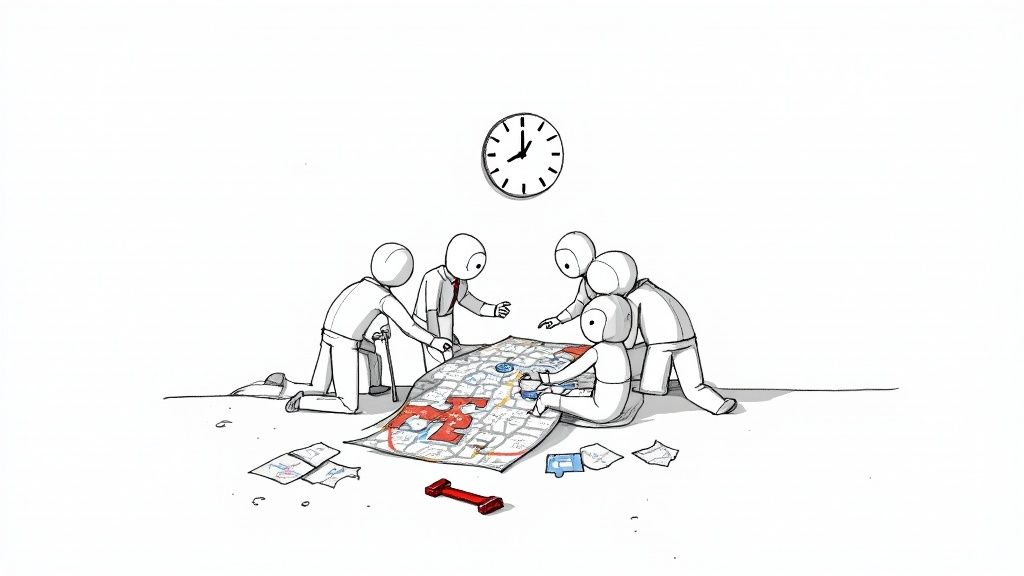
This concept is supported by research from Woolley et al. (2010) in Science, which found that a group’s collective intelligence isn’t determined by the average IQ of its members. Instead, it correlates with factors like social sensitivity and balanced conversational turn-taking, skills that an escape room naturally nurtures. Companies like Google and Microsoft use these challenges to foster innovation and identify emergent leaders within their teams.
Implementation and Facilitation
The real value lies in the post-activity debrief. A well-facilitated discussion transforms a fun outing into a profound learning experience.
- Choose Wisely: Select a room with a difficulty level appropriate for your team. For an intense challenge that hones problem-solving and teamwork, consider engaging your team in a One Hour Escape Room for Six at No Escape London.
- Facilitate a Debrief: Immediately after, gather the team and use targeted questions to connect the game to workplace dynamics. Ask, “At what point did we get stuck, and how did our communication style help or hinder us?” or “How can we apply the way we delegated tasks under pressure to our upcoming product launch?”
- Focus on Process: Emphasize that the goal is not to “win” but to observe and improve team processes. Celebrate small wins and moments of great collaboration, regardless of the final outcome. This exercise is a powerful diagnostic tool for improving communication in the workplace.
Best Use-Case: Ideal for project kickoff teams, cross-departmental integration, or any group needing to improve its collaborative problem-solving and performance under pressure.
2. Volunteer and Community Service Days: Building Teams by Giving Back
Engaging in community service activities allows teams to unite for a cause greater than their daily tasks. By volunteering for charitable work like cleaning parks, serving meals, or mentoring youth, employees connect on a deeper, more human level. This shared experience fosters a powerful sense of collective purpose and strengthens bonds through mutual effort and accomplishment. It is one of the best corporate team building activities because it shifts the focus from internal metrics to external impact, aligning personal values with company culture.
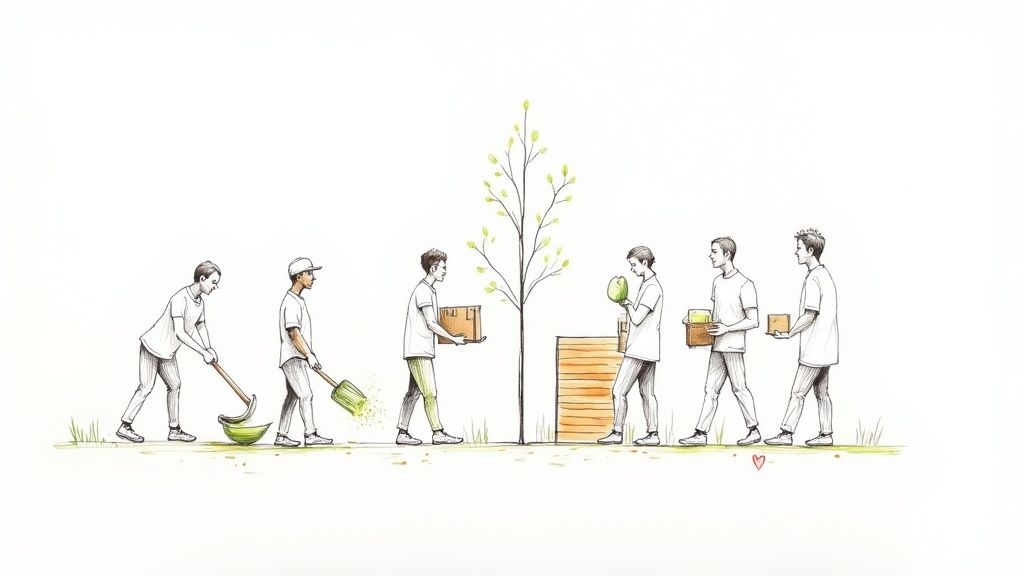
This approach is validated by research demonstrating a strong link between corporate social responsibility (CSR) and employee engagement. A study in the Journal of Business Ethics by Jones (2010) found that employees who participate in company-sponsored volunteer programs report higher levels of organizational commitment and job satisfaction. Companies like Salesforce and Microsoft have institutionalized this, recognizing that giving back is a powerful tool for finding meaning in work.
Implementation and Facilitation
A successful volunteer day requires thoughtful planning to ensure both community impact and team growth. The focus should be on creating a seamless and meaningful experience.
- Partner Effectively: Collaborate with established non-profits to handle logistics. For teams looking to make a local difference, exploring dedicated platforms can reveal unforgettable volunteer opportunities tailored to corporate groups.
- Offer Choice: Allow teams to vote on causes they are passionate about or provide a few distinct options. This empowers employees and increases personal investment in the activity.
- Connect and Reflect: Start with an orientation explaining the non-profit’s mission. Afterward, facilitate a discussion about the experience. Ask, “What skills did we use today that we don’t always use in the office?” or “How did working towards this common goal change how we see each other?”
Best Use-Case: Excellent for fostering a positive corporate culture, strengthening team empathy, and connecting a company’s mission to broader community values. It’s particularly effective for new teams or those seeking a renewed sense of purpose.
3. Outdoor Adventure and Wilderness Retreats: Building Resilience and Trust in Nature
Outdoor adventure and wilderness retreats immerse teams in natural environments through activities like hiking, rock climbing, or kayaking. These experiences move team building beyond the office walls, forcing participants to rely on one another in unfamiliar settings. This dynamic builds deep trust, enhances resilience, and fosters collaborative problem-solving, making it one of the best corporate team building activities for forging strong, adaptable teams. The shared physical challenge and removal from daily routines create a unique space for authentic connection and leadership development.
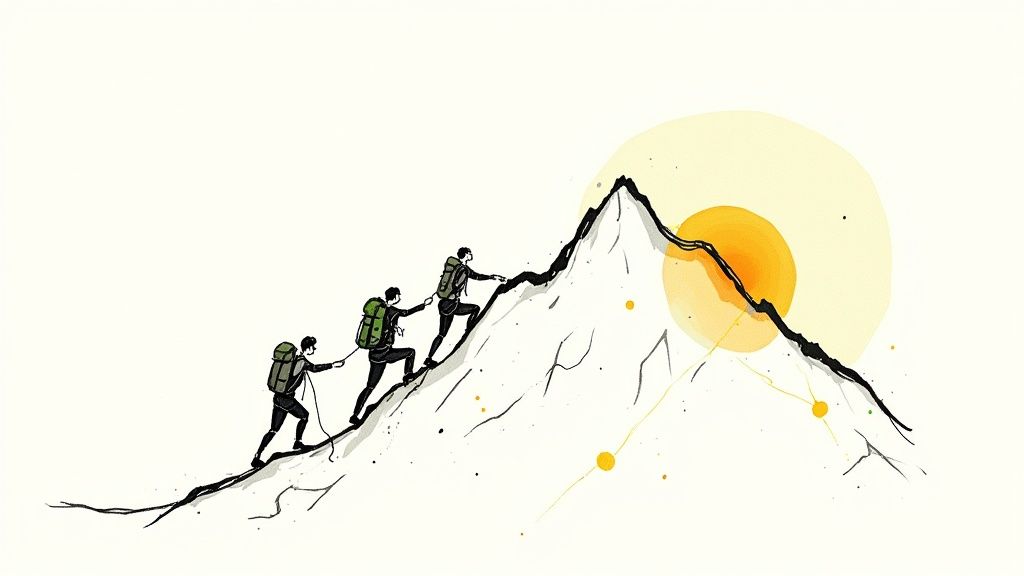
This approach is grounded in Attention Restoration Theory, which suggests that exposure to nature can restore cognitive resources depleted by the high-stress urban environment of most workplaces (Kaplan, 1995). Companies like McKinsey & Company have long used outdoor executive development programs to build leadership skills, understanding that shared adversity strengthens interpersonal bonds and decision-making capabilities. A study in the Journal of Experiential Education also found that such adventure-based training significantly improves group cohesion and communication (Gass, 1993).
Implementation and Facilitation
Success depends on careful planning, professional guidance, and a focus on inclusivity to ensure a positive and impactful experience for all.
- Prioritize Safety and Accessibility: Conduct thorough risk assessments and partner with certified professional guides. Offer tiered activities, like a strenuous hike or a gentle nature walk, so everyone can participate meaningfully regardless of physical ability.
- Facilitate Connection to Work: The debrief is crucial. After a challenging activity, ask questions like, “How did we support the team member who was struggling on that climb, and how can we offer that same support during a difficult project?” or “What communication strategies did we use to navigate the rapids that we can apply to our team meetings?”
- Focus on Shared Experience: Frame the retreat not as a competition but as a collective journey. The goal is mutual support and shared accomplishment. This creates a powerful foundation of trust that translates directly back to the workplace, helping to improve mental health in the workplace.
Best Use-Case: Excellent for leadership development, strengthening established teams, or helping groups navigate significant change or high-pressure environments.
4. Improv and Comedy Workshops: Building Agility and Psychological Safety
Improv and comedy workshops introduce teams to the principles of improvisational theatre in a guided, non-judgmental setting. Participants engage in exercises designed to foster spontaneity, active listening, and a “yes, and…” mindset, where ideas are built upon rather than shut down. This activity directly tackles the fear of failure and encourages risk-taking, creating a space where team members learn to support each other’s creative contributions unconditionally. It’s one of the best corporate team building activities for developing adaptability and strengthening interpersonal bonds through shared vulnerability and laughter.
This approach is validated by research demonstrating the link between improvisation and cognitive flexibility. A study by Lewis & Lovatt (2013) found that even short improv exercises can significantly boost divergent thinking and problem-solving abilities. Corporations like Microsoft and Facebook use these workshops to enhance leadership’s adaptability and improve team communication, recognizing that the skills honed on the “stage” are directly transferable to the boardroom and collaborative projects.
Implementation and Facilitation
Success depends on creating a safe environment where participants feel comfortable stepping outside their comfort zones. The facilitator’s role is crucial in bridging the gap between playful exercises and professional development.
- Hire a Pro: Engage a certified improv coach with specific experience in corporate training. Companies like Second City Works specialize in translating theatre principles into business-applicable skills.
- Establish Ground Rules: Start by setting clear rules for respectful participation. Emphasize that the goal is not to be funny but to be present, listen actively, and support scene partners. This builds trust and encourages participation.
- Connect to Business Goals: The facilitator should guide a post-activity debrief connecting improv concepts to workplace challenges. Discuss how “yes, and…” can prevent idea-blocking in brainstorming sessions or how active listening can reduce misunderstandings in project meetings. These exercises are a practical way to learn how to improve emotional intelligence.
Best Use-Case: Excellent for teams needing to boost creativity, enhance communication, or build psychological safety. Particularly effective for newly formed teams or groups struggling with rigid thinking patterns.
5. Cooking Classes: Stirring Up Collaboration and Creativity
Culinary challenges place teams in a kitchen environment, tasking them with creating a meal together. Whether it’s a guided cooking class or a competitive “Iron Chef” style event, this activity transforms the workplace dynamic into a collaborative, hands-on project. The shared goal of producing a delicious meal requires clear communication, role allocation, and creative problem-solving, making it one of the most engaging corporate team building activities for fostering camaraderie and practical teamwork skills.
This approach is grounded in the psychological benefits of shared, creative activities. A 2018 study in the Journal of Positive Psychology by Conner, DeYoung, and Silvia highlighted how engaging in everyday creative endeavors, like cooking, can lead to increased positive affect and a sense of “flourishing.” Companies like Google and Deloitte utilize these events to break down hierarchical barriers and encourage a more relaxed, informal mode of interaction, which can translate back to more open communication in the office.
Implementation and Facilitation
The success of a culinary event hinges on thoughtful planning and a debrief that connects the kitchen experience to workplace collaboration.
- Plan for Inclusivity: Survey your team for dietary restrictions and allergies well in advance. Choose recipes that are challenging but achievable, and consider partnering novices with more experienced home cooks to build mentorship and support.
- Facilitate a Debrief: After enjoying the meal, guide a conversation with questions like, “How did we assign roles like prepping and plating, and what can that teach us about project management?” or “Describe a moment of miscommunication and how we corrected it. How can we apply that lesson to our team meetings?”
- Emphasize Shared Success: Frame the activity around the collective achievement of creating and enjoying a meal together. This tangible, shared outcome builds a powerful sense of unity and accomplishment that is often difficult to replicate in a typical office setting.
Best Use-Case: Excellent for new teams to bond, for rewarding a team after a major project completion, or for integrating members from different departments in a low-pressure, high-reward environment.
6. Problem-Solving Workshops and Innovation Challenges: Fueling Creative Solutions
Problem-solving workshops and innovation challenges immerse teams in tackling complex business problems using structured methodologies like Design Thinking. These sessions are not just theoretical exercises; they channel collective brainpower towards generating practical, creative solutions for real organizational hurdles, from process inefficiencies to new product development. This makes them one of the best corporate team building activities because they directly link team collaboration with tangible business outcomes.
This approach is validated by research demonstrating that structured creative processes enhance innovation. A study by Litchfield (2008) highlighted how idea-generation techniques significantly improve both the quantity and quality of ideas. Similarly, practitioner-led examples like Google’s famous “20% Time,” which led to innovations like Gmail and AdSense, and Microsoft’s annual global hackathon, show how dedicating structured time for exploration fosters a powerful innovation culture.
Implementation and Facilitation
The success of these workshops hinges on creating a psychologically safe environment where creativity can flourish and applying a clear, actionable framework.
- Adopt a Proven Methodology: Structure your session around a well-established framework like Design Thinking, which guides teams through empathizing with users, defining problems, ideating solutions, prototyping, and testing. This provides a clear roadmap from problem to potential solution.
- Facilitate Inclusively: Ensure all voices are heard. A facilitator’s role is to manage dominant personalities and encourage quieter members to contribute, creating a space where every idea is valued. Frame the session as an exploration, not an evaluation of performance.
- Mix Departments: Intentionally create cross-functional teams. Bringing together individuals from marketing, engineering, and customer service to solve a single problem breaks down silos and generates more holistic, robust solutions.
Best Use-Case: Perfect for teams facing a specific business challenge, seeking to innovate a product or service, or aiming to embed a culture of continuous improvement and creative problem-solving across the organization.
7. Team Sports and Wellness Competitions: Building Camaraderie Through Healthy Competition
Team sports and wellness competitions involve organizing leagues, one-day tournaments, or fitness challenges that pit teams against each other in a friendly, physical setting. Whether it’s a corporate softball league, a company-wide 5K, or a month-long step challenge, these activities channel competitive energy into a positive outlet that promotes physical health, strategic thinking, and strong interpersonal bonds. This approach is one of the best corporate team building activities because it fosters sustained interaction and teamwork outside of traditional work-related tasks.
The benefits of physical activity on team cohesion are well-documented. A study by Puffer (2009) highlighted that corporate sports participation significantly enhances social integration and informal communication networks. Companies like Microsoft and Google have long leveraged this, with programs such as internal sports leagues and “Summer Games” that not only boost morale but also improve employee engagement and reduce stress. The ongoing nature of a league or challenge creates a continuous thread of connection and shared identity among colleagues.
Implementation and Facilitation
Success depends on inclusivity and a focus on participation rather than just winning. A well-organized program can become a cornerstone of company culture.
- Offer Variety: Cater to diverse interests and physical abilities by offering multiple options. This could include a competitive basketball league, a recreational bowling tournament, and a walking club.
- Emphasize Participation: Create “fun divisions” with mixed skill levels or award prizes for “most improved” and “best team spirit.” This ensures the focus remains on camaraderie. Ensure roles exist for non-participants, such as team managers, scorekeepers, or official cheer squads.
- Prioritize Safety: Provide proper equipment, first-aid access, and clear rules of conduct. A pre-season safety briefing is essential for more strenuous sports. This approach is a core element of effective workplace wellness program examples.
Best Use-Case: Excellent for building long-term morale, improving employee health and wellness, and creating strong informal social networks across different departments or seniority levels.
8. Mentorship and Reverse Mentoring Programs: Building Bridges for Growth and Knowledge Transfer
Mentorship programs formalize the powerful dynamic of guidance and knowledge sharing by pairing employees across different hierarchical levels, departments, or generations. These structured relationships move beyond informal advice, creating dedicated channels for career development, skill acquisition, and fostering a deep sense of belonging. Reverse mentoring flips the traditional model, pairing junior employees with senior leaders to share insights on topics like digital technology, social media trends, and evolving workplace expectations, making this one of the best corporate team building activities for bridging generational and skill gaps.
This approach is highly effective because it cultivates psychological safety and boosts employee engagement. A study published in the Journal of Vocational Behavior (Allen, Eby, Poteet, Lentz, & Lima, 2004) found that mentored employees report higher job satisfaction, greater career success, and stronger organizational commitment. Companies like Cisco and Procter & Gamble leverage these programs not just for individual growth but to build a cohesive, interconnected organizational culture where knowledge flows freely in all directions.
Implementation and Facilitation
A successful program requires more than just random pairings; it needs a thoughtful structure and ongoing support to thrive.
- Structure the Pairing Process: Use clear matching criteria based on skills, career goals, and personality assessments, rather than just availability. Ensure both parties understand the objectives of the relationship from the outset.
- Provide Training and Resources: Equip mentors and mentees with training on active listening, providing constructive feedback, and setting meaningful goals. Offer discussion guides or frameworks to help structure their initial conversations.
- Establish Clear Expectations: Define the expected frequency of meetings (e.g., bi-weekly for one hour), communication methods, and the overall duration of the formal relationship (e.g., six months). This clarity prevents ambiguity and ensures commitment.
- Promote and Celebrate: Publicly recognize successful mentoring pairs and share their stories. This not only celebrates their effort but also promotes the program’s value and encourages wider participation across the organization.
Best Use-Case: Excellent for onboarding new hires, developing high-potential employees, promoting diversity and inclusion by connecting people across different backgrounds, and retaining institutional knowledge during organizational change.
9. Creative Workshops and Artistic Activities: Fostering Innovation and Well-being
Creative workshops invite teams to engage in hands-on artistic activities like painting, pottery, or music, guided by professional instructors. This approach moves team building away from purely analytical tasks, tapping into a different part of the brain to foster innovation, reduce stress, and build unique connections. These activities are among the best corporate team building activities because they create a low-pressure environment where team members can express themselves, see colleagues in a new light, and practice creative thinking without the fear of failure.
This method’s effectiveness is rooted in the psychological benefits of creative expression. A study published in the Journal of the American Art Therapy Association (Kaimal et al., 2016) found that just 45 minutes of creative activity significantly lowers cortisol, the body’s primary stress hormone. Similarly, research in the Creativity Research Journal highlights how engaging in novel, artistic tasks can enhance cognitive flexibility, a key component of innovative problem-solving. This makes artistic workshops a powerful tool for both employee well-being and organizational creativity.
Implementation and Facilitation
Success depends on creating an inclusive atmosphere that prioritizes participation over perfection. A well-chosen activity and thoughtful facilitation can unlock profound benefits.
- Set the Right Tone: Emphasize that the goal is expression, not artistic mastery. Choose forgiving mediums like abstract painting or collaborative murals where individual skill is less important than collective effort.
- Facilitate Connection: Use the creative process as a springboard for discussion. Ask questions like, “What was it like to start with a blank canvas?” or “How did our initial plan change as we worked together on this mural?” This links the artistic experience to workplace agility and innovation.
- Celebrate the Process: Display the completed artwork in the office. This serves as a tangible reminder of the team’s shared experience and creative potential, reinforcing the bonds formed during the activity and celebrating participation.
Best Use-Case: Perfect for teams experiencing creative burnout, groups needing to improve non-verbal communication, or as a wellness initiative to reduce workplace stress and strengthen interpersonal bonds.
10. Virtual Team Building and Hybrid Meeting Games: Fostering Connection Across Distances
Virtual team building involves structured online activities and games designed specifically for remote or hybrid teams. These activities, ranging from digital escape rooms and online trivia to collaborative multiplayer games, are crucial for maintaining team cohesion and engagement when colleagues are not physically in the same space. They are among the best corporate team building activities because they bridge the digital divide, turning passive video calls into active, shared experiences that build trust and rapport.
This approach is validated by research on computer-mediated communication. A study by Walther (1996) on social information processing theory suggests that given enough time, online relationships can be just as strong as face-to-face ones. Virtual activities accelerate this process by providing structured, positive interactions. Companies like LinkedIn and Meta have integrated virtual office tours and custom online platforms to strengthen bonds within their globally distributed workforces.
Implementation and Facilitation
Effective virtual team building requires more than just sending a game link; it demands thoughtful planning and facilitation to combat digital fatigue and maximize engagement.
- Choose Interactive Platforms: Opt for activities that demand active participation. Platforms like Kahoot! for live trivia, Jackbox Games for humorous mini-games, or virtual escape rooms from providers like The Escape Game create shared moments of challenge and fun.
- Facilitate Deliberately: Keep sessions concise, ideally under 60 minutes, to maintain focus. Use breakout rooms to encourage deeper conversation in smaller groups and ensure clear instructions are sent out well in advance. Always test technology 15 minutes before starting.
- Connect to Work: After the activity, facilitate a short debrief. Ask questions like, “What communication strategies worked best in this virtual environment?” or “How can we bring this level of energy and collaboration to our regular team meetings?” This links the fun directly to improved remote work processes.
Best Use-Case: Essential for remote-first companies, global teams across different time zones, and hybrid teams seeking to ensure equitable engagement between in-office and remote employees.
Top 10 Corporate Team-Building Activities Comparison
| Activity | Implementation complexity | Resource requirements | Expected outcomes | Ideal use cases | Key advantages |
|---|---|---|---|---|---|
| Escape Room Challenges | Medium — book venue or virtual facilitator, moderate setup | Themed room or platform, puzzles, facilitator, budget per participant | Improved communication, collaborative problem-solving under time pressure | Short, high-engagement team bonding; cross-functional icebreakers | Memorable, hands-on teamwork; low physical demand |
| Volunteer and Community Service Days | Medium–High — external coordination, logistics planning | Partnership with nonprofits, transportation, tools, liability management | Increased morale, purpose-driven bonds, CSR visibility | CSR initiatives, large teams, purpose-oriented engagement | Tangible community impact; boosts employee purpose and reputation |
| Outdoor Adventure and Wilderness Retreats | High — safety, permits, travel and multi-day logistics | Professional guides, safety gear, transport, higher budget | Trust, resilience, leadership development, wellness benefits | Leadership retreats, resilience training, small-to-mid teams | Deep bonding and memorable leadership challenges in nature |
| Improv and Comedy Workshops | Low–Medium — hire skilled facilitator, controlled environment | Professional improv coach, open space, minimal props | Better listening, spontaneity, confidence, emotional intelligence | Communication training, creative confidence building, light leadership work | Highly engaging; improves communication and adaptability |
| Cooking Classes and Culinary Challenges | Medium — venue and dietary planning, kitchens required | Professional chef, kitchen space or mobile setup, ingredients | Practical collaboration, creativity, relaxed bonding | Small teams, celebratory or informal team events | Tangible edible outcome; inclusive skill levels |
| Problem-Solving Workshops and Innovation Challenges | High — significant prep, skilled facilitation, real problems | Facilitators, materials for prototyping, dedicated time away from work | Strategic thinking, actionable ideas, cross-functional collaboration | Innovation sprints, product or process challenges, leadership dev | Direct business impact; generates implementable solutions |
| Team Sports and Wellness Competitions | Medium — ongoing scheduling, facilities and coordination | Sports facilities, equipment, scheduling tools, safety protocols | Improved wellness, camaraderie, friendly competition, ongoing engagement | Long-term engagement, wellness programs, large organizations | Promotes health and sustained team identity |
| Mentorship and Reverse Mentoring Programs | High — long-term program design and management | Matching system, training resources, time commitment | Talent development, knowledge transfer, increased retention | Leadership pipelines, cross-generational learning, career development | Builds deep, sustained relationships and organizational learning |
| Creative Workshops and Artistic Activities | Low–Medium — instructor booking, space for materials | Professional artist, art materials, display space | Boosted creativity, stress relief, inclusive self-expression | Creativity stimulation, stress-reduction events, informal bonding | Low-pressure creativity; tangible takeaways and mental wellness |
| Virtual Team Building and Hybrid Meeting Games | Low — platform setup, facilitation to maintain engagement | Online platforms (Zoom, Miro, Kahoot), facilitator, stable internet | Maintains connection, flexible participation, accessible inclusion | Distributed or hybrid teams, short engagement sessions | Highly accessible, low cost, scalable across time zones |
From Activity to Culture: Embedding Team Cohesion into Your Daily Workflow
You’ve explored a comprehensive list of the best corporate team building activities, from the strategic puzzles of an Escape Room to the creative expression of an artistic workshop. While selecting the right event is a crucial first step, the true measure of success lies in what happens after the activity ends. The goal isn’t to create a single memorable day; it’s to build a lasting culture of collaboration, trust, and psychological safety that permeates your daily operations.
The most profound and enduring benefits of team building emerge when these initiatives are not isolated events but part of a continuous, strategic program. A single offsite adventure or volunteer day can create a temporary spike in morale, but sustained high performance requires a more integrated approach. The key is to transform the energy and insights gained from these activities into tangible, everyday behaviors and processes.
The Power of a Programmatic Approach
Evidence overwhelmingly supports a long-term strategy over one-off events. A landmark meta-analysis published in the Journal of Applied Psychology by Klein et al. (2009) examined the effectiveness of team-building interventions. The study concluded that these activities have a significant positive impact on team processes and outcomes, but their effects are most pronounced and durable when they are part of a systematic, ongoing development program tailored to specific team needs.
Similarly, research in Small Group Research highlights that activities focused on role clarification and goal-setting, often integrated into workshops and mentorship programs, yield more substantial performance improvements than purely social events. This doesn’t diminish the value of fun; rather, it emphasizes the need for a balanced portfolio of activities that address different team dynamics.
Key Insight: The difference between a good team and a great one isn’t the grandeur of a single event, but the consistency of its investment in connection and collaboration. Treat team building as a core business function, not an occasional perk.
Your Team Cohesion Roadmap: From Idea to Integration
To help you translate this article from a list of ideas into a concrete plan, we’ve developed a “Team Cohesion Roadmap.” This framework encourages a structured, quarterly approach to ensure a balanced mix of activities that build different “muscles” within your team.
Quarterly Planning Framework:
- 1 Major Event (Quarterly): Dedicate resources to one significant, high-impact activity per quarter. This could be an Outdoor Adventure Retreat to build resilience, a large-scale Community Service Day to foster shared purpose, or a multi-department Innovation Challenge.
- 1 Skill-Building Workshop (Quarterly): Schedule a focused session aimed at developing specific collaborative competencies. Examples include an Improv Workshop to enhance communication and adaptability, a Problem-Solving Workshop to refine critical thinking, or a Reverse Mentoring session to break down hierarchical barriers.
- 4-6 Micro-Activities (Monthly/Bi-Weekly): Integrate small, consistent touchpoints into your regular workflow. These can be 15-minute Virtual Team Games at the start of a weekly meeting, a monthly “lunch and learn” session, or a simple “two truths and a lie” icebreaker. These micro-activities keep the collaborative spirit alive between major events.
A study in the Academy of Management Journal by Methot et al. (2016) found that frequent, informal interactions are critical for building the “affective trust” (trust based on genuine care and concern) that underpins psychological safety. Your micro-activities are the perfect vehicle for fostering these essential connections. By implementing this roadmap, you are not just planning events; you are architecting a culture where teamwork is a habit, not an anomaly. The best corporate team building activities are those that become a seamless part of your organization’s DNA, empowering your team to navigate challenges, innovate freely, and achieve collective success.
Ready to integrate a powerful, science-backed wellness tool into your team building strategy? 9D Breathwork offers guided sessions that reduce stress, enhance focus, and build profound emotional connection, making it an ideal activity for burnout recovery and fostering psychological safety. Explore how to bring this transformative experience to your team at 9D Breathwork.