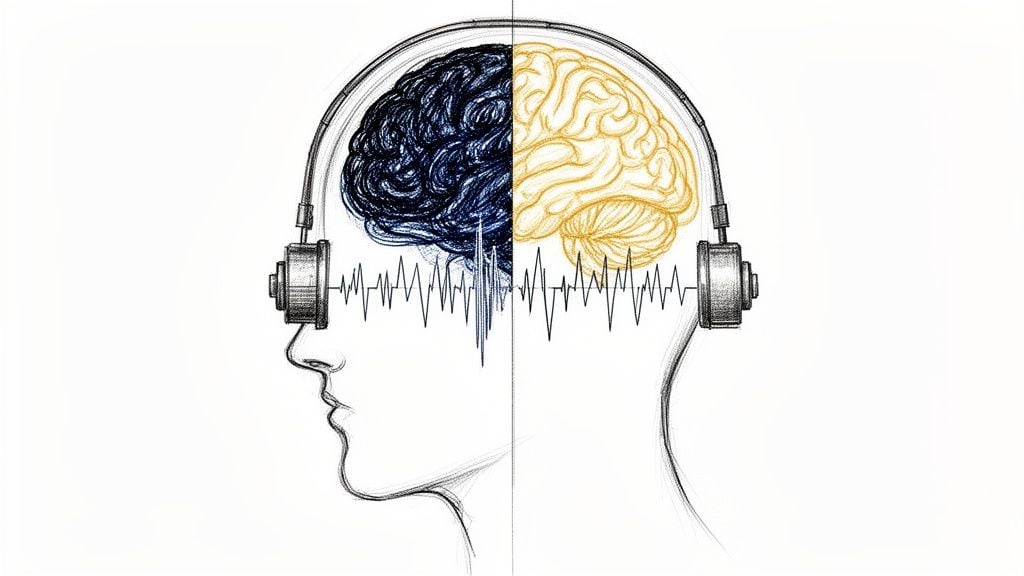
Company culture has moved from a “nice-to-have” HR initiative to a critical driver of business performance. It’s the invisible force that dictates how work gets done, how teams collaborate, and how resilient an organization is in the face of change. A positive culture is a powerful magnet for top talent, a catalyst for innovation, and a direct contributor to your bottom line. Forget the superficial perks; a truly great culture is built on a foundation of psychological safety, mutual respect, and a strong connection to a shared purpose.
This article provides a blueprint with 10 evidence-backed, actionable ways to improve company culture. We move beyond generic advice to give you specific strategies you can implement right away. Each point is grounded in research and designed for immediate impact, covering everything from leadership development and transparent communication to inclusive wellbeing programs that support employee mental health. Staying informed about broader industry movements, such as emerging future workplace trends, is essential for building a resilient organization that thrives.
The following strategies are designed to help you cultivate an environment where both your people and your business can flourish. Research from the Journal of Organizational Behavior confirms that when employees perceive their workplace culture as positive, it directly correlates with higher levels of engagement and job satisfaction. By focusing on these core areas, you can transform your workplace from a place people have to be into a community where they want to belong, making culture your most significant competitive advantage.
1. Foster Radical Transparency and Open Communication
Establishing clear, consistent, and bi-directional communication is foundational to building a high-trust culture. Radical transparency involves openly sharing company performance data, strategic decisions, and even challenges with the entire organization. This approach dismantles the rumor mill, reduces cynicism, and empowers employees by providing the context behind leadership decisions, which is a crucial way to improve company culture.
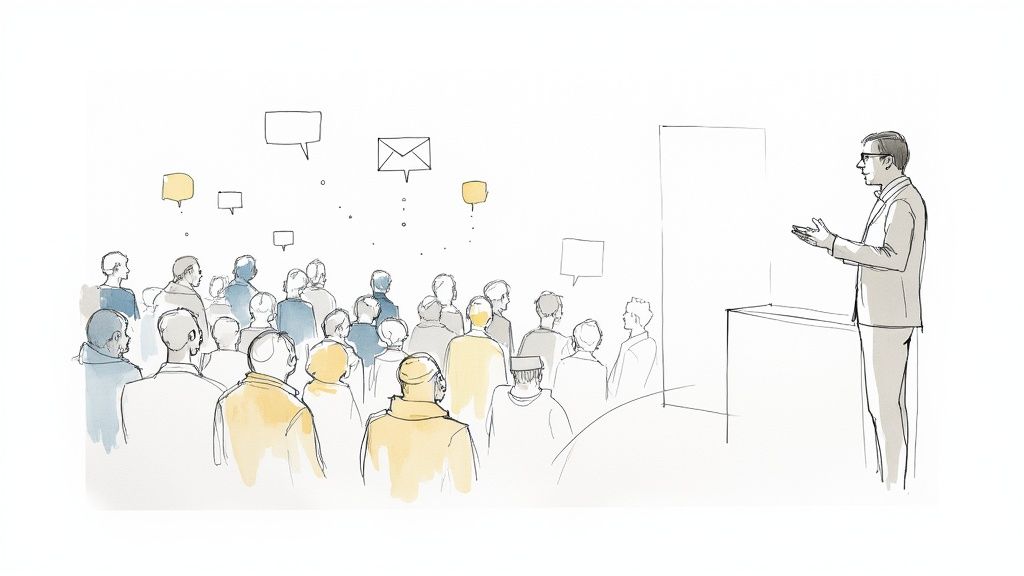
This isn’t just about broadcasting information; it’s about cultivating a genuine dialogue. A 2017 study in the Journal of Business Ethics found a direct link between transparent leadership communication and higher levels of employee trust. When employees understand the ‘why,’ they feel more connected to the company’s mission and are more likely to be engaged. For a deeper look into this, you can explore more techniques for improving communication in the workplace.
How to Implement Radical Transparency
This strategy is particularly effective during periods of change, rapid growth, or uncertainty, as it provides a stable foundation of trust. Pioneers of this approach, like Bridgewater Associates with its “radical transparency” principle and Buffer with its public salary and revenue dashboards, have demonstrated its power.
To apply this in your organization, consider these actionable steps:
- Action Step 1: Establish a Predictable Cadence. Schedule a non-negotiable weekly all-hands meeting to review key metrics and host a Q&A session. For example, software company HubSpot holds weekly “HubSpot Huddle” meetings where company performance is openly discussed.
- Action Step 2: Centralize Key Decisions. Create a single source of truth, such as a Confluence or Notion page titled “Key Decisions Log.” For every major decision, document the date, the decision made, the rationale, and who was involved.
- Action Step 3: Implement a “You Asked, We Listened” Segment. In your monthly company newsletter, dedicate a section that highlights a piece of employee feedback (e.g., from a survey) and the specific action taken in response. Example: “You asked for more clarity on our remote work policy. We listened, and have now published a detailed guide in the employee handbook.”
2. Recognition and Rewards Programs
Systematic recognition is a powerful tool to reinforce desired behaviors and make employees feel genuinely valued for their contributions. A well-designed program goes beyond annual bonuses, creating a continuous culture of appreciation that celebrates both major achievements and daily efforts. This is an essential way to improve company culture because it directly addresses a core human need: the desire to be seen and acknowledged.

The impact is backed by significant research. A study in the International Journal of Hospitality Management found that employee recognition significantly enhanced job satisfaction and reduced turnover intentions. When appreciation is tied to specific actions, it clarifies what success looks like and motivates others to emulate those behaviors, creating a positive feedback loop that elevates performance across the board.
How to Implement Recognition and Rewards Programs
This strategy is highly effective for boosting morale, reinforcing company values, and increasing engagement, especially in high-performance or rapidly changing environments. Companies like Google pioneered peer-to-peer recognition with their bonus system, allowing employees to directly reward colleagues, while Zappos’ famous culture book highlights employee stories as a form of powerful, public acknowledgment.
To build a meaningful recognition program, consider these steps:
- Action Step 1: Diversify Recognition Channels. Combine formal awards with informal, real-time appreciation. Create a dedicated Slack channel called
#winsor#shoutoutswhere anyone can publicly thank a colleague. Supplement this with a tool like Bonusly for peer-to-peer micro-bonuses. - Action Step 2: Tie Recognition to Core Values. When acknowledging an employee in a team meeting, explicitly connect their action to a specific company value. For example, “I want to recognize Sarah for her incredible customer focus when she stayed late to resolve that complex client issue. That’s a perfect example of our ‘Own the Outcome’ value in action.”
- Action Step 3: Train Managers on Effective Recognition. Hold a mandatory 60-minute workshop for all managers titled “The Art of Specific Praise.” Teach them to make praise timely, specific, and personal, using the “Situation-Behavior-Impact” (SBI) feedback model.
3. Professional Development and Learning Opportunities
Investing in employee growth is a powerful statement that a company values its people not just for their current output, but for their future potential. Offering robust training, mentorship, and skill development programs demonstrates a tangible commitment to employee success and creates clear pathways for career advancement. This is one of the most impactful ways to improve company culture because it fosters loyalty and transforms a job into a career.

When employees see opportunities for growth, they become more engaged and motivated. A 2018 study in the International Journal of Human Resource Management highlighted that employees who perceive high levels of training opportunities report greater job satisfaction and organizational commitment. This commitment directly fuels a culture of continuous improvement and innovation.
How to Implement Professional Development
This approach is especially critical for organizations in fast-evolving industries where skills can quickly become outdated. Companies like Amazon, with its Career Choice program that pre-pays 95% of tuition for in-demand fields, and Google, with its famous “20% Time,” have proven that investing in learning pays dividends in both retention and innovation.
To embed this in your organization, consider these actionable steps:
- Action Step 1: Create Personalized Development Plans. During annual performance reviews, require managers to co-create an Individual Development Plan (IDP) with each employee. The plan should include at least two specific skills to develop and the corresponding courses, mentorship, or projects needed to achieve them.
- Action Step 2: Offer a “Learning Stipend”. Provide every employee with an annual stipend (e.g., $1,000) to be used for professional development, such as online courses, books, or conference tickets. This empowers employees to take ownership of their growth.
- Action Step 3: Launch a “Lunch & Learn” Program. Once a month, host a voluntary session where an internal expert teaches a skill to colleagues. For example, a marketing team member could teach the sales team the basics of SEO, fostering cross-functional learning and connection.
4. Flexible Work Arrangements and Work-Life Balance
Empowering employees with autonomy over their schedules and work location is a powerful strategy to improve company culture. Flexible arrangements, such as remote work, hybrid models, or compressed workweeks, signal trust and respect for employees’ lives outside of the office. This approach moves beyond the outdated model of valuing physical presence, focusing instead on productivity, outcomes, and employee well-being.
This shift from time-based to results-based work is supported by extensive research. A 2021 study from Stanford University on 16,000 workers over 9 months found that working from home increased productivity by 13%. Furthermore, a meta-analysis published in the Journal of Management linked telecommuting to higher job satisfaction, lower turnover intentions, and reduced work-family conflict. When organizations prioritize balance, they foster a healthier, more loyal, and more productive workforce.
How to Implement Flexible Work
This strategy is particularly beneficial for attracting and retaining top talent, as flexibility has become a key job-seeker demand. Pioneering companies like GitLab (all-remote) and Microsoft (hybrid flexibility) have proven that flexible models can operate at scale. Basecamp is also famous for its four-day, 32-hour summer workweeks, demonstrating a commitment to deep work and employee rejuvenation.
To effectively integrate this into your culture, consider these actionable steps:
- Action Step 1: Define Clear Expectations. Establish and document “core collaboration hours” (e.g., 10 AM to 3 PM local time) when all team members must be available for meetings, but allow full flexibility outside that window.
- Action Step 2: Pilot a Compressed Workweek. Trial a four-day workweek with one department for a quarter. Measure key metrics like productivity, employee satisfaction, and client feedback. A successful pilot at a company like Kickstarter led to its permanent adoption.
- Action Step 3: Focus on Outcomes, Not Hours. Train managers to shift performance evaluations away from tracking activity to measuring results. Instead of asking “How many hours did you work?” ask “Did you achieve the agreed-upon outcomes for this week’s sprint?”
5. Inclusive Hiring and Diversity Initiatives
Building a truly diverse, equitable, and inclusive (DEI) workplace is not a passive activity; it requires deliberate, strategic action. This involves actively building varied teams through inclusive hiring, establishing support systems like mentorship programs, and creating robust accountability measures. This approach is a powerful way to improve company culture by introducing a richer tapestry of perspectives, which directly fuels stronger innovation and problem-solving while actively reducing systemic bias.
Beyond being the right thing to do, DEI is a significant business driver. A 2018 study in the Financial Management journal found that firms with greater gender diversity on their boards were more innovative. Similarly, research from McKinsey consistently shows that companies in the top quartile for ethnic and cultural diversity outperform those in the bottom quartile by 36% in profitability. When employees feel they belong, their engagement and contribution soar, fundamentally strengthening the organization.
How to Implement Inclusive Hiring and DEI
This strategy is crucial for any organization aiming for long-term relevance and growth, especially in globalized markets. It helps attract top talent and reflect the diverse customer base you serve. Industry leaders like Salesforce, with its multi-million dollar investments in pay equity audits, and Microsoft, with its dedicated Disability Hiring Program, showcase the impact of executive-led commitment to DEI.
To embed this in your organization, consider these actionable steps:
- Action Step 1: Standardize Interview Questions. Create a structured interview kit for every role with pre-defined questions and scoring rubrics. This ensures every candidate is evaluated on the same criteria, reducing the impact of unconscious bias.
- Action Step 2: Mandate Unconscious Bias Training. Require all employees involved in hiring to complete a recognized unconscious bias training program, such as Google’s “Unconscious Bias @ Work” workshop, before they can sit on an interview panel.
- Action Step 3: Establish Employee Resource Groups (ERGs). Provide a budget and executive sponsorship for employee-led ERGs (e.g., Women in Tech, Pride Network). For instance, an ERG at Sodexo helped the company develop more inclusive marketing strategies for diverse customer segments.
6. Organize Intentional Team Building and Social Events
Organizing well-designed events that bring employees together to build relationships and community is a powerful way to improve company culture. These activities move beyond generic happy hours to create positive, shared experiences that strengthen interpersonal connections, improve collaboration, and foster a genuine sense of belonging among colleagues.
This isn’t just about having fun; it’s about strategic relationship-building. A study published in the Journal of Organizational Behavior revealed that positive social interactions at work are directly correlated with lower levels of emotional exhaustion. When employees feel connected to their peers, they build a support system that enhances resilience and engagement. You can discover a variety of options by exploring some of the best corporate team-building activities.
How to Implement Intentional Team Events
This strategy is especially valuable for remote or hybrid teams where organic social interactions are limited, or during periods of high stress when morale needs a boost. Companies like Atlassian with its “ShipIt Days” and Patagonia with its volunteering-focused retreats have shown that events aligned with company values can be deeply impactful.
To apply this in your organization, consider these actionable steps:
- Action Step 1: Offer a Mix of Events. In a single quarter, plan a variety of events to cater to different interests. For example, host a competitive virtual trivia game, organize a team volunteer day at a local food bank, and start a company book club.
- Action Step 2: Create “Donut Buddies”. Use a Slack integration like Donut to randomly pair two or three employees from different departments for a 30-minute virtual coffee chat each week. This fosters cross-functional relationships with minimal planning.
- Action Step 3: Survey for Ideas. Before planning the next major social event, send out a simple Google Forms survey asking employees to vote on three different options (e.g., cooking class, escape room, bowling). Acting on the most popular choice guarantees higher engagement.
7. Clear Values and Purpose Alignment
Defining and living a clear company mission, vision, and values provides a north star for every decision and action within the organization. When employees understand and align with this purpose, their work gains meaning, transforming their roles from a list of tasks into a contribution to something larger. This sense of shared purpose is a powerful and often underestimated way to improve company culture.
This alignment fosters intrinsic motivation and resilience. Research from The Journal of Organizational Behavior highlights that a strong person-organization fit, especially in values, is directly correlated with higher job satisfaction and lower turnover intentions. When an employee feels their work matters, they are more engaged and committed. You can explore how individuals can connect with their purpose at work for a deeper perspective on this dynamic.
How to Implement Values and Purpose Alignment
This strategy is critical during all stages of a company’s lifecycle but is particularly potent for scaling organizations that need to maintain cultural consistency as they grow. Companies like Patagonia, whose mission to “save our home planet” guides every product and policy decision, and Zappos, with its legendary customer-centric core values, exemplify purpose-driven cultures.
To embed this in your organization, consider these actionable steps:
- Action Step 1: Co-Create Your Values. Instead of a top-down declaration, facilitate workshops with a cross-section of employees to define company values. Ask questions like, “What behaviors do we admire in our most successful colleagues?” This ensures authenticity.
- Action Step 2: Operationalize Your Mission in Hiring. Add a specific “values interview” stage to your hiring process. Ask behavioral questions tied to each value, such as, “Tell me about a time you had to be radically candid with a colleague. What was the situation and outcome?”
- Action Step 3: Make Values-Based Decisions Visible. When leadership makes a tough choice, such as turning down a profitable but misaligned client, communicate the decision in an all-hands meeting and explicitly link it back to the company’s core values. This builds immense trust.
8. Manager Training and Leadership Development
Your managers have a more direct impact on an employee’s daily experience than anyone else in the company. Investing in their development from managers into true leaders is one of the most powerful ways to improve company culture, as they are the primary architects of team-level environments. This involves equipping them with the skills to foster psychological safety, provide effective feedback, and connect their team’s work to the broader company mission.
The data strongly supports this focus. A 2015 study in the Journal of Occupational and Environmental Medicine highlighted that supportive manager behaviors were directly linked to lower employee stress and burnout. Furthermore, research from Gallup consistently shows that managers account for at least 70% of the variance in employee engagement scores. Effective leadership training bridges the gap between management as a task and leadership as an influence, directly nurturing a positive culture. For more on this, consider exploring the principles of conscious leadership.
How to Implement Leadership Development
This strategy is essential for any growing organization, particularly when promoting high-performing individual contributors into management roles for the first time. Companies like Google, with its famous Project Oxygen research, have identified key behaviors of great managers and built training programs around them, proving that better managers create more productive and happier teams.
To build a strong leadership pipeline in your organization, follow these steps:
- Action Step 1: Define “What Good Looks Like”. Create a simple “Manager’s Playbook” that clearly outlines the expectations for managers at your company, including the cadence for one-on-one meetings, how to give feedback, and how to conduct performance reviews.
- Action Step 2: Implement Manager Peer Coaching. Establish “Manager Circles” of 4-6 managers who meet monthly to discuss challenges and share best practices in a confidential setting. This provides ongoing, peer-led support.
- Action Step 3: Focus on Human-Centric Skills. Prioritize training in soft skills. Host a quarterly workshop on a topic like “Giving Compassionate Feedback” or “Leading with Empathy,” using frameworks from thinkers like Brené Brown.
9. Champion Comprehensive Employee Wellness Programs
Investing in comprehensive wellness programs demonstrates a genuine commitment to employees as whole individuals, not just as workers. These initiatives extend beyond basic health insurance to support the physical, mental, emotional, and financial well-being of your team. This holistic support system is a powerful way to improve company culture by reducing burnout, mitigating stress, and showing employees they are valued.
This approach is backed by significant research. A meta-analysis published in the Journal of Occupational and Environmental Medicine revealed that well-designed workplace wellness programs can lead to a 25% reduction in both absenteeism and healthcare costs. When organizations actively support employee well-being, they foster an environment where people feel safe, supported, and capable of performing at their best. To see how leading companies are achieving this, you can review some effective workplace wellness program examples.
How to Implement Employee Wellness Programs
This strategy is especially crucial in high-stress industries or during times of organizational change, as it provides vital resources for resilience and coping. Companies like Salesforce, with its emphasis on mindfulness programs, and LinkedIn, with its wellness stipends and dedicated mental health days, showcase how to embed wellness into the corporate DNA.
To effectively introduce these programs in your organization, consider these steps:
- Action Step 1: Assess Genuine Needs. Conduct an anonymous wellness survey asking employees to rank their biggest stressors (e.g., workload, financial worries, family care) and what resources they would find most helpful. Use this data to prioritize your initiatives.
- Action Step 2: Offer a Diverse Mix of Resources. Provide a “wellness menu” of options. For example, offer a monthly stipend that can be used for a gym membership, a meditation app like Headspace, or sessions with a financial planner.
- Action Step 3: Normalize Mental Health Support. Have a senior leader openly share a story in an all-hands meeting about their own mental health challenges and how they sought support. This single act can dramatically reduce stigma. To foster stronger bonds and collaboration, consider incorporating regular and unforgettable team building activities into your organizational rituals.
10. Create Robust Employee Feedback Systems
Establishing structured, ongoing mechanisms for employee feedback is one of the most powerful ways to improve company culture because it transforms culture from a top-down mandate into a collaborative, living system. This involves more than just an annual survey; it’s about creating a continuous loop where employees feel heard, leaders gain critical insights, and the organization demonstrates a genuine commitment to improvement.
This approach creates accountability and builds psychological safety. Research published in the Journal of Applied Psychology demonstrates that when employees perceive their voice is valued, their sense of organizational justice and engagement skyrockets. By actively soliciting, analyzing, and acting on feedback, companies show that employee perspectives are not just welcome but essential to organizational health.
How to Implement Continuous Feedback
This strategy is vital for any organization seeking to be agile and responsive. It prevents small issues from becoming major cultural problems and ensures that initiatives align with employee needs. Companies like Workday excel at this by using regular pulse surveys and transparently communicating the actions they take in response to the feedback they receive.
To build a similar system in your organization, consider these actionable steps:
- Action Step 1: Implement Quarterly Pulse Surveys. Use a simple tool like Culture Amp or Google Forms to send out a short, 5-question anonymous survey each quarter. Track the same key metrics over time to measure progress.
- Action Step 2: Ask Specific, Actionable Questions. Instead of the generic “How satisfied are you?” ask, “What is one process in your daily work that, if improved, would save you the most time?” or “On a scale of 1-10, how manageable is your current workload?”
- Action Step 3: “Close the Loop” Visibly. After each survey, the leadership team must present a “Here’s What We Heard, Here’s What We’re Doing” summary in the next all-hands meeting. For example: “We heard that cross-departmental communication is a challenge. To address this, we are launching a shared project management tool next quarter.”
Top 10 Company Culture Strategies Comparison
| Strategy | Implementation complexity | Resource requirements | Expected outcomes | Ideal use cases | Key advantages |
|---|---|---|---|---|---|
| Open Communication and Transparency | Medium — requires cadence and governance | Medium — leadership time, comms tools | Higher trust, alignment, fewer rumors | Organizational change, crisis management, scaling teams | Builds trust, improves decision-making, alignment |
| Recognition and Rewards Programs | Low–Medium — policy + systems | Low–Medium — platform costs, manager time | Increased motivation and retention | Improving morale, reinforcing values, frontline teams | Boosts morale, reinforces behaviors, low-cost wins |
| Professional Development and Learning Opportunities | High — programs, curricula, career paths | High — training budgets, time away from work | Improved skills, internal mobility, retention | Talent growth, succession planning, competitive markets | Builds capability, reduces skill gaps, attracts talent |
| Flexible Work Arrangements and Work-Life Balance | Medium — policy, trust, coordination | Medium — tech, management systems | Better well‑being, broader talent pool, productivity | Remote/hybrid teams, retention of caregivers, distributed hiring | Increases satisfaction, reduces overhead, expands talent reach |
| Inclusive Hiring and Diversity Initiatives | High — process redesign and accountability | High — recruiting channels, training, audits | Greater innovation, better decision‑making, representation | Scaling teams, serving diverse markets, equity goals | Brings diverse perspectives, improves reputation, reduces bias |
| Team Building Activities and Social Events | Low — planning and facilitation | Low–Medium — event costs, organizer time | Stronger relationships, increased engagement | Onboarding, team cohesion, hybrid/remote socializing | Strengthens bonds, improves collaboration, morale booster |
| Clear Values and Purpose Alignment | Medium — development + reinforcement | Low–Medium — communication, training | Greater meaning, alignment, hiring fit | Culture transformation, mission-driven organizations | Drives intrinsic motivation, consistent decision-making |
| Manager Training and Leadership Development | High — curriculum + coaching, behavior change | High — training costs, coaching time | Better team performance, lower turnover | Improving manager effectiveness, scaling leadership | Reduces toxic practices, builds leadership pipeline |
| Employee Wellness Programs | Medium — program mix and access | Medium–High — benefits, vendor partnerships | Reduced burnout, lower absenteeism, improved health | High-stress environments, retention focus, wellbeing gaps | Improves health, demonstrates care, attractive benefit |
| Employee Feedback Systems and Continuous Improvement | Medium — tools + action processes | Medium — survey platforms, analyst time | Early issue detection, improved engagement when acted on | Ongoing culture monitoring, post-change evaluation | Enables data-driven improvements, closes feedback loop |
Culture is a Journey, Not a Destination: Your Next Steps
We have navigated through a comprehensive collection of strategies, each serving as a powerful lever for organizational transformation. From building pillars of open communication and implementing robust recognition programs to championing employee wellness and fostering inclusive environments, the path to a thriving workplace is multifaceted. The sheer number of effective ways to improve company culture can seem daunting, but the goal is not to execute all ten initiatives simultaneously.
The true essence of cultural development lies in its nature as an ongoing, iterative process. It is a continuous journey of listening, adapting, and growing, not a final destination to be reached. The most successful organizations understand that culture is a living entity, shaped by every policy, interaction, and leadership decision. It requires constant nurturing and intentional effort.
Distilling the Core Principles
Across all the strategies discussed, from manager training to feedback systems, three core principles emerge as the bedrock of a positive company culture:
- Psychological Safety: Employees must feel safe to speak up, take calculated risks, and be their authentic selves without fear of retribution. A 2017 study published in the Academy of Management Journal reinforced that psychological safety is a key predictor of learning behavior in teams, which directly fuels innovation and performance. When people feel secure, they contribute more freely.
- Intentional Design: Exceptional cultures do not happen by accident. They are meticulously designed, with values that are not just written on a wall but are actively modeled by leadership and integrated into every process, from hiring and onboarding to performance reviews and offboarding.
- Human-Centric Approach: At its heart, a great culture recognizes and honors the whole person. It supports employees’ professional growth, respects their need for work-life integration, and prioritizes their mental and physical wellbeing. This approach builds loyalty and deep engagement far more effectively than any superficial perk.
Your Actionable Roadmap to Cultural Improvement
Feeling inspired is the first step; taking action is what creates momentum. To avoid analysis paralysis, adopt a focused, incremental approach. Here is a practical roadmap to get you started:
Step 1: Diagnose Your Starting Point
Before you can improve, you must understand your current state. Deploy an anonymous culture survey or conduct small, confidential focus groups. Ask targeted questions related to communication, recognition, leadership, and wellbeing. Quantitative and qualitative data will reveal your most significant pain points and opportunities.
Step 2: Prioritize One or Two High-Impact Areas
Based on your diagnosis, select one or two initiatives that will deliver the most value right now.
- Is communication a major issue? Start by implementing transparent “Ask Me Anything” sessions with leadership.
- Is burnout on the rise? Focus on launching a targeted employee wellness program or refining flexible work policies.
- Is recognition lacking? Introduce a peer-to-peer recognition platform or a simple “wins of the week” segment in your team meetings.
Step 3: Define Clear, Measurable Goals
Transform abstract goals into concrete outcomes. Instead of “improve communication,” aim for “increase employee satisfaction with internal communications by 15% within six months,” as measured by your next pulse survey. Tangible goals make progress visible and keep your team motivated. Research from The Journal of Applied Psychology has consistently shown that specific, challenging goals lead to higher performance than vague or easy ones.
Step 4: Empower Culture Champions
You cannot build culture from the top down alone. Identify enthusiastic employees at all levels to act as “culture champions.” Empower them to lead initiatives, gather feedback, and model desired behaviors within their teams. A 2019 study in Human Resource Management highlighted the critical role of these informal leaders in successfully embedding organizational change.
By committing to this deliberate and continuous process, you transform your workplace from a place where people simply work into a community where they thrive. The investment in your culture is an investment in your people, and ultimately, the most powerful driver of sustained business success.
Ready to take your employee wellness program to the next level? 9D Breathwork offers a powerful, science-backed modality designed to reduce stress, enhance focus, and improve mental wellbeing in the workplace. Explore how incorporating transformative breathwork journeys can become a cornerstone of your revitalized company culture at 9D Breathwork.