To get a handle on stress eating, you have to look under the hood at your own biology. The real strategy isn’t about white-knuckling your way through cravings. It’s about recognizing your body’s stress response—that knee-jerk reaction driven by cortisol—and using simple grounding techniques to hit the brakes before the urge to eat even starts.
You’re basically learning to work with your body’s chemistry instead of constantly fighting against it.
The Science of Why You Stress Eat
Ever wonder why a tight deadline or a tense meeting has you making a beeline for the vending machine? It’s not a moral failing or a lack of self-control. It’s a hardwired biological process, a feedback loop in your brain and body that modern stress completely hijacks.
When you’re under pressure, your adrenal glands pump out cortisol, the body’s main stress hormone. This kicks off your fight-or-flight response, which demands a quick-and-dirty source of energy. Your brain, seeking the fastest fuel it can find, starts screaming for high-sugar, high-fat foods. A study in the Journal of Consumer Psychology confirmed that people under stress consistently prefer high-calorie, rewarding snacks over healthier options, demonstrating this biological drive in action.
This isn’t a design flaw. It’s an ancient survival instinct doing its job in a world it wasn’t built for. That 3 PM crash where you’d do anything for a cookie? That’s often your body’s clumsy attempt to manage the stress that’s been building up all day.
The Cortisol Connection
Cortisol does more than just make you hungry. It specifically pushes you toward what scientists call “hyper-palatable” foods. Think salty, sweet, and fatty—the irresistible trio found in chips, pastries, and candy.
These foods deliver a fast energy jolt and a brief flood of feel-good chemicals in your brain. The result is a powerful, if short-lived, sense of relief. And just like that, you’ve taught your brain that a snack is a great way to handle stress, reinforcing the habit for next time.
The cycle is simple but incredibly effective: Stress raises cortisol, cortisol creates cravings for comfort food, and eating that food temporarily eases the stress—which locks in the behavior.
And if you feel like you’re the only one stuck in this loop, you’re not. Research published in the American Journal of Clinical Nutrition found that chronic life stress is directly linked to a greater preference for high-fat, sugary foods, especially in women. This isn’t a niche problem; it’s the norm.
This simple flowchart shows just how direct the path is from a stressful trigger to the act of eating.
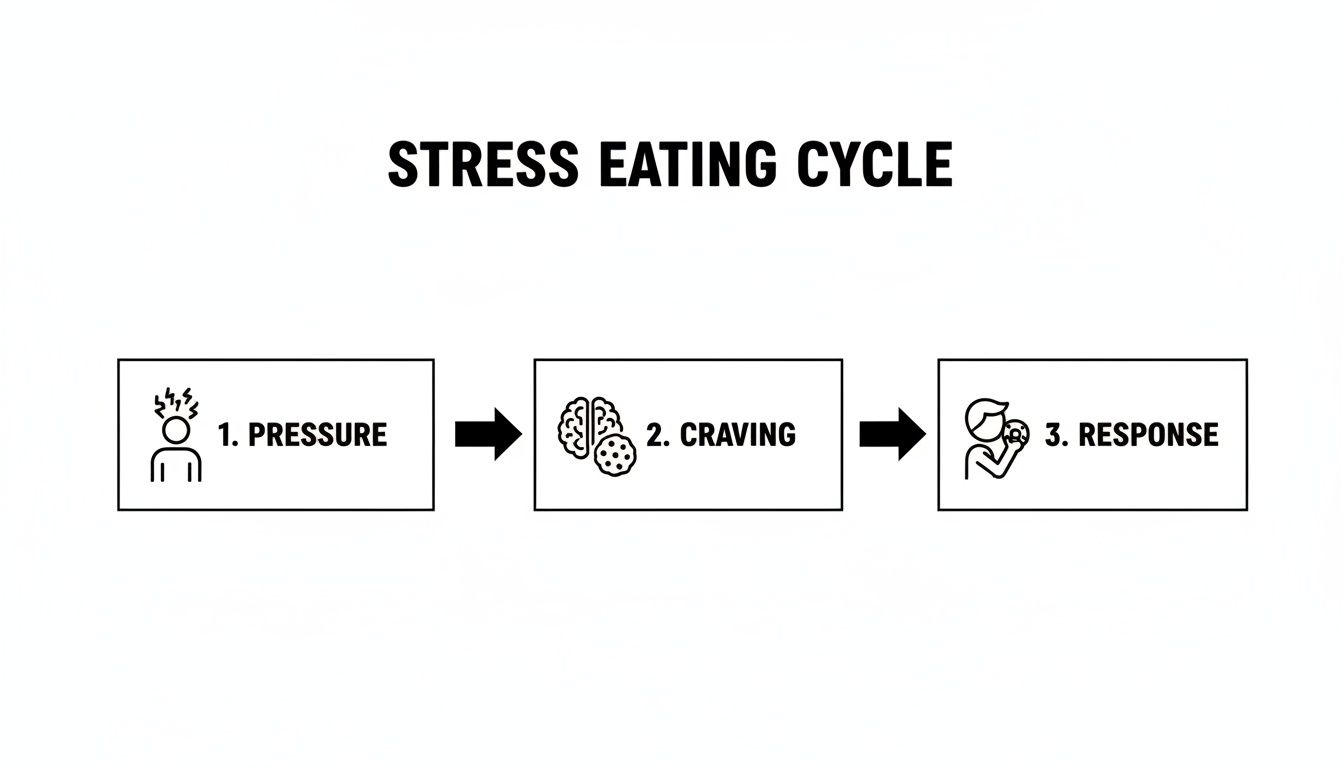
The real takeaway here? The craving is just a symptom. The pressure you’re feeling is the actual trigger.
The Stress-Eating Feedback Loop
This table breaks down the common cycle from trigger to response, helping you identify your own patterns. The first step to changing a habit is seeing it clearly.
| Stage | What Happens in Your Body | Common Workplace Example |
|---|---|---|
| Trigger | Your brain perceives a threat, releasing stress hormones like adrenaline and cortisol. | You get a last-minute, high-stakes project dropped on your desk. |
| Craving | Cortisol signals a need for quick energy, driving intense cravings for sugary, fatty foods. | Suddenly, you can’t stop thinking about the doughnuts in the breakroom. |
| Response | You eat the “comfort food,” which temporarily boosts feel-good brain chemicals like dopamine. | You eat a doughnut (or three), feeling a momentary sense of relief and calm. |
| Reinforcement | The brain links the food with stress relief, making you more likely to repeat the behavior next time. | The next time a stressful email lands, your brain’s first thought is, “Find a doughnut.” |
Once you see this cycle laid out, you can start to spot the moments where you have the power to intervene.
It’s Biology, Not a Lack of Willpower
This hormonal drive is exactly why “just say no” is terrible advice. You’re not just fighting a bad habit; you’re up against a powerful hormonal signal your brain thinks is crucial for survival.
To truly break this cycle, you need tools that work on a physiological level to calm that initial stress response. Anything that can bring down your cortisol levels is your best friend here. If you’re often battling hunger on top of stress, it’s worth exploring why you might always feel hungry, as the two are frequently connected.
One of the most direct ways to intervene is by influencing your own nervous system. When you learn how to interrupt the stress signal at its source, you stop the cortisol surge from ever taking over. That’s the moment you get to make a conscious choice instead of just reacting.
Understanding this science is your first real step toward freedom. It shifts the focus from self-blame to self-awareness. Once you can clearly see the triggers and the biological machine at work, you can finally start taking it apart, piece by piece.
Immediate Actions for When a Craving Strikes
When an intense craving hits, it can feel like a tidal wave—overwhelming and unstoppable. In that moment, your long-term goals seem to vanish. This isn’t about willpower; it’s about having an emergency toolkit ready to go at a moment’s notice.
The trick is to interrupt the stress-eating loop before it builds momentum. There’s a tiny window between the trigger (that stressful email) and the response (reaching for the snacks). Your goal is to wedge that window open with a practical action, creating a pause just long enough to choose a different path.
This is a widespread issue. Research in Appetite journal found that negative emotions are one of the strongest predictors of unhealthy eating and binge episodes. This confirms that when you feel stressed, the craving for sugary, fatty snacks intensifies, putting you on a fast track to unwanted weight gain.
Your 3-Minute Cortisol Reset
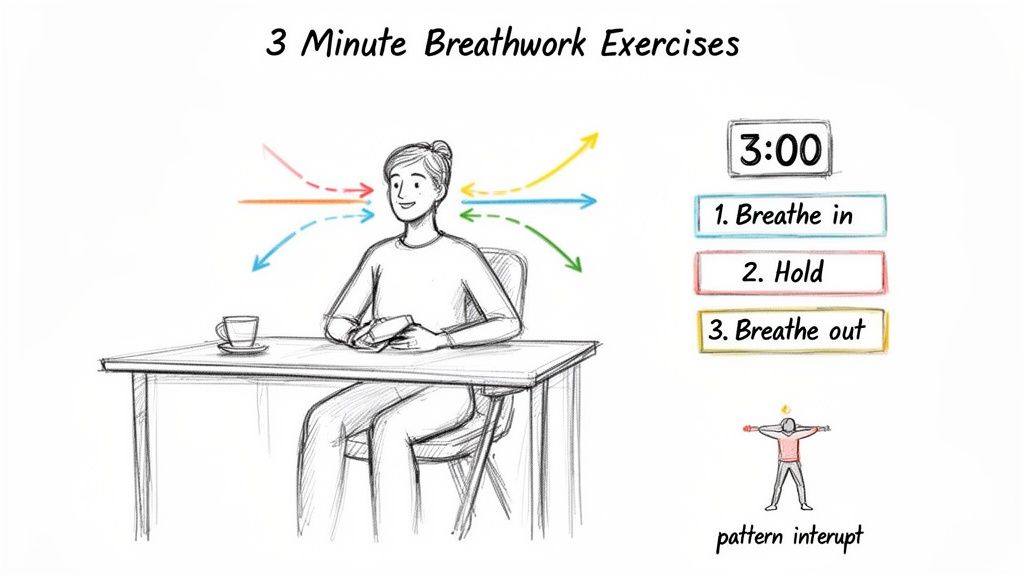
One of the quickest, most actionable ways to regain control is by changing your physiology. Stress eating is fueled by a surge in cortisol, but you can actively lower it with nothing more than your breath. This simple exercise can be done anywhere—at your desk, in your car, even in a bathroom stall—to activate your parasympathetic nervous system, your body’s “rest and digest” mode.
Actionable Step: The next time a craving hits, stop and do this for three minutes before you act on it.
- Inhale: Breathe in slowly through your nose for a count of four.
- Hold: Gently hold your breath at the top for a count of four.
- Exhale: Now, exhale slowly and completely through your mouth for a count of six.
- Pause: Pause for a count of two before you start the next breath.
Repeat this cycle for three minutes. That slightly longer exhale is a direct signal to your nervous system that the threat has passed and it’s safe to calm down.
The Power of the Pause: The goal isn’t to magically eliminate the craving. It’s to create enough space between the urge and your action to make a conscious choice. Breathwork is your most direct tool for creating that crucial space.
This simple act physically shifts your body out of a stressed state, often dissolving the urgency of the craving. Think of it as a physiological off-switch for the stress alarm that’s screaming for food.
Use a Pattern Interrupt Technique
Sometimes you need a mental jolt to break the spell of a craving, especially when you’re on autopilot marching toward the kitchen. A pattern interrupt is any action that forces your brain out of its habitual groove.
Actionable Step: Choose one of these to try this week. Write it on a sticky note and put it on your monitor or fridge.
- Change Your Environment: About to open the fridge? Instead, immediately walk outside for two minutes. The change in light, temperature, and scenery is often enough to break the trance.
- Engage Your Senses: Pop a super-sour candy, sniff a bottle of peppermint essential oil, or splash cold water on your face. Strong, non-food sensory input can override a food craving.
- Play a Mental Game: Stop what you’re doing and name five blue things you can see, four sounds you can hear, and three textures you can feel. This forces your brain from its emotional, craving-driven state to its logical, observational one.
Practical Example: You’ve just gotten a frustrating email, and you’re walking to the office snack pantry for chips.
Your Action: Stop. Turn around and walk to the nearest window. Consciously describe three things you see in detail (e.g., “a gray car with a bike rack,” “a tall tree with dark green leaves swaying”). This small act derails the “stress-snack” autopilot and gives you the moment you need to reassess. You’ll find many powerful mindfulness exercises for stress relief that integrate beautifully with these quick-hit techniques.
These immediate actions are your first line of defense. They are about winning the present moment, one craving at a time.
Building a Resilient Daily and Weekly Routine
While in-the-moment tactics are your first defense, real freedom from stress eating comes from building a new foundation. It’s about getting ahead of the problem. A consistent routine is what truly rewires your automatic response to stress, making pressure no longer a direct trigger for eating.
This isn’t about cramming more into your schedule. The key is to weave small, powerful practices into the life you already have.
Architecting Your Anti-Stress Week
Think of your week as a blueprint for resilience. Instead of just reacting to stress, you’re proactively creating moments of calm. A 2017 study in PLOS ONE found that even brief nature experiences, like a walk in a park, can significantly reduce stress, highlighting the power of planned interventions.
Actionable Step: This Sunday, schedule these activities into your calendar as if they were meetings.
- Mindful Mondays: Take five minutes in the morning to journal about potential stressors for the week. Example: “Big presentation on Friday. Action: Schedule a 10-minute breathwork session for Thursday evening to calm my nerves.”
- Trigger-Tracking Tuesdays: Use a note on your phone to log any time you feel the urge to stress eat. Jot down the time, situation, and emotion. Example: “3:15 PM, after tense team call, felt overwhelmed.” This isn’t about judgment; it’s about gathering intel.
- Workout Wednesdays: Schedule a 30-minute walk outside. Put it on your calendar. This physical activity can dramatically reduce anxiety and stress levels.
- Thoughtful Thursdays: Review your notes from Tuesday. Do you see a pattern? Example: “I notice my cravings always spike right after meetings with a specific colleague.” That insight is pure gold for creating a future plan.
- Freedom Fridays: Plan a non-food reward for the week. Example: Watch a movie you’ve saved, take a long bath, or block off an hour for a hobby. This helps your brain associate the end of a tough week with rewards other than food.
This structured approach is how you shift from being reactive to proactive.
Your Sample Daily Resilience Plan
A resilient week is built with consistent daily actions. A study published in Mindfulness found that mindfulness meditation training effectively reduces stress-eating tendencies and the intensity of food cravings. These small daily practices are a direct application of that powerful principle.
Actionable Step: Commit to trying this simple daily routine for one week.
Morning (7:00 AM) – The 10-Minute Proactive Calm Session
Before checking emails, dedicate ten minutes to a calming breathwork session. This sets a calm, centered tone for the entire day. You start with a full tank of resilience, making you less vulnerable to stressors later on.
Lunch Break (12:30 PM) – The 5-Minute Mindful Eating Exercise
Put your phone away for the first five minutes of your meal.
- Observe: Look at the colors and shapes on your plate.
- Smell: Inhale the aromas before your first bite.
- Savor: Chew each mouthful slowly, noticing the flavors.
- Notice: Pay attention to your body’s signals of fullness.
This reconnects you with your body’s natural hunger cues.
Afternoon (3:00 PM) – The 2-Minute Pattern Interrupt
Instead of reaching for a snack, stand up, stretch, and do one minute of deep breathing. This boosts oxygen to your brain and resets your focus without sugar.
By combining specific breathing patterns with focused intention, you can reprogram subconscious triggers. For anyone curious about the deeper science, our guide on how to rewire your brain is a great place to start.
How to Navigate a High-Pressure Work Environment
The modern workplace is a minefield for stress eating: catered lunches, birthday cakes, and constant deadlines. You need more than willpower; you need a game plan.
This is about preparation. The goal is to build a supportive ecosystem that makes the healthy choice the easy choice, even when you’re under pressure.
Fortify Your Workspace
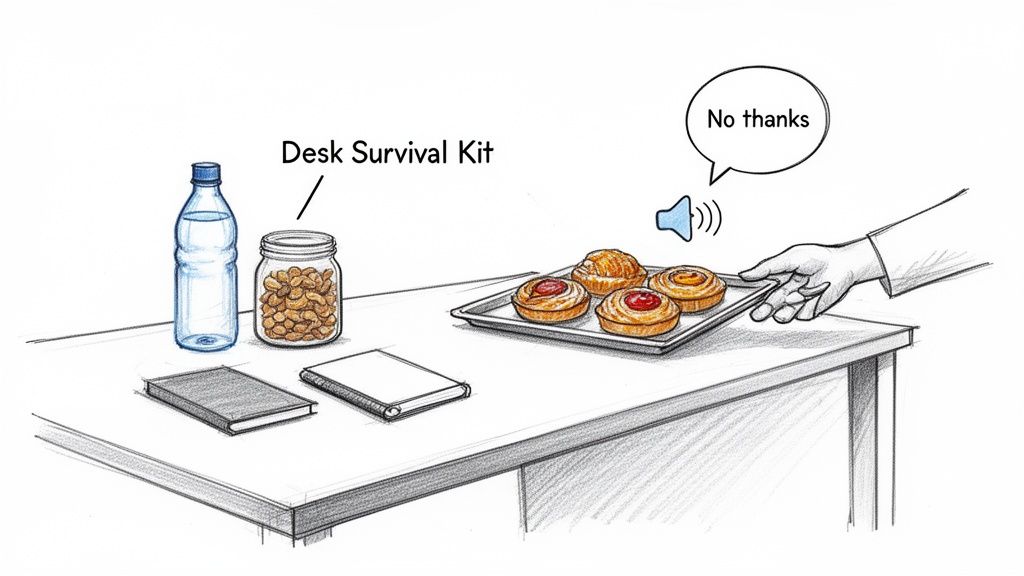
Your immediate environment has a huge influence on your actions. Curate your personal space to support your goals. A study in the International Journal of Environmental Research and Public Health confirmed that chronic job stress elevates cortisol, which cranks up appetite for comfort foods. Your kit is the perfect counter-attack.
Actionable Step: Build your “Desk Survival Kit” this week. Go shopping for these specific items.
Your Desk Survival Kit Checklist
- Nutrient-Dense Snacks: Pack almonds, walnuts, plain Greek yogurt, or baby carrots and hummus to stabilize blood sugar.
- Hydration Station: Keep a large, reusable water bottle on your desk. Often, thirst is mistaken for hunger.
- Sensory Tools: Have a small bottle of peppermint essential oil or a stress ball handy to interrupt a craving.
- Herbal Tea: A warm cup of chamomile or peppermint tea offers a comforting ritual to replace mindless snacking.
When these items are right there, you eliminate the friction that makes unhealthy choices easy.
The Lunch Break Reset
Your midday break is a powerful tool to decompress and prevent after-work binges. Use a small part of that time to actively calm your nervous system.
Actionable Step: This week, set a calendar reminder for a 10-minute “breathwork break” at lunchtime. Find a quiet spot—your car, an empty conference room—and run through a calming breathing practice. This is a physiological intervention. Research has confirmed that even short nature walks can significantly cut down on stress and anxiety; breathwork offers a similar escape at your desk.
By intentionally activating your parasympathetic nervous system midday, you are hitting the reset button on your body’s stress response. This proactive calm makes you far less likely to seek comfort in food later.
Navigating Social Food Situations
Food-related peer pressure is real. Learning to say no politely but firmly is a critical skill.
Actionable Step: Memorize one of these phrases so you’re ready for the next office birthday party.
- “No, thank you, I’m saving my appetite for later.”
- “That looks delicious, but I’ll pass for now.”
- “I appreciate the offer, but I’m all set.”
You don’t owe anyone an explanation. A simple, confident “no, thank you” is enough. For more tips on workplace pressure, see our guide on how to manage stress at work.
Building these small habits transforms your work environment from a source of temptation into a place where you feel in control.
Knowing When It’s Time to Ask for Help
These tools are powerful, but sometimes the fight against stress eating is too much to handle alone, and that’s okay. Reaching out for professional help isn’t failure—it’s a smart move toward real, lasting peace with food.
The problem arises when food becomes your only coping mechanism, when it feels uncontrollable, and when it’s causing you pain.
Is It Stress Eating or Something More?
It’s important to know the difference between a tough habit and a potential clinical issue. Binge Eating Disorder (BED), for instance, is a formal diagnosis involving regularly eating large amounts of food, feeling a loss of control, and experiencing significant distress afterward. A study in Current Psychiatry Reports confirmed that these patterns are often deeply intertwined with depression and anxiety.
Here are red flags that might mean it’s time to talk to a professional:
- You feel out of control: A recurring feeling that you can’t stop eating.
- You’re eating in secret: Shame causes you to hide your eating from others.
- The guilt is overwhelming: After eating, you’re flooded with self-hatred or depression.
- You’re eating past fullness: You consistently eat until you’re physically uncomfortable.
If this sounds familiar, please know that specialized, compassionate help is available.
Who to Turn To (and What They Do)
Figuring out who can help can feel challenging. Research, such as a major review in the Journal of Clinical Psychology, shows that therapies like Cognitive Behavioral Therapy (CBT) are incredibly effective for breaking these cycles.
Seeking professional help is about adding an expert to your team. It’s a proactive step to get the right tools for your specific situation.
Actionable Step: If you identified with the red flags above, take one of these actions this week:
- Search for a therapist specializing in eating disorders in your area.
- Look up a registered dietitian who focuses on intuitive eating.
- Ask your primary care doctor for a referral.
- Therapists or Psychologists: They help you work through the underlying anxiety, trauma, or stress that triggers the eating, often using proven methods like CBT.
- Registered Dietitians (RDs): A good RD will help you rebuild a healthy relationship with food and learn to trust your body’s hunger signals again.
- Certified Coaches: A coach specializing in emotional eating can provide accountability and help you put new coping skills into practice.
Your Questions About Stress Eating Answered
As you start putting these ideas into practice, you’re bound to have questions. This isn’t a straight line, and that’s okay. Here are answers to common concerns.
How Long Does It Take to Stop Stress Eating?
There’s no magic number. It depends on your history, triggers, and consistency. Some people feel a shift in cravings within a few weeks of consistent practice with tools like breathwork. The real win isn’t hitting an imaginary finish line; it’s making steady progress.
Actionable Step: Focus on one small victory today. Did you pause before grabbing a snack? Did you notice a trigger without acting on it? Acknowledge that win. Those moments are the real building blocks for lasting change.
What If I Slip Up and Have a Stress-Eating Episode?
First, breathe. A slip-up isn’t a failure; it’s information. Treat yourself with compassion, not guilt. Guilt feeds the shame-stress cycle, which often leads to more emotional eating.
Actionable Step: After a slip-up, grab a journal and answer these questions without judgment:
- What exactly was the trigger this time?
- What emotion was I feeling right before the urge took over?
- What’s one practical thing I could do differently if this situation happens again?
One episode doesn’t erase your hard work. Acknowledge what happened, learn from it, and get right back to your plan.
Can Breathwork Really Stop Food Cravings?
Yes, it absolutely can, due to pure physiology. Cravings are driven by cortisol, which shoves your body into fight-or-flight mode. Specific breathing techniques, especially those with a longer exhale, directly activate your parasympathetic nervous system (your body’s “rest and digest” switch).
Actionable Step: Test it yourself. The next time a craving hits, commit to just three minutes of the 4-4-6-2 breathing exercise mentioned earlier. Notice the shift in your physical state and the intensity of the craving afterward. You’re not fighting the craving; you’re dissolving its biological root.
Are There Specific Foods That Help Combat Stress Eating?
While managing stress is the main goal, your diet can be a powerful ally. Certain foods help stabilize your mood and regulate your nervous system. A review in Nutrients highlighted how diets rich in magnesium and omega-3s are associated with reduced anxiety, making you more resilient to stress in the first place.
Actionable Step: When you go grocery shopping this week, add three of these items to your list.
- Magnesium-Rich Foods: Leafy greens (like spinach), almonds, and avocados have a calming effect on the nervous system.
- Omega-3 Fatty Acids: Salmon, walnuts, and chia seeds support brain health and mood regulation.
- Complex Carbohydrates: Oats, quinoa, and sweet potatoes provide a steady release of energy, preventing blood sugar crashes that trigger cravings.
Think of food as your foundation. A stronger foundation makes it easier to use your mental and emotional tools when stress shows up.
At 9D Breathwork, we believe in getting to the core of what drives behavior. Our immersive breathwork journeys are designed to help you release stored stress and rewire the subconscious patterns that keep you stuck. Ready to breathe your way to freedom? Explore our transformative experiences at https://9dbreathwork.com.