To start releasing tension in your body, you need a few core techniques: mindful breathing, gentle stretching, and progressive muscle relaxation. These aren’t just feel-good exercises; they are active interventions that send a powerful signal of safety to your nervous system. This is what allows those chronically tight muscles in your neck, shoulders, and jaw to finally let go.
Why Your Body Holds Onto Stress
That nagging tightness in your shoulders or the jaw you can’t seem to unclench isn’t just in your head—it’s a very real, physical reaction to the pressures of modern life. All the daily stressors from work, finances, and relationships translate directly into muscle tension.
It all comes down to your body’s “fight-or-flight” response. When you feel stressed, your brain releases hormones like cortisol, which instantly cause your muscles to contract. This is a survival mechanism, designed to prepare you to face a physical threat.
The problem is, our stressors today are rarely short-term or physical. They’re often chronic and psychological, but your body doesn’t know the difference between an angry client and a saber-toothed tiger. It stays in that prolonged state of readiness, and your muscles never get the signal to stand down. Releasing this isn’t about simply “relaxing”—it’s about understanding that this stored tension is a physiological state that requires specific, active interventions.
The Real-World Impact of Stored Tension
Think about how this actually plays out. You spend hours hunched over a laptop, and by the end of the day, you have stubborn knots in your neck and upper back. You’re worrying about a looming deadline, and a tension headache starts creeping up from the base of your skull. This unaddressed stress literally becomes a physical burden you carry around.
This guide is your practical toolkit for actively releasing that tension. Once you understand the root cause, you can see why the following techniques are so crucial for finding lasting relief. They work by directly interrupting the stress cycle and teaching your body it’s finally safe to relax.
When we fail to actively release tension, we allow stress to become physically stored in our bodies. This accumulation doesn’t just cause discomfort; it fundamentally alters our physiology over time, leading to chronic pain and other health complications.
This constant state of alert has consequences far beyond simple discomfort. The economic burden is staggering: job stress costs the United States over $300 billion yearly in absenteeism, turnover, and lost productivity. On top of that, work-related stress generates an estimated $190 billion in annual healthcare costs, much of which goes to treating physical conditions like hypertension and chronic headaches. You can dig into more of these stress statistics from SingleCare.
The mind-body connection couldn’t be clearer. Learning how to release physical tension is critical for both your immediate well-being and your long-term health. A key first step is managing the very stress hormones that trigger this physical response in the first place, which you can learn more about in our guide on how to reduce cortisol levels naturally.
Using Your Breath to Dissolve Tension
Think of your breath as your body’s built-in reset button. It’s the most direct and immediate tool you have for dialing down physical tension. This isn’t just about taking a random deep breath when you feel stressed; it’s about using intentional, controlled breathing to communicate directly with your nervous system.
When you deliberately slow your breathing, you’re sending a powerful signal that you’re safe, which interrupts the frantic stress messages bouncing between your brain and your muscles. A fascinating 2017 study from Stanford University pinpointed the exact neurons that link breathing to states like relaxation and panic. It turns out, we can essentially take manual control of these neurons just by changing the pace of our breath. So, when you’re told to “just breathe,” there’s real biology at work.
Stress from different areas of life—work, home, finances—often shows up as predictable patterns of tension in the body. You’ve probably felt it yourself: the tight neck after a long day at the computer or a clenched jaw when you’re worried about bills.
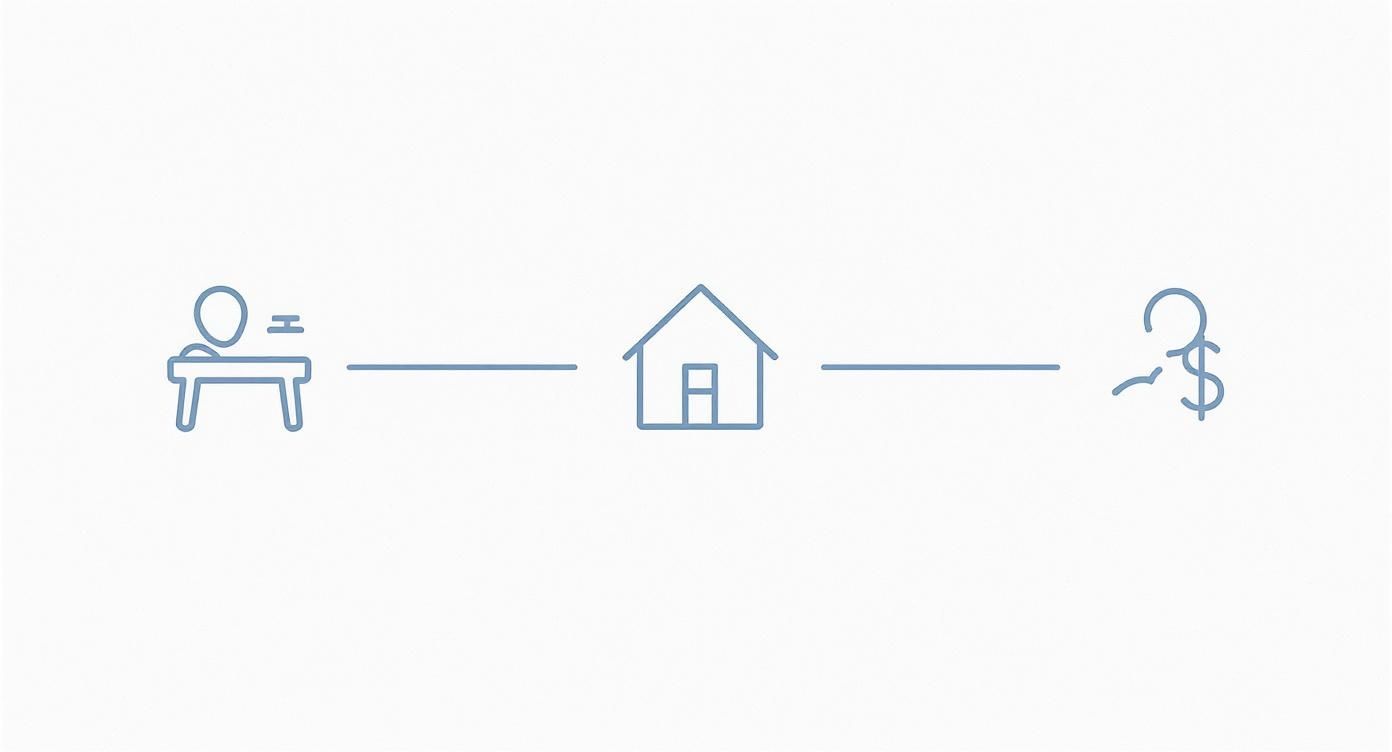
This connection between mental stress and physical tightness, especially in the neck, jaw, and shoulders, is incredibly common. The good news is that a few simple breathing techniques can offer immediate relief.
The 4-7-8 Breathing Technique
I often recommend the 4-7-8 method to clients who need a quick, powerful way to calm down before a high-stakes moment, like a big presentation or a tough conversation. Think of it as a natural tranquilizer for your nervous system. The specific rhythm is what makes it so effective.
Actionable Example: Right before your next team meeting, take two minutes at your desk. Sit upright, place your feet on the floor, and follow these steps:
- First, let all the air out of your lungs with a whooshing sound.
- Close your mouth and inhale quietly through your nose for a mental count of four.
- Now, hold that breath for a count of seven. This part is crucial.
- Finally, exhale completely through your mouth, making that same whoosh sound, for a count of eight.
Just repeating this cycle three or four times is often enough to feel a significant drop in your body’s tension. It’s not just a feeling; research shows that slow breathing techniques like this directly lower your heart rate and blood pressure—two of the most common physical signs of stress.
Mastering Diaphragmatic Breathing
Also known as “belly breathing,” this is a foundational practice for managing tension. When we’re stressed, our breathing tends to become shallow and high up in the chest, which can ironically make us feel even more anxious. Diaphragmatic breathing corrects this by encouraging a full, deep breath that engages your entire diaphragm.
To get the hang of it, find a comfortable position, either sitting or lying down. Place one hand on your chest and the other on your stomach.
- Breathe in slowly through your nose, focusing on letting your stomach expand like a balloon. The hand on your belly should rise, while the one on your chest stays fairly still.
- Exhale slowly through pursed lips, as if you’re blowing out a candle. You should feel your stomach gently fall.
A 2017 study published in Frontiers in Psychology found that practicing diaphragmatic breathing for just eight weeks led to significantly lower cortisol (the stress hormone) levels and better focus.
Actionable Example: Set a daily calendar reminder labeled “5-Minute Reset.” When it goes off, close your laptop and practice diaphragmatic breathing for the duration of one song (about 3-5 minutes). This small habit can work wonders for releasing pent-up tension in your shoulders and core. By making this a regular habit, you’re retraining your body’s default response to stress.
For a quick breakdown, here’s a look at how these techniques compare for on-the-spot relief.
Breathing Techniques for Instant Tension Relief
| Technique | How It Works | Best For | Time Commitment |
|---|---|---|---|
| 4-7-8 Breathing | Uses a specific ratio of inhale-hold-exhale to quickly slow the heart rate and calm the nervous system. | Acute stress, pre-meeting nerves, or trouble falling asleep. | 1-2 minutes (3-4 cycles) |
| Diaphragmatic (Belly) Breathing | Promotes full oxygen exchange by engaging the diaphragm, reversing shallow stress breathing patterns. | Releasing built-up daily tension, improving focus, building long-term stress resilience. | 5-10 minutes daily |
These simple exercises are a great starting point. If you’re interested in exploring how breath can be used in more profound ways, it can be helpful to understand the differences between meditation and guided breathing to find an approach that truly resonates with you.
Physical Techniques to Unwind Muscle Knots
While your breath is an incredible tool for calming your nervous system, sometimes you need to get your hands dirty—literally—to work out those stubborn knots that have set up camp in your muscles. These physical methods go right to the source, offering that immediate, satisfying relief you can actually feel.
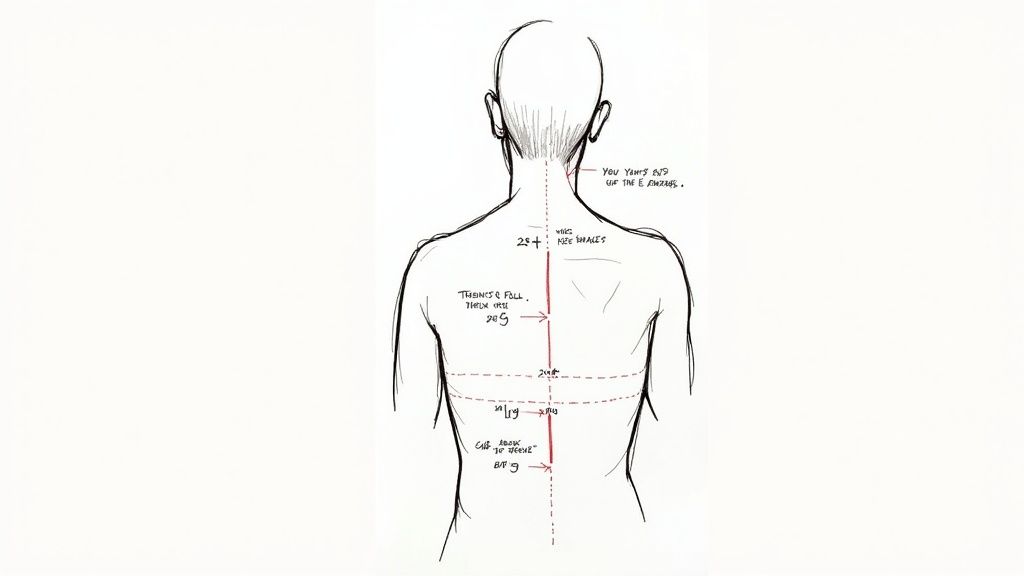
Think of these techniques as a way to hit the reset button on chronic muscle contraction. By manually addressing these tight spots, you boost blood flow, send soothing signals to your brain, and gently remind your muscles what it feels like to truly let go.
Try Progressive Muscle Relaxation
Progressive Muscle Relaxation (PMR) is a fantastic mind-body technique where you intentionally tense a muscle group and then release it. It’s a surprisingly powerful way to tune into where you’re holding stress and consciously teach your body the difference between being wound up and completely relaxed. In fact, a 2020 meta-analysis in the Journal of Affective Disorders found PMR to be a seriously effective, drug-free way to manage anxiety and its physical side effects.
Actionable Example: Do this tonight in bed to help unwind before sleep.
- Feet and Calves: Start from the ground up. Curl your toes as tightly as you can and tense your calves. Hold that for about five seconds, really noticing the strain. Then, release everything and feel the wave of warmth and looseness that washes over them.
- Thighs and Glutes: Now, squeeze your thigh and glute muscles together firmly. Hold that tension for five seconds, then let it all melt away.
- Shoulders and Neck: This is a big one for most of us. Shrug your shoulders way up to your ears, creating as much tension as possible. Hold it… then release with a sigh and let them drop down, heavy and relaxed.
- Face and Jaw: Clench everything in your face—squint your eyes, furrow your brow, and tighten your jaw. After five seconds, let it all go slack. You might be surprised how much tension you were holding there.
This kind of focused practice pairs beautifully with the concepts in our guide on Polyvagal Theory exercises, which also explore the deep connection between our physical state and our sense of safety.
Simple Stretches for High-Tension Zones
Movement is medicine, especially for muscles that have been stuck in one position for too long. You don’t need an hour-long yoga session; just a few targeted stretches can make a world of difference.
- Neck Release: Gently tilt your right ear toward your right shoulder until you feel a nice stretch along the left side of your neck. Breathe into it for 20-30 seconds. Slowly come back to center and repeat on the other side.
- Doorway Chest Stretch: This one feels amazing if you’ve been hunched over a keyboard. Stand in a doorway, place your forearms on the frame with your elbows just below shoulder height, and take a small step forward. You’ll feel a wonderful opening across your chest and the front of your shoulders. Hold for 30 seconds.
It doesn’t take much to see results. A study in the Journal of Physical Therapy Science showed that office workers who did regular neck and shoulder stretches for just four weeks had significantly less pain and better mobility.
Use Self-Massage for Trigger Points
For those deep, nagging knots that just won’t quit, self-massage is your best friend. This is all about applying direct pressure to trigger points—those tiny, irritable spots in a muscle that can cause a surprising amount of grief—and convincing them to release.
Actionable Example: Keep a tennis ball or lacrosse ball at your desk. When you feel tension building between your shoulder blades, stand up and place the ball between your back and a wall. Gently roll around until you find a tender spot, then lean into it. Hold steady pressure for 30-60 seconds while taking slow, deep breaths. You can do the same for tight glutes by sitting on the ball on the floor.
If you find you’re dealing with more persistent stiffness, it might be worth learning what myofascial release therapy is to understand how to tackle the connective tissue around the muscles for even deeper relief.
Reset Your Environment to Prevent Tension
It’s rarely one big thing that causes chronic tension. More often, it’s the slow, steady drip of tiny pressures from our daily lives and our surroundings. The good news? You can fight back with small, powerful tweaks to your workspace and routine, stopping tension before it even starts.
This is especially critical in today’s work culture. We’re seeing younger generations, in particular, dealing with a heavy burden of stress. A global survey from Deloitte found that a staggering 40% of Gen Zs and 34% of millennials feel stressed or anxious all or most of the time. The research also revealed that an unsupportive workplace can actually triple the risk of developing new depressive symptoms, drawing a clear line between tension at work and our mental health. You can read more about these findings on workplace mental health.
Optimize Your Ergonomic Setup
Think of your desk setup as either a constant source of low-grade physical stress or a solid foundation for comfort and focus. Getting it right is one of the most proactive things you can do to release tension.
- Monitor Height: Your screen should be positioned so the top of it is at or just slightly below your eye level. Actionable Tip: Use a stack of books or a monitor stand to elevate your screen today. This one change stops you from craning your neck down all day.
- Chair Support: Your feet should be flat on the floor with your lower back properly supported. If your chair is lacking in the lumbar department, don’t underestimate the power of a rolled-up towel or a small cushion. It can make a world of difference.
- Keyboard and Mouse: Keep them close. You shouldn’t have to reach for them. Your elbows should stay comfortably tucked by your sides, which prevents that all-too-common tension that builds up in the upper back and shoulders.
The Power of the Posture Reset
Even with a flawless ergonomic setup, just sitting for hours on end is going to make your muscles tired and tight. This is where a quick “posture reset” comes in. It’s a simple move that can realign your spine and provide instant relief.
Give this a try right now:
- Sit up tall in your chair.
- Pull your shoulder blades down and back, imagining you’re trying to tuck them into your back pockets.
- Gently tuck your chin in to lengthen the back of your neck.
- Hold it for 10-15 seconds while taking a few deep breaths.
Actionable Example: Set a recurring timer on your phone for every hour labeled “Posture Check.” When it goes off, perform this reset. This simple prompt helps turn it from a “should do” into a genuine habit, breaking the slouching cycle and stopping tension from building up.
Beyond altering your physical surroundings, some find that integrating objects of focus can provide a tangible source of peace. For those interested in this approach, learning about calming crystals for anxiety might offer another layer of environmental support.
Creating a less stressful environment isn’t just about ergonomics; it’s also about managing sensory input. Try swapping harsh fluorescent lights for softer, warmer lighting. Take just five minutes to declutter your desk. A clear space really does help promote a clearer, less tense mind.
Strengthening Your Mind-Body Connection
Physical tension is rarely just physical. It’s almost always tangled up with our mental and emotional state. If you want lasting relief, you have to look at both sides of the coin. Think of it this way: stress creates a signal, and your body stores it as tension. By strengthening your mind-body connection, you learn to intercept that signal before it takes root.
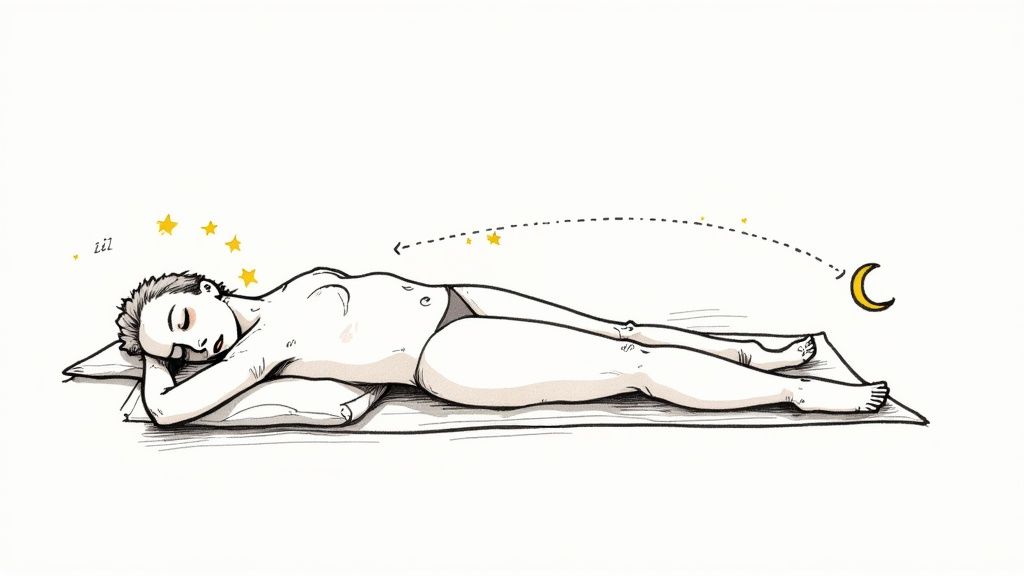
This whole process really starts with awareness. It’s funny—most of us don’t even notice how tightly we’re clenching our jaw or hiking our shoulders up to our ears until a headache or backache screams for attention. Mindfulness practices are a game-changer here. They train you to catch those subtle signals early, so you can let go of that tension before it settles in and becomes a chronic issue.
Becoming Aware Through a Body Scan
One of the most powerful yet simple tools for this is a body scan meditation. It’s essentially a guided tour of your own body, where you systematically bring your attention to different areas to check for stored tension. You’re not trying to fix anything, just notice.
Actionable Example: Download a free guided body scan meditation (many are available on YouTube or apps like Insight Timer) and listen to a 10-minute session during your lunch break.
- Get comfortable. Lie on your back or sit in a chair with your feet on the floor. If it feels right, close your eyes.
- Start with your feet. Bring all your focus to your toes. What do you feel? Tingling, warmth, tightness? Just observe.
- Slowly move upward. Guide your attention up through your body—ankles, calves, knees, thighs. Spend a few mindful breaths on each part, simply noticing what’s there.
- Scan your core and back. Now, check in with your abdomen, lower back, and chest. Are they tight and braced, or soft and relaxed?
- Hit the usual suspects. Finally, move your awareness to your shoulders, neck, jaw, and the tiny muscles around your eyes. This is where most of us hoard stress. Without forcing it, gently invite these areas to soften.
Research from the Journal of Psychosomatic Research found that participants in an eight-week mindfulness program that included body scans reported a significant drop in perceived stress. It’s a clear example of how training your mind directly impacts your physical well-being.
The Critical Role of Restorative Sleep
If your body is a house, sleep is the overnight repair crew. It’s when your muscles get rebuilt, your tissues get repaired, and your brain processes the day’s stressors. Skimp on quality sleep, and your muscles never get a chance to fully recover. The result? Persistent aches and stubborn tension.
Sleep deprivation is a massive, often overlooked, contributor to physical tension. In fact, a study in the International Journal of Behavioral Medicine found a direct link between poor sleep and increased muscle pain the following day. This kicks off a vicious cycle: tension makes it harder to sleep, and the lack of sleep just makes the tension even worse.
Creating a Better Sleep Routine
Improving your sleep hygiene is a non-negotiable step if you truly want to learn how to release tension in your body. It’s not just about logging more hours in bed; it’s about making those hours count.
Actionable Example: Choose one of these actions to implement this week.
- Create a screen-free wind-down. For at least 30-60 minutes before you want to be asleep, put your phone and tablet away. The blue light from screens messes with your body’s production of melatonin, the sleep hormone. Action: Leave your phone charger in the kitchen overnight instead of by your bed. Grab a real book or listen to some calming music instead.
- Stick to a schedule. Try to go to bed and wake up around the same time every day—yes, even on weekends. This simple habit helps regulate your body’s internal clock, making it easier to fall asleep and wake up feeling rested.
- Optimize your sleep space. Your bedroom should be a sanctuary. Keep it cool, dark, and quiet. Even tiny amounts of light from a charger or a clock can disrupt your sleep quality.
Making these small adjustments can have a massive impact on your body’s ability to repair itself overnight, leaving you feeling more resilient and less prone to tension.
When Self-Help Isn’t Cutting It
The methods we’ve covered are fantastic tools for your day-to-day toolkit, empowering you to manage stress and learn how to release tension in your body. But let’s be real—sometimes, no matter what you try, the tension sticks around.
If that’s where you are, it’s not a sign of failure. Think of it as your body sending up a flare, signaling that there might be something deeper going on that self-care alone can’t quite reach. Listening to that signal is one of the smartest things you can do for your long-term health.
So, when is it time to call in a professional? If you’re dealing with pain that just won’t quit after a few weeks, if it’s so severe it’s getting in the way of your life, or if you’re experiencing weird sensations like numbness or tingling, that’s your cue. Those symptoms could point to an underlying issue that really needs a proper diagnosis.
Finding the Right Professional for You
Figuring out who to see can feel a bit overwhelming, but it gets a lot easier when you know what each specialist brings to the table. They all have a unique lens for looking at tension and helping you get back in balance.
- Physical Therapists: These are your go-to experts if your pain seems tied to an old injury, your posture, or just the way you move. They’re like detectives for the physical body, figuring out the root cause and giving you a custom plan of exercises and stretches to get you moving freely again.
- Massage Therapists: Got knots that feel like they’ve been there for years? A licensed massage therapist is skilled at manually releasing that kind of chronic tightness in your muscles and connective tissues. They know exactly how to improve circulation and get to that deep-seated tension, which can be a game-changer.
- Mental Health Counselors: If you notice your physical tension skyrockets when you’re stressed, anxious, or dealing with past trauma, a counselor can be incredibly helpful. They give you the tools to handle the mental triggers, which helps break that vicious cycle where your mind creates pain in your body.
Reaching out for help is a sign of strength, not weakness. It’s about recognizing you deserve the best care possible and consulting an expert who can see the whole picture and offer support that’s tailored to you.
This isn’t just a personal battle; it’s a massive global issue. The worldwide mental health crisis, which often shows up as physical and emotional tension, affects over 1 billion people living with mental health disorders. Yet, the median government spending on mental health is a mere 2% of total health budgets, which is a huge gap. You can discover more about this global challenge from the WHO.
Choosing to see a professional is a powerful step. You’re not just getting help; you’re making a proactive, healthy decision for your future.
Ready to take your journey of releasing tension to a much deeper level? 9D Breathwork offers a powerful experience, blending ancient breathing wisdom with modern science to help you get to the root of your stress patterns. It’s all about rewiring your response to stress from the inside out.