When it comes to getting your cortisol levels back in check, the most powerful levers you can pull are often the simplest. We’re talking about fundamental lifestyle shifts: prioritizing deep, restorative sleep, cleaning up your diet with whole foods, and getting your body moving consistently and moderately. These aren’t just wellness buzzwords; they are the core pillars that directly regulate your body’s stress response system, keeping this powerful hormone from running the show.
Your Guide to Naturally Lowering Cortisol
Do you ever feel perpetually wired but tired? Like you’re running on fumes even after what should have been a full night’s sleep? That constant feeling of being “on” could be a sign that your cortisol levels are chronically high.
While cortisol is essential for our survival—it’s the hormone that fuels our “fight or flight” response—the relentless pace of modern life can get that system stuck in the “on” position. The result? That nagging fatigue, stubborn weight gain (especially around the middle), and unpredictable mood swings.
This guide is built to give you a clear, no-nonsense roadmap to regaining balance. We’ll focus on proven, science-backed strategies you can start using today to gently guide your body’s stress response back to a healthier state.
What Are We Actually Trying to Accomplish?
Let’s be clear: the goal isn’t to get rid of cortisol. You need it. It helps manage everything from metabolism and blood sugar to inflammation. What we’re aiming for is to restore its natural rhythm, preventing the constant spikes that wreak havoc on your health and well-being.
This isn’t about finding a magic bullet. It’s about making deliberate, sustainable shifts that put you back in control of your own health.
By getting to the root causes of elevated cortisol, you’re not just treating symptoms—you’re building a more resilient foundation. This makes you better equipped to handle life’s stressors when they inevitably pop up. It’s about creating a system that works for you, not against you.
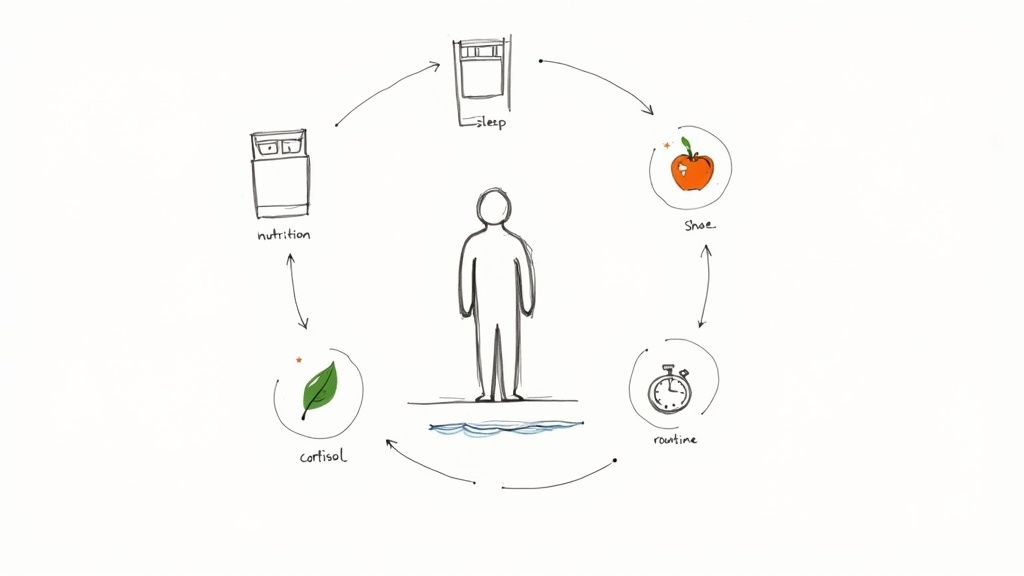
To give you a bird’s-eye view, here’s a quick summary of the main strategies we’ll be diving into. Think of these as the foundational pillars for rebalancing your system.
Key Pillars of Natural Cortisol Reduction
| Strategy | Primary Impact | Simple First Step |
|---|---|---|
| Restorative Sleep | Resets the HPA axis (your stress response system) and allows the body to repair. | Create a “wind-down” hour before bed with no screens. Tonight, plug your phone in across the room and pick up a book instead. |
| Strategic Nutrition | Stabilizes blood sugar and reduces inflammation, two major triggers for cortisol release. | Swap your usual afternoon snack for an apple with a spoonful of almond butter. This balances your blood sugar. |
| Mindful Movement | Calms the nervous system and metabolizes excess stress hormones. | Take a 10-minute walk outside during your lunch break. Set a timer on your phone and just go. |
| Mental Reset Tools | Activates the parasympathetic “rest and digest” nervous system to counteract stress in real-time. | When you feel overwhelmed, practice 2 minutes of slow, deep belly breathing. Try it right now: inhale for 4, hold for 4, exhale for 4. |
By weaving these practices into your life, you can effectively and naturally lower cortisol, paving the way for more energy, better moods, and a profound sense of calm. Let’s start with the two areas that will give you the biggest bang for your buck: sleep and movement.
Master Your Sleep and Movement for Stress Resilience
When it comes to managing cortisol, your body’s physical state is just as important as your mental one. Two of the most powerful levers you can pull are sleep and movement. Get these two fundamentals right, and you’re building a rock-solid foundation that makes everything else so much easier.
Think of sleep as your body’s nightly reset button. While you’re sleeping, your brain and body are hard at work performing critical maintenance, including recalibrating the very hormonal systems that control cortisol. When you cut that process short or the quality is poor, it’s no surprise that your cortisol levels can be out of whack the next day.
And it’s not just about the hours you log in bed. True, restorative rest is all about quality. A single night of bad sleep can throw your cortisol rhythm off, which is why creating a dedicated sleep sanctuary is non-negotiable if you’re serious about this.
Create Your Personal Sleep Sanctuary
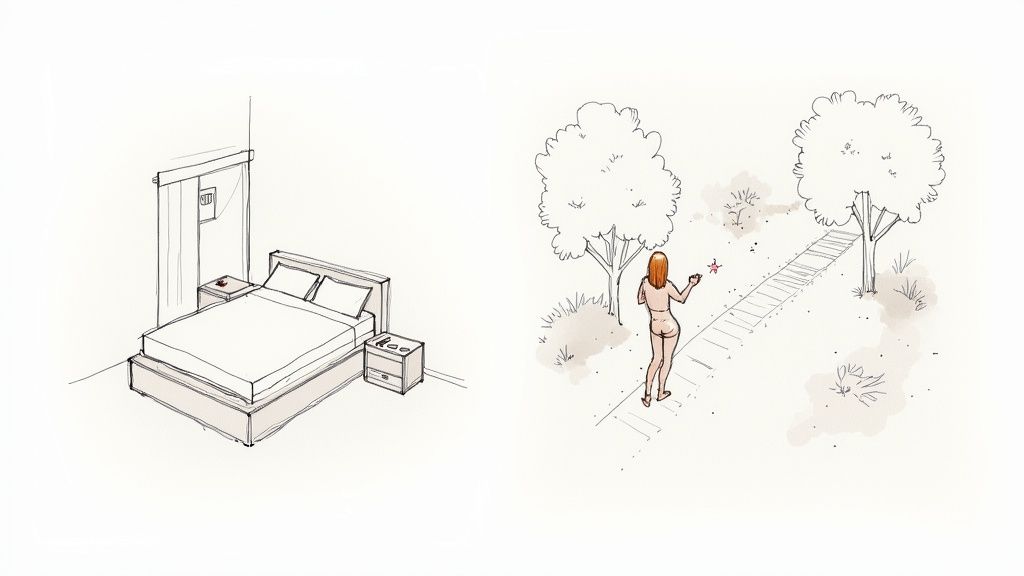
Your bedroom needs to be a clear signal to your brain that it’s time to power down. This is about optimizing your environment for deep, uninterrupted rest. You can start with these simple, high-impact changes tonight.
- Embrace True Darkness: Even tiny amounts of light can disrupt melatonin production. Actionable Step: Use blackout curtains or an eye mask. Put a piece of electrical tape over the glowing lights on your electronics before you go to sleep tonight.
- Keep It Cool: Your body temperature naturally needs to drop to initiate sleep. Actionable Step: Set your thermostat to 60-67°F (15-19°C). If you don’t have AC, open a window or use a fan to create a cooler environment.
- Implement a “Digital Sunset”: The blue light from our phones and TVs suppresses melatonin. Actionable Step: Set a recurring alarm for 60-90 minutes before your desired bedtime. When it goes off, all screens go off. Plug your phone in to charge in another room so you’re not tempted.
That last point is a game-changer. Instead of scrolling, use that last hour to read a physical book, listen to some calming music, or do a few gentle stretches. This “wind-down” routine is a powerful cue to your brain that the day is over.
The Exercise Paradox: Finding Your Cortisol Sweet Spot
Movement is another huge piece of the puzzle, but it’s a delicate balance. On one hand, regular physical activity is one of the best natural ways to lower cortisol. But on the other, the type and intensity really matter.
Moderate activities like a brisk walk or a bike ride can do wonders for metabolizing cortisol from chronic stress. The paradox is that pushing your body too hard with intense, grueling workouts can have the opposite effect and actually spike your cortisol levels. The goal is to find a routine that energizes you without just adding more stress to an already overloaded system. For a deeper dive into how exercise and sleep work together, check out these insights on ways to lower cortisol on Healthline.
This is why you need to think about the “dose” of your exercise. If you’re already feeling fried, a high-intensity interval training (HIIT) class might just be pouring gasoline on the fire.
The goal of movement for cortisol management isn’t to punish your body; it’s to calm your nervous system. You should finish your workout feeling refreshed and clear-headed, not completely drained and exhausted.
So, what does this look like in the real world? It means picking activities that gently burn off stress hormones and, more importantly, activate your parasympathetic “rest and digest” nervous system.
Actionable, Cortisol-Lowering Activities
- Brisk Walking: Put on your shoes and walk for 30-40 minutes today. If you can, choose a route through a park or a quiet neighborhood.
- Restorative Yoga: Search on YouTube for a “beginner Yin yoga” or “Hatha yoga for stress relief” video and follow along for 20 minutes.
- Cycling or Swimming: Schedule two 30-minute sessions this week. These are fantastic forms of moderate cardio that are also easy on your joints.
- Light Strength Training: Focus on controlled movements with lighter weights. The goal is building resilience, not pushing to failure. Try a simple circuit of bodyweight squats, lunges, and planks.
Pairing these activities with conscious breathing can seriously amplify their benefits. Simple breath control can shift you out of a stressed state in minutes. If you need some specific guidance, explore our guide on breathing exercises to lower your heart rate.
Ultimately, mastering sleep and movement comes down to listening to your body. Pay close attention to how you feel after a certain workout or a particular night of sleep. By making these small, consistent adjustments, you build a powerful physical buffer against daily stress, giving yourself the resilience you need to thrive.
How Your Diet Can Tame Your Stress Hormones

The food on your plate has a direct, powerful conversation with your hormones. What you eat can either add to your body’s stress load, triggering cortisol spikes, or it can be your greatest ally in building hormonal resilience.
And let’s be clear: this isn’t about restrictive, complicated dieting. It’s about strategically adding specific, nourishing whole foods that give your body the tools it needs to handle stress.
Think of it this way: when you’re stressed, your body burns through certain nutrients much faster. You’re in overdrive. By consciously replenishing those key vitamins and minerals, you’re providing the raw materials to calm the storm and re-establish balance.
Fueling Calm with Cortisol-Conscious Nutrients
Some nutrients are absolute superstars when it comes to soothing your nervous system and managing cortisol. Two of the most impactful are magnesium and omega-3 fatty acids. These aren’t just abstract concepts; they are real tools you can put on your grocery list today.
Magnesium is often called the “calming mineral,” and for good reason. It plays a critical role in relaxing the nervous system and is essential for quality sleep—a non-negotiable for cortisol regulation. The catch? When you’re stressed, your body actually dumps magnesium, which can create a vicious cycle where low magnesium leads to even higher stress.
Similarly, omega-3s are potent anti-inflammatory agents. Chronic stress fuels inflammation throughout the body, and omega-3s work to counteract this, helping to soothe the entire system and directly lower cortisol production.
Actionable Ways to Boost Your Intake
- Magnesium Powerhouses: For your next meal, add a side of steamed spinach. For a snack, grab a small handful of almonds or pumpkin seeds. For a treat, choose dark chocolate with at least 70% cacao.
- Omega-3 Champions: Add canned salmon or mackerel to your grocery list for easy lunches this week. For a quick boost, sprinkle a tablespoon of ground flaxseeds or chia seeds onto your morning oatmeal or yogurt.
These small additions might seem simple, but they create a powerful cumulative effect over time.
Stabilize Your Blood Sugar to Stabilize Your Mood
One of the fastest ways to send your cortisol on a wild ride is with a blood sugar rollercoaster. When you eat highly processed foods, sugary snacks, or refined carbs, your blood sugar spikes hard and fast. Your body sees this spike as a threat and releases cortisol to help manage it.
This inevitably leads to the dreaded “crash” an hour or two later, leaving you tired, irritable, and craving more sugar. That’s the cycle starting all over again, and it’s incredibly taxing on your adrenal glands.
The key to getting off this rollercoaster is to build meals that promote a gentle, stable release of energy. Every time you eat, you have an opportunity to either spike your cortisol or keep it calm and steady.
Dietary choices are foundational for managing cortisol naturally, as certain nutrients directly influence your hormonal balance. For instance, magnesium-rich foods like leafy greens and avocados are linked to better sleep, a critical factor in lowering cortisol. On the flip side, diets high in refined sugars can trigger blood sugar spikes and subsequent cortisol release. By focusing on whole, nutrient-dense foods, you’re using a well-supported strategy to keep your stress hormones in check. You can find more details on how diet impacts cortisol on OSF Healthcare.
The solution is surprisingly simple: pair your carbohydrates with protein, healthy fats, and fiber. These components slow down how quickly sugar enters your bloodstream, preventing those dramatic spikes and crashes.
Practical Examples of Blood Sugar Balancing
- Instead of plain toast for breakfast, have a slice of whole-grain toast with mashed avocado and a hard-boiled egg.
- Instead of a sugary granola bar for a snack, pack an apple with a tablespoon of almond butter.
- Instead of a huge bowl of pasta with just tomato sauce for dinner, reduce the pasta portion and add grilled chicken and a side of roasted broccoli with olive oil.
This simple shift in how you build your plate is a total game-changer for maintaining stable energy and mood all day long.
Cortisol-Balancing Foods vs. Cortisol-Spiking Foods
To make this even easier to put into practice, here’s a quick-glance table to help you build your next grocery list. Think of it as your cheat sheet for making cortisol-conscious choices at the store.
| Foods to Emphasize | Why It Helps | Foods to Limit | Why It Hurts |
|---|---|---|---|
| Leafy Greens (Spinach, Kale) | High in magnesium, which calms the nervous system and supports sleep. | Sugary Drinks & Sodas | Cause rapid blood sugar spikes, triggering a significant cortisol release. |
| Fatty Fish (Salmon, Mackerel) | Rich in omega-3s, which reduce inflammation and lower cortisol. | Processed Snack Foods | Often contain refined carbs, unhealthy fats, and sugar, fueling the stress cycle. |
| Avocados & Nuts | Provide healthy fats and potassium, helping to lower blood pressure and stress. | Refined Grains (White Bread) | Lack fiber and cause the same blood sugar instability as sugar. |
| Berries & Citrus Fruits | Packed with Vitamin C, an antioxidant that helps the adrenal glands function properly. | Excessive Caffeine | Can overstimulate the adrenal glands, leading to elevated cortisol in some people. |
By consistently reaching for foods in the “Emphasize” column, you are actively giving your body the fuel it needs to manage stress more effectively. You’re turning your diet into a powerful tool for lasting calm.
Reset Your Mind with Mindfulness and a Dose of Nature
You hold the power to calm your own nervous system, right here and now. This isn’t about booking a week-long silent retreat; it’s about having simple, practical tools in your back pocket to hit the mental reset button whenever life gets overwhelming.
Mindfulness is simply the act of paying attention to the present moment without judging it. When your mind is stuck in a loop—worrying about tomorrow’s presentation or replaying a mistake from yesterday—your body gets the message that it’s under threat and starts pumping out cortisol. Gently pulling your focus back to the here and now is one of the fastest ways to tell your body it’s safe to stand down.
Use Your Breath for an Instant Reset
Your breath is the most direct line you have to your nervous system. Think about it: when you’re stressed, your breathing gets fast and shallow. By intentionally slowing it down, you send a powerful signal straight to your brain that the danger has passed and it’s time to relax.
One of the best techniques for your desk, car, or anywhere you feel stressed is Box Breathing. It’s incredibly simple and no one even has to know you’re doing it.
Actionable Step: Try It Right Now
- Breathe in through your nose for a slow count of 4.
- Gently hold that breath for a count of 4.
- Breathe out slowly through your mouth or nose for 4.
- Hold the breath out for a final count of 4.
Just run through that cycle for 2-3 minutes. The shift you’ll feel is often immediate, moving you from a state of frazzled panic to one of centered calm. If you want to explore this further, understanding the essentials of guided breathwork can provide further benefits and starting points.
For those looking for a more structured path, programs like Mindfulness Based Stress Reduction (MBSR) offer a deep dive into using mindfulness to fundamentally change your relationship with stress.
Let Nature Do the Heavy Lifting
While your breath is your internal tool for calm, the natural world is a potent external one. The idea of “nature therapy” is more than just a nice thought; it’s backed by solid science showing that time in green spaces actively lowers stress hormones.
You don’t need to plan a huge wilderness expedition to feel the effects. Small, regular doses of nature can have a surprisingly powerful impact on your cortisol levels. It’s about consciously swapping screen time for green time.
Science backs this up. Studies show that walking in a forest can significantly lower cortisol, while walking down a busy city street has almost no effect. The sweet spot? Just 20 to 30 minutes in a natural setting provides the biggest drop in cortisol, confirming that nature has a unique anti-stress effect that goes beyond just physical exercise.
This means your daily lunch break can become a potent stress-management tool. Just choosing to walk through a local park instead of around the office block can make all the difference.
How to Get Your Daily Dose of Nature
Weaving nature therapy into a packed schedule is totally doable. You just have to be a little intentional and look for the small windows of opportunity.
- Green Up Your Workspace: Can’t get outside? Bring the outside in. Actionable Step: On your way home today, stop and buy a small, low-maintenance plant for your desk, like a snake plant or pothos.
- Take a “Nature Snack”: Even 10-15 minutes works. Actionable Step: Set a timer, step away from your screen, find a patch of grass or a tree, and just notice the feeling of the breeze or the sun on your skin.
- Eat Outside: Ditch the desk lunch. Actionable Step: Tomorrow, pack your lunch and find a park bench or a quiet courtyard. This simple change of scenery acts as a pattern interrupt for your brain.
- Go on a Mindful Walk: As you walk, tune into your senses. Actionable Step: On your next walk, name five things you can see, four things you can hear, and three things you can feel (like the wind or your feet on the ground). This anchors you in the present moment.
By pairing the internal focus of breathwork with the external calm of nature, you’re hitting chronic stress from two different angles. These aren’t just “nice-to-have” activities; they are non-negotiable strategies for taking back control of your cortisol levels and your peace of mind.
Building Your Personal Cortisol Management Plan
Alright, we’ve covered the science behind cortisol and the core pillars for keeping it in check—sleep, food, mindfulness, and getting outdoors. But knowing what to do is one thing; actually doing it is another. Let’s get practical and build a routine that actually works for your life, not against it.
The goal isn’t to add another daunting list of chores to your day. It’s about making smart, small adjustments that, over time, add up to a huge impact. Think of it as stacking tiny wins from morning to night to keep your stress response from running the show.
A Sample Daily Routine for a Busy Professional
Let’s imagine what this looks like for someone with a demanding job. This isn’t a rigid script to follow perfectly, but more of a flexible framework to inspire your own plan. Consistency beats perfection every single time.
Morning (6:30 AM – 9:00 AM)
- Hands Off The Phone: For the first 15 minutes of your day, resist the urge to check emails or scroll through the news. Actionable Step: Instead of reaching for your phone, immediately walk to a window and get five minutes of direct sunlight. This helps anchor your body’s internal clock.
- Hydrate and Fuel: Before you do anything else, drink a big glass of water. For breakfast, make scrambled eggs with avocado and spinach. This protein-and-fat combination will prevent a mid-morning energy crash.
- Mindful Commute: If you’re sitting in traffic, use that time for a couple of minutes of Box Breathing. It’s a surprisingly effective way to reclaim that lost time and walk into the office feeling calm and centered.
Midday (12:00 PM – 2:00 PM)
- Actually Take a Break: Step away from your desk. Seriously. Shoveling down a salad while firing off emails keeps your nervous system on high alert.
- Walk It Out: Set a calendar reminder for a 15-20 minute walk, preferably somewhere with a bit of green. The one-two punch of gentle movement and nature is a powerful cortisol-reducer.
- Build a Better Lunch: Make sure your plate includes a solid source of protein (grilled chicken, lentils), a ton of greens, and some healthy fat (olive oil, avocado). This is your best defense against that dreaded afternoon slump.
Evening (6:00 PM – 10:00 PM)
- Create a “Work is Over” Ritual: When you finish work, create a clear signal that the day is done. Actionable Step: Change your clothes, put on a specific “after-work” playlist, or spend five minutes tidying your desk. This creates a psychological boundary.
- Get Your Magnesium: An hour or two before bed, have a small snack like a handful of almonds or a square of high-quality dark chocolate to help your body relax.
- Implement a Digital Sunset: This is a big one. Shut down all screens at least 60 minutes before you plan to sleep. The blue light wreaks havoc on your melatonin production. Pick up a real book, listen to some chill music, or just talk with your partner.
The infographic below shows a simple mental reset you can do anywhere to hit the pause button on stress.
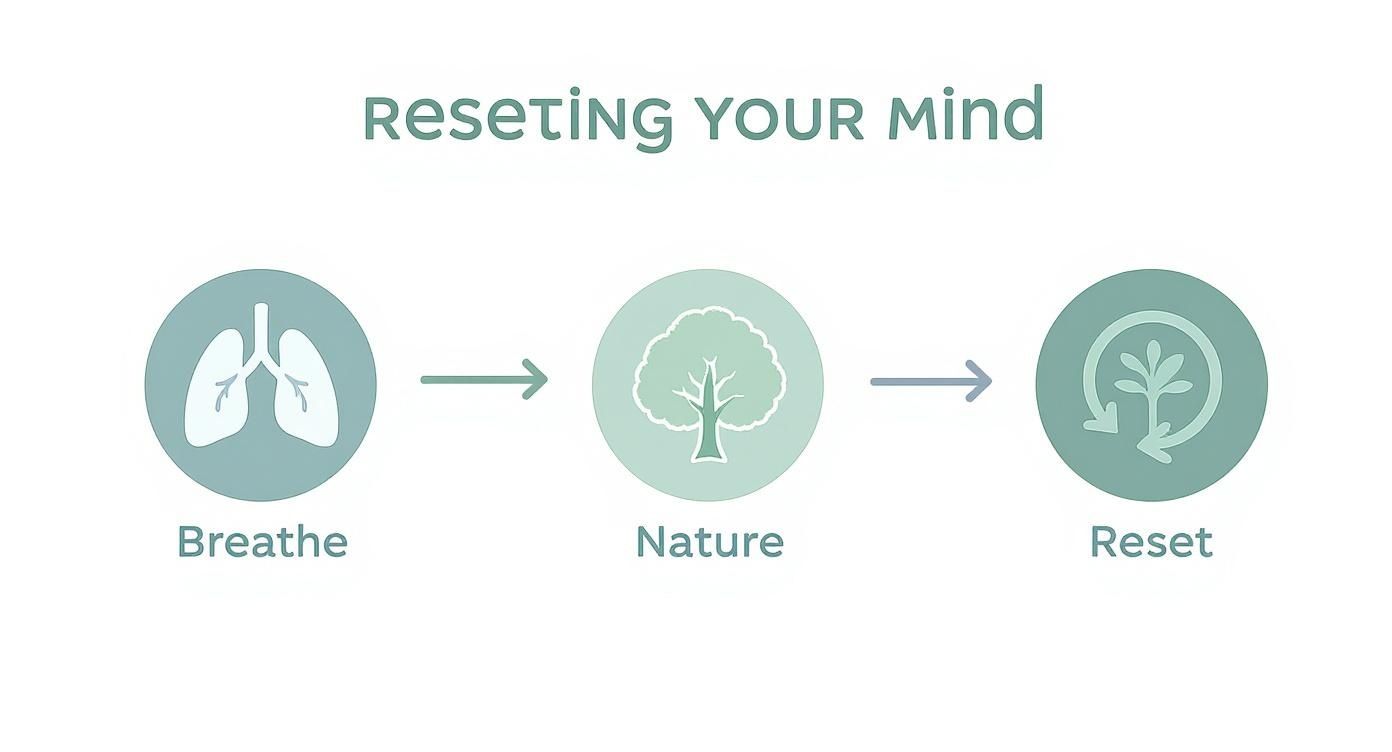
It’s a great reminder that calming your system doesn’t require a complicated ritual. It can be as straightforward as paying attention to your breath and noticing the world around you for a moment.
Creating Habits That Stick
Making these changes last means swapping out old stress-inducing habits for new, supportive ones. Building these new patterns takes a bit of strategy. For a deeper dive into the mechanics of this, you can find some great pointers on how to break bad habits and design routines that actually serve you.
The best plan is one you can follow on a bad day, not just a good one. Don’t try to overhaul your entire life overnight. Pick one or two things from the sample routine—like the morning sunlight or the digital sunset—and focus on just those until they feel automatic.
Remember, it’s the small, consistent actions that ultimately rewire your stress response. Integrating something as simple as a breathing technique can be a total game-changer for your daily energy. If you’re curious to learn more, our guide on using breathing for energy dives into how you can consciously shift your state of mind.
Tracking Your Progress Beyond the Numbers
While you can get lab tests to measure cortisol, they only tell a fraction of the story. The real proof is in how you feel, day in and day out. Your body is giving you constant feedback—you just have to learn to listen.
Start paying attention to these qualitative signs:
- Energy Levels: Are you experiencing more steady energy throughout the day, without the intense highs and lows?
- Sleep Quality: Is it easier to fall asleep? Do you wake up feeling like you actually rested?
- Mood Stability: Do you feel less reactive? Are daily frustrations rolling off your back a little easier?
- Cravings: Have those intense urges for sugar or salty snacks started to fade?
- Physical Symptoms: Are stress-related issues like tension headaches, stomach knots, or tight shoulders easing up?
Actionable Step: For the next two weeks, take 60 seconds at the end of each day to rate your energy, sleep, and mood on a scale of 1 to 5 in a notebook. You’ll be amazed at how quickly you can see patterns and connect your new habits to how much better you’re feeling.
Your Questions About Lowering Cortisol, Answered
When you start digging into balancing your hormones, a lot of questions pop up. That’s completely normal. Getting clear, practical answers is the best way to build momentum and feel like you’re actually on the right track. Let’s walk through some of the things people ask me most often.
How Long Does This Actually Take?
Everyone wants to know how quickly they’ll feel better, and the answer is both immediate and gradual.
You can actually lower your cortisol in the moment. A mindful walk outside or even just 5 minutes of deep, belly breathing can bring down that acute spike of stress right then and there. It’s a fantastic tool to have in your back pocket.
But for the deep, lasting changes to your chronic stress patterns? That’s a longer game. Your body needs time to recalibrate. Most people start to feel a real difference—better mood, more stable energy, sleeping through the night—within about 2 to 4 weeks of being consistent.
If you’re looking for proof on a lab test, that’s more of a 3 to 6-month journey. The key isn’t perfection; it’s just showing up for yourself most days.
Is It Possible to Lower My Cortisol Too Much This Way?
This is a great question, but you can probably set this worry aside. It’s nearly impossible to push your cortisol into a dangerously low range using natural lifestyle habits alone.
Conditions like Addison’s disease, where cortisol is critically low, are typically caused by physical damage to the adrenal glands—not by eating your vegetables and getting good rest. Think of the methods in this guide—diet, smart exercise, mindfulness—as a regulatory tune-up. They don’t shut down your cortisol production; they help your body find its natural, healthy rhythm again.
If I Can Only Do One Thing, What Should It Be?
Feeling overwhelmed? I get it. If you need to pick just one thing to start with, make it sleep. Hands down, it’s the most powerful lever you can pull.
Sleep is when your body does its most important repair work and hormonal housekeeping. Nailing 7 to 9 hours of quality, consistent sleep is the bedrock for everything else. It sets the stage for better food choices, gives you the energy to move your body, and makes you far more resilient to whatever the next day throws at you.
Actionable Step: A simple but incredibly effective place to begin is by setting a non-negotiable bedtime and wake-up time. Sticking to it, even on the weekends, is one of the best ways to anchor your body’s internal clock and stabilize that cortisol curve. Set recurring alarms for both right now.
When Is It Time to See a Doctor?
Lifestyle changes are incredibly powerful, but they aren’t a cure-all, and it’s crucial to know when you need to bring in a medical professional.
You should definitely book an appointment with your doctor if you’re dealing with persistent and severe symptoms. Look out for things like:
- Unexplained weight gain, especially in your face and around your midsection
- Fatigue that feels bone-deep and never goes away
- High blood pressure
- Noticeable weakness in your muscles
- Skin that bruises easily or cuts that take forever to heal
A doctor can run the right tests to see what’s really going on and rule out underlying conditions like Cushing’s syndrome. And please, always talk to a qualified professional before starting any new supplements to make sure they’re a safe fit for you.
Ready to go deeper and actively rewire your body’s response to stress? The journeys at 9D Breathwork are designed to disrupt old patterns at their source. Using a powerful fusion of breath, sound, and guided coaching, we help you release stored stress and build a more resilient nervous system from the inside out. Discover a 9D Breathwork experience today.