Learning how to do diaphragmatic breathing is surprisingly simple. You just inhale through your nose, letting your belly expand outward, and then exhale slowly as your belly gently falls. It’s a conscious shift away from the shallow chest breathing most of us do by default and into a deeper, more intentional rhythm that taps into your body’s built-in relaxation system.
Why Diaphragmatic Breathing Is More Than Just a Deep Breath
Let’s be honest, most of us go through our day without giving a single thought to our breath. We tend to take short, shallow sips of air that only fill the top of our lungs. This habit, while common, can keep our bodies stuck in a low-grade state of stress.
Diaphragmatic breathing, often called “belly breathing,” flips the script by properly engaging the diaphragm—the primary muscle of respiration.
This big, dome-shaped muscle sits right below your lungs. When you breathe from your belly, your diaphragm contracts and moves downward. This simple action creates a vacuum that pulls air deep into the lower lobes of your lungs, where the most efficient gas exchange happens. It’s a world away from those tight, rapid breaths that only use the secondary muscles in your chest, shoulders, and neck.
The Powerhouse Muscle and Your Nervous System
Think of your diaphragm as a biological reset button. Its movement is physically linked to the vagus nerve, a major player in your parasympathetic nervous system. This is the “rest and digest” side of the coin, the one that tells your body it’s safe to calm down and counters the “fight or flight” response.
When you deliberately engage in belly breathing, you’re sending a direct signal up the vagus nerve to your brain that says, “Everything is okay.” This one simple action can downshift your entire nervous system, pulling you out of that state of high alert.
The real-world impact of this is huge. Once you get the hang of it, you can use it to:
- Calm pre-meeting jitters: Action: Before your next big presentation, find a quiet space (even a bathroom stall works). Place a hand on your belly and take 10 slow, deep breaths. Feel your belly rise and fall. This tangible action can genuinely lower your heart rate and quiet a racing mind.
- Improve focus during a chaotic workday: Action: When emails are piling up, push back from your desk for 60 seconds. Set a timer, close your eyes, and focus only on the sensation of your breath. This technique can act as an anchor, pulling your attention back to the present.
- Manage physical responses to stress: Action: The next time you feel your shoulders tensing up, consciously drop them and take three deep belly breaths, making your exhale longer than your inhale. This helps regulate key physiological markers like blood pressure and heart rate variability (HRV).
This is a foundational skill in many powerful practices. To see how it fits into a broader therapeutic context, you can explore our guide on what is breathwork therapy.
Diaphragmatic Breathing vs. Chest Breathing: A Quick Comparison
It’s helpful to see the two styles side-by-side to really understand the difference. Most of us are stuck in a chest breathing pattern without even realizing it.
| Feature | Diaphragmatic Breathing (Belly Breathing) | Thoracic Breathing (Chest Breathing) |
|---|---|---|
| Primary Muscle | Diaphragm | Intercostal muscles (between ribs), neck & shoulder muscles |
| Breath Depth | Deep, full lung capacity | Shallow, upper lung lobes only |
| Nervous System | Activates Parasympathetic (Rest & Digest) | Activates Sympathetic (Fight or flight) |
| Oxygen Intake | High, very efficient | Low, inefficient |
| Physical Sensation | Belly rises and falls | Chest and shoulders rise and fall |
| Effects on Body | Lowers heart rate, reduces blood pressure, promotes calm | Increases heart rate, raises blood pressure, can cause muscle tension |
Switching from the right column to the left is one of the most effective things you can do for your well-being, and it’s a skill anyone can learn.
Evidence-Based Impact on Health
The benefits of diaphragmatic breathing aren’t just anecdotal—they’re backed by a solid and growing body of scientific research. A 2017 study published in Frontiers in Psychology confirmed that slow breathing techniques, like diaphragmatic breathing, can influence the autonomic nervous system and emotional regulation, effectively reducing anxiety and stress. By mastering this simple technique, you gain a powerful tool to actively manage your body’s response to the pressures of daily life.
A Practical Walkthrough of Proper Belly Breathing Technique
Knowing the theory behind diaphragmatic breathing is a great start, but the real magic happens when you actually feel it in your own body. This simple exercise is designed to get you out of your head and into that physical sensation of a deep, restorative breath. Let’s walk through it together.
First things first, get comfortable. For most people just starting out, lying on your back with your knees bent is the easiest position. Gravity does some of the work for you, helping your belly relax. If sitting is better for you, find a chair where you can plant your feet flat on the floor and sit up tall, but not stiffly.
Now, place one hand on your upper chest and the other right on your belly, just below your ribcage. Think of your hands as feedback sensors—they’re going to tell you exactly where the air is going. For a few moments, just breathe normally. Don’t change a thing. Simply notice the rise and fall beneath your hands.
The Foundational 4-6 Breath Count
Once you feel settled, we’ll start guiding the breath. The key here is gentleness; we’re not forcing anything, just showing the breath where to go.
The entire goal is to have the hand on your belly rise with your inhale, while the hand on your chest stays mostly still. That’s how you know your diaphragm is doing the heavy lifting.
- The Inhale: Close your mouth and breathe in slowly through your nose for a count of four. Really focus on sending that breath deep down into your belly, feeling it expand like a balloon and lift the hand resting there. Your chest should barely move.
- The Exhale: Now, purse your lips slightly (like you’re about to whistle) and breathe out slowly and completely through your mouth for a count of six. Feel the hand on your belly gently lower as your abs engage to help push the air out. The key is making that exhale noticeably longer than the inhale.
This simple rhythm of belly expansion on the inhale and belly contraction on the exhale is the core of diaphragmatic breathing. It’s a powerful mechanical process that directly influences your nervous system.
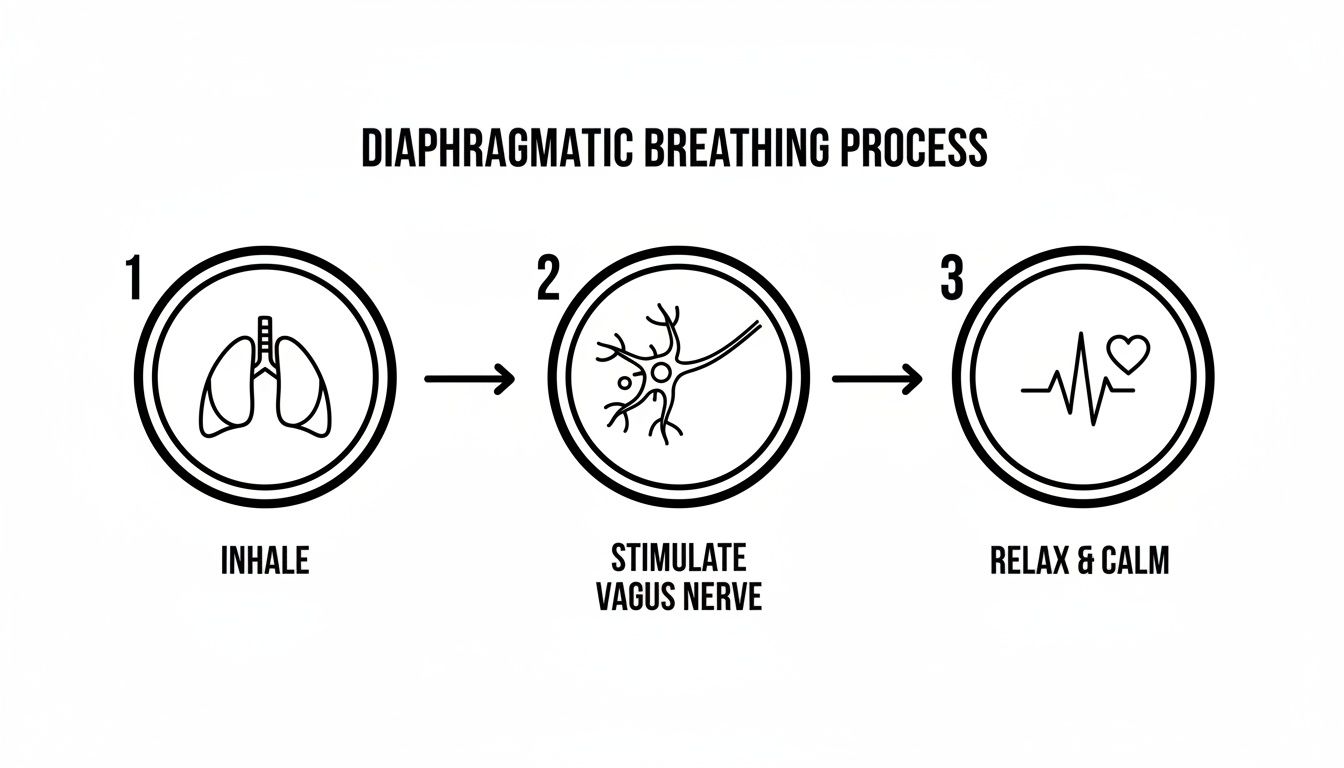
As you can see, this isn’t just about getting more oxygen. That deep, diaphragmatic inhale sends a direct signal to your vagus nerve, telling your entire body it’s safe to relax and downshift out of “fight or flight.”
Making It a Practical Habit
Knowing how to do this is one thing; actually weaving it into your life is where the real benefits kick in. You don’t need to block out an hour on your calendar. Just a few intentional minutes here and there can completely change your state.
It’s also fascinating to consider the physiological impact beyond stress relief. Research published in the Journal of Manual & Manipulative Therapy has highlighted how diaphragmatic breathing effectively acts as a “lymphatic pump.” Considering that a large concentration of lymph nodes are located right under the diaphragm, this deep breathing actively helps your body’s natural detoxification and drainage processes.
Here are a few ways to successfully build this into your routine:
- Morning Anchor: Action: Before your feet even hit the floor, spend just two minutes on your back doing belly breaths. It sets a much calmer tone for the day.
- Traffic Decompress: Action: Stuck at a red light? Instead of sighing in frustration, see it as a reminder. Take three to five deep belly breaths and feel the tension in your shoulders melt away.
- Workday Reset: Action: Set a recurring alarm for 2 PM. When it goes off, push back from your desk. Place a hand on your belly and take a one-minute breathing break. It’s a surprisingly effective circuit breaker.
Turning this practice into these kinds of micro-habits makes it an automatic tool you can reach for when stressed, rather than another chore on your to-do list. For those who want to take it a step further, our guide on guided meditation breathing shows you how to build this foundation into a more immersive mindfulness practice.
The Science-Backed Benefits of Mastering Your Breath
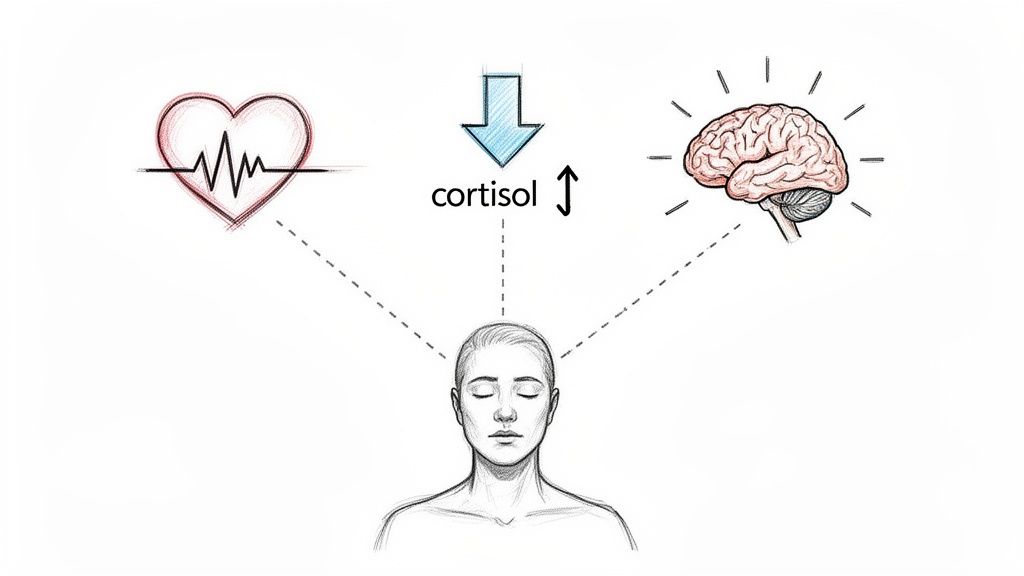
When you deliberately practice diaphragmatic breathing, you’re not just taking a deeper breath—you’re actually changing your body’s chemistry. This isn’t some abstract wellness concept; it’s a direct way to shift your physiological response to stress. The science is clear, and the impact it can have on your nervous system and overall health is profound.
Every time you take one of those intentional belly breaths, you’re helping your body dial down its production of cortisol, the primary stress hormone. Research has shown that even a single session of slow, deep breathing can significantly lower cortisol levels, pulling you out of that constant, draining state of high alert.
This shift away from a fight-or-flight response has an immediate, measurable effect on your cardiovascular system.
Lowering Blood Pressure and Building Resilience
Over time, this practice has been shown to reduce blood pressure, which eases the long-term strain on your heart and arteries. A randomized controlled trial found that people who practiced slow, deep breathing for only five minutes a day saw a real drop in their blood pressure readings. It’s a powerful reminder of how a small daily habit can contribute to lasting cardiovascular health.
But it goes beyond just blood pressure. Mastering your breath also improves your heart rate variability (HRV), which is a fantastic indicator of your body’s resilience to stress. A higher HRV means your nervous system is flexible and can adapt to challenges more effectively.
A study published in the Journal of Alternative and Complementary Medicine confirmed that slow breathing techniques, the very kind used in diaphragmatic breathing, directly increase HRV. This means you aren’t just coping with stress in the moment—you’re actively training your body to recover from it more efficiently over time.
For anyone who wants to dive deeper into this, you can check out our guide on how to improve heart rate variability here: https://9dbreathwork.com/how-to-improve-heart-rate-variability/. The power of this is often a core focus at meditation and yoga retreats, where conscious breathing is central to the entire experience.
Tangible Benefits Beyond the Lab
The real magic happens when you translate this science into your daily life. Imagine feeling a wave of mental clarity right before a high-stakes presentation, or preventing that bone-deep exhaustion that comes from chronic stress. These aren’t just nice ideas; they’re the direct result of learning to regulate your internal state through your breath.
The cost of unmanaged stress is staggering. In the United States alone, stress-related issues cost employers well over $300 billion annually. That number alone shows why evidence-based, accessible tools like diaphragmatic breathing are getting so much attention for both personal and organizational well-being. By learning this simple skill, you’re giving yourself a powerful way to manage life’s pressures from the inside out.
Common Mistakes People Make and How to Fix Them
When you first start practicing, it’s completely normal for this to feel a bit… weird. Learning how to do diaphragmatic breathing is like waking up a muscle you haven’t really used in a while. Most of us run into the same few hurdles before the movement clicks and feels natural.
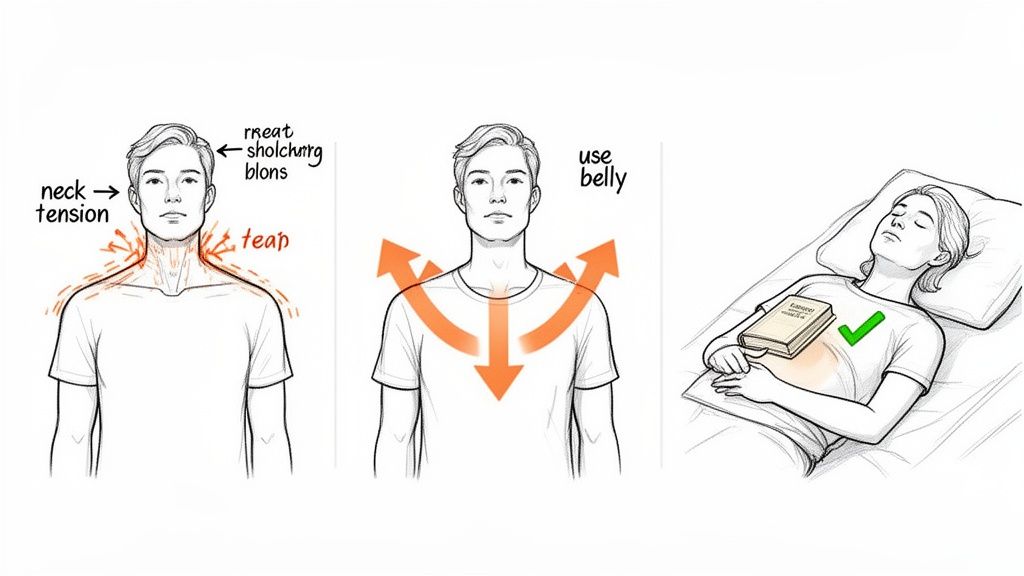
The biggest one by far is paradoxical breathing. This is when your chest rises on the inhale and your belly sucks in, the exact opposite of what we’re aiming for. It’s a sign your body is stuck in a shallow, chest-breathing pattern, which can actually keep you in a state of low-grade stress.
And it’s not just a beginner issue. It’s surprisingly common, even in people you’d expect to have it figured out. One study in The Journal of Strength and Conditioning Research found that an incredible 91% of athletes had dysfunctional breathing patterns. Most were chest breathers. You can explore the full study on athlete breathing patterns to dig into the data yourself.
Fixing the “Backwards” Breath
The best way to fix this is to give your brain some undeniable physical feedback.
Lie on your back, bend your knees, and place a lightweight object—like a paperback book or your phone—on your belly, just below your ribcage. Now, your only job is to make that object rise as you breathe in and fall as you breathe out. Try to keep your chest and shoulders completely still.
This simple trick stops you from overthinking it and starts building the right muscle memory. After a few minutes, you’ll start to feel that natural belly expansion happening on its own.
Releasing Neck and Shoulder Tension
Another classic mistake is trying to “help” the breath along by using your neck and shoulder muscles. If you feel your shoulders hiking up toward your ears on the inhale, you’re recruiting muscles that are supposed to be relaxing. This just adds tension instead of melting it away.
Actionable Tip: Before you even start your breathing practice, do a quick reset. Shrug your shoulders all the way up to your ears, squeeze for a second, then let them drop completely as you sigh out. This exaggerated movement helps you register the difference between tense and relaxed.
This little trick encourages your diaphragm to take the lead, which is its natural job. If you’re looking for more ways to release physical tension, you might be interested in other techniques to calm your nervous system.
https://9dbreathwork.com/calm-nervous-system/
Dealing With Dizziness or Lightheadedness
Feeling a little woozy when you first begin is also pretty common, so don’t be alarmed. It usually means you’re breathing too deeply, too fast, or forcing the exhale. Remember, belly breathing should feel gentle and easy, not like you’re trying to set a new record for lung capacity.
If you start feeling lightheaded, just stop. Return to your normal, everyday breathing for a minute or two until the feeling passes. When you’re ready to start again, make your breaths a little shallower and a lot slower. The goal is a smooth, effortless rhythm.
This sensation almost always disappears as your body gets used to a more efficient and oxygen-rich way of breathing.
Making Belly Breathing a Natural Part of Your Day
Knowing how to do a belly breath is one thing. Making it your go-to, automatic response when life gets hectic? That’s where the real magic happens. The goal isn’t to add another task to your endless to-do list, but to weave this simple, powerful tool into the fabric of your everyday life.
A really effective way to do this is through something called habit stacking. Instead of trying to carve out new time for a “breathing session,” you simply attach the practice to something you already do without thinking. This creates a natural trigger, making consistency feel almost effortless.
Building Automatic Breathing Cues
Take a moment to think about your daily rhythm. Those little recurring moments are perfect opportunities to sneak in a few conscious breaths.
- Your Morning Coffee Cue: Action: While the coffee is brewing, stand in your kitchen, place one hand on your belly, and take slow, deep breaths until it’s ready.
- The “Sit Down” Anchor: Action: Every single time you sit down at your desk, take five deep belly breaths before you even touch your keyboard.
- The Red Light Reset: Action: Hitting a red light while driving is the perfect signal to release your grip on the wheel, soften your shoulders, and take three slow, intentional breaths.
These tiny, consistent actions start building new neural pathways. Over time, belly breathing becomes less of a conscious effort and more of an ingrained resource your body just knows how to use. You’re not trying to find extra time; you’re simply hijacking the small pockets of time that already exist.
For those looking to go deeper and combine these techniques within a broader wellness framework, many Spanish-language yoga retreats offer incredible immersive experiences that build on this mind-body connection.
Quick Routines for When You Need Them Most
Different situations call for different approaches. Having a few go-to breathing templates in your back pocket means you can pull out the right tool for the job. We know from research that structured breathing is a major non-pharmacological strategy for managing stress and optimizing how our bodies function.
Here are three simple, practical templates you can start using today:
- The 1-Minute Nervous System Reset: This is your secret weapon before a tough conversation. Just close your eyes, put a hand on your belly, and take four slow breaths. Action: Try a 4-second inhale and a longer 6-second exhale. That’s all it takes to tap into your vagus nerve and dial down that fight-or-flight feeling.
- The 5-Minute Wind-Down: Use this before bed to signal to your body and mind that the day is done. Lie on your back with your hands on your lower abdomen and just breathe. Action: For five minutes, simply feel the gentle rise and fall, letting go of the day with each exhale. It’s a powerful way to prepare for deep, restorative sleep.
- The 10-Minute Deeper Dive: When you have more time, go a little deeper. Combine your belly breathing with a simple body scan. Action: As you breathe, mentally scan your body from your toes to your head. When you find a tense spot, imagine sending your breath directly there, encouraging it to release.
It’s amazing what’s happening under the surface. A 2023 review in the journal Cureus reinforces the diaphragm’s role as a critical pump for the lymphatic system, noting how its rhythmic contractions during deep breathing significantly enhance lymphatic flow. Each deep belly breath you take is actively helping your body’s natural detoxification system do its job.
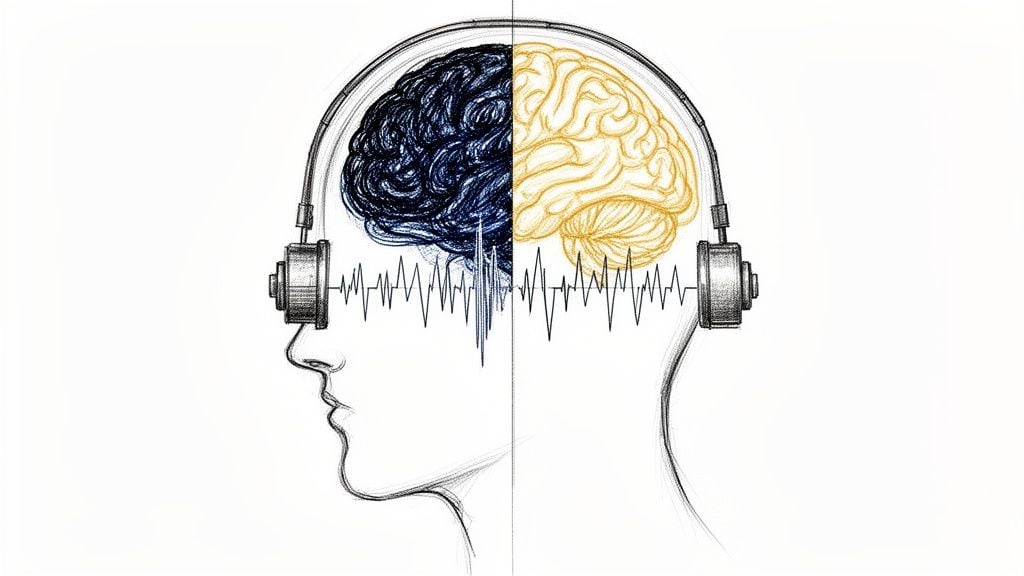
Once you’ve truly mastered the foundational skill of how to diaphragmatic breathing, a whole new world of advanced practices opens up. You could explore something like 9D Breathwork, which layers intentional breathing with elements like binaural beats, soundscapes, and guided prompts for a much more immersive and profound experience. But it all starts with this simple, powerful, and fundamental tool: the belly breath.
Got Questions? Let’s Troubleshoot Your Breathing Practice
It’s totally normal for questions to pop up when you start practicing. Actually feeling this technique in your own body is a brand new experience for most people, and it’s common to wonder, “Am I even doing this right?”
Let’s walk through some of the most frequent questions I hear. My goal is to give you the confidence to stick with it and really make this skill your own.
How Often Should I Be Doing This?
When you’re just starting out, think consistency over duration. Short, frequent sessions are far more effective than one long, stressful one.
- Beginner’s Goal: Aim for just two to five minutes at a time, maybe two or three times a day. That’s it. This is plenty to start building the muscle memory without it feeling like another chore on your to-do list.
- Pro Tip: I always tell people to “tack it on” to a habit you already have. For example, do a few minutes of belly breathing right after you brush your teeth in the morning or just as you get into bed at night. It’s a simple way to make it stick.
Once the movement starts to feel more automatic, you can slowly work your way up to 10 or 15-minute sessions. The real secret is finding a rhythm that you can actually maintain.
Help! I Don’t Feel My Belly Moving.
This is probably the most common roadblock people face, so if this is you, you’re in good company. Most of us have spent decades breathing shallowly into our chests, which means the diaphragm muscle is basically asleep at the wheel. Don’t panic—it just needs a gentle wake-up call.
Here’s a great little trick: lie on your back with your knees bent and place a lightweight book on your lower belly. Forget everything else and just focus on one thing: make the book rise on your inhale and fall on your exhale. This gives you direct, physical feedback that can help your brain reconnect with that muscle.
The diaphragm is a muscle, plain and simple. Just like any other muscle in your body, it gets stronger with practice. Be patient with yourself as you relearn this natural, fundamental movement.
Can This Actually Help Me Sleep Better?
Absolutely. Belly breathing is one of the best tools for winding down before bed. It flips the switch on your nervous system, moving you from the “fight or flight” stress response to the parasympathetic “rest and digest” state. This physically lowers your heart rate and quiets a busy mind, setting the stage for sleep.
In fact, one study published in The Journal of Clinical Sleep Medicine found that mind-body practices incorporating slow, deep breathing significantly improved sleep quality in individuals with insomnia. The steady, gentle rhythm is a powerful signal to your body that it’s safe to power down. Instead of scrolling on your phone tonight, try spending your last five minutes in bed just breathing into your belly. You might be surprised.
Ready to see how this foundational skill can unlock even deeper states of awareness and healing? At 9D Breathwork, we build on intentional breathing, weaving in sound, expert guidance, and other sensory elements to create a profound experience that works on your body, mind, and subconscious. Discover our transformative breathwork journeys.