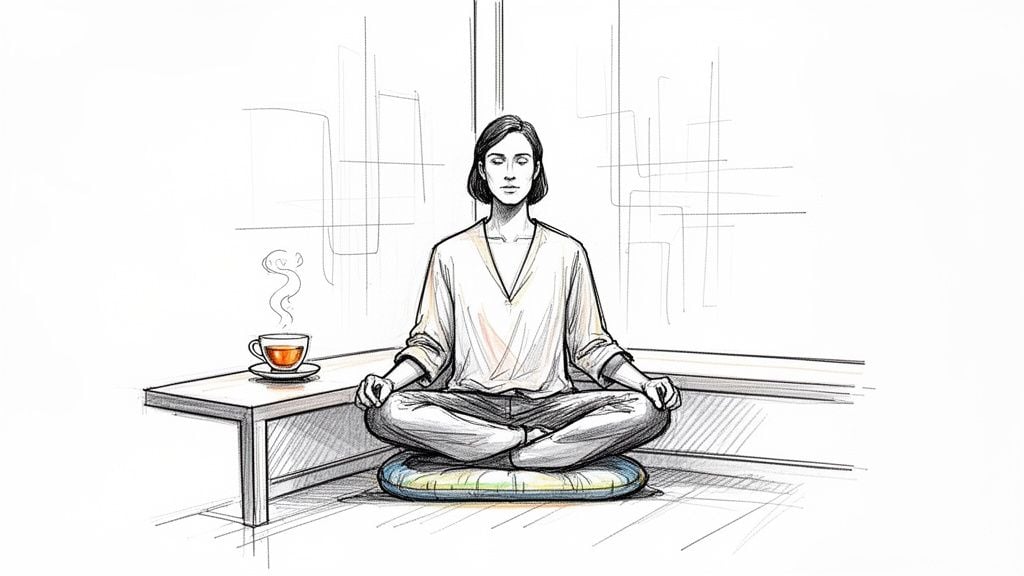
In a world of constant digital noise and relentless pressure, finding a moment of genuine calm can feel like a monumental task. Guided meditation breathing isn’t some fleeting wellness trend; it’s a practical, scientifically-grounded way to reclaim your mental clarity and find your footing. At its core, it’s about using the one tool you always have with you—your breath—to manage stress, sharpen focus, and anchor yourself in the present.
Why Your Breath Is the Ultimate Tool for Modern Stress
Let’s be honest: our nervous systems are often stuck in overdrive. This constant state of high alert is what fuels anxiety, leads to burnout, and leaves so many of us feeling perpetually overwhelmed. Guided meditation breathing acts as a direct line to your autonomic nervous system, giving you the power to consciously shift from a stressed “fight-or-flight” state to a calm “rest-and-digest” mode.
This isn’t just an ancient practice rediscovered; it’s become a modern necessity. It’s no surprise that the global meditation market is projected to hit USD 37.53 billion by 2035. More and more people are realizing that mastering their inner state isn’t a luxury—it’s a fundamental skill for thriving in today’s world.
The Science of a Simple Inhale
The incredible power of controlled breathing isn’t just anecdotal; it’s backed by solid research. A 2017 study published in Science revealed how specific breathing techniques directly impact a small group of neurons in the brainstem, which in turn influences states of arousal and calm. Another study in Frontiers in Psychology confirmed that slow, deep breathing can significantly dial down symptoms of anxiety and depression by increasing vagal tone.
This is why so many people are turning to guided breathing for real-world challenges. Here’s how you can take action:
- Before a big presentation: Find a quiet corner for two minutes. Practice Box Breathing (which we’ll cover next) to settle your nerves and clear your head.
- During a stressful commute: Instead of letting frustration boil over, turn off the radio and focus on your exhales. Make each one slightly longer than the inhale to create a pocket of peace right there in your car.
- To wind down after work: As soon as you walk in the door, before checking your phone, sit down for five minutes of conscious breathing. This draws a line in the sand, helping you leave the day’s stress behind you.
By simply bringing your awareness to the rhythm of your inhales and exhales, you give your brain a single, calming task. This breaks the cycle of anxious thoughts. That intentional pause is where the magic really happens.
Moving Beyond Basic Techniques
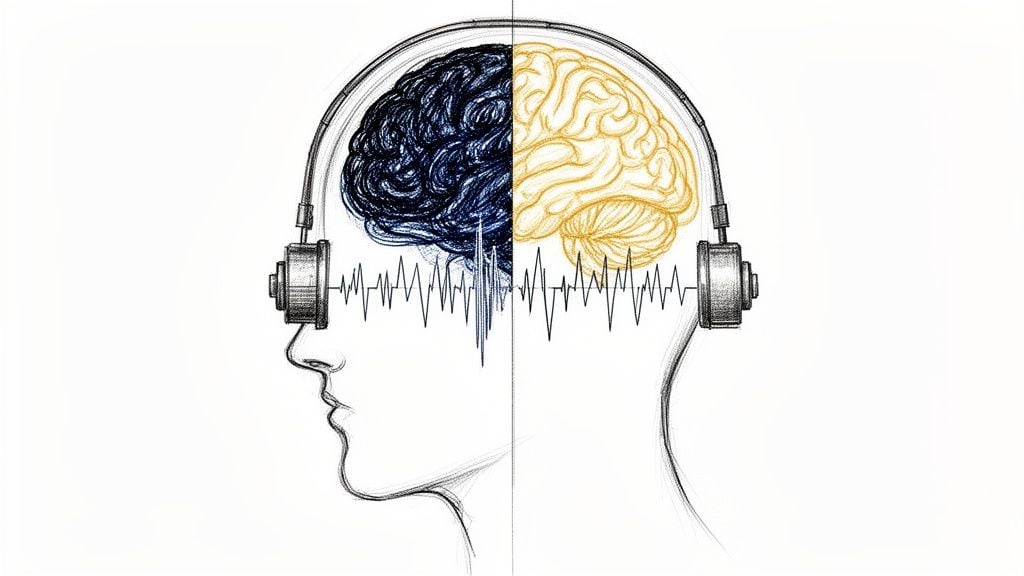
While simple breathing exercises are incredibly effective, modern approaches are pushing the boundaries of this practice. For example, methods like 9D Breathwork don’t just stop at the breath. We integrate it with other powerful modalities—like binaural beats, hypnotic guidance, and subliminal messaging—to create a much more profound and immersive experience.
This multi-sensory approach helps to gently access and re-pattern limiting beliefs at a subconscious level, opening a deeper path to release and clarity.
You’ll also see guided breathing woven into immersive experiences like wellness retreats. It’s often paired with other essential wellness retreat activities to amplify the benefits. In this guide, we’ll dive into actionable techniques you can start using immediately, proving that a calmer, more centered state is just a few breaths away.
To give you a quick overview of what’s to come, here’s a look at some of the core techniques we’ll cover.
Guided Breathing Techniques at a Glance
| Technique | Primary Benefit | Best For |
|---|---|---|
| Box Breathing | Calming the nervous system | Moments of high stress, anxiety, or need for focus |
| 4-7-8 Breathing | Promoting relaxation and sleep | Winding down before bed or easing into meditation |
| Diaphragmatic Breathing | Reducing stress and improving lung function | Daily practice to build resilience and ground yourself |
These are just a few of the foundational practices you can use. Each one offers a unique pathway to a more regulated and peaceful state of mind.
Mastering the Foundational Box Breathing Technique
When stress hits, you need a tool that works instantly. That’s where Box Breathing comes in. It’s a powerfully simple technique trusted by everyone from Navy SEALs in high-pressure situations to top executives before a critical meeting. What makes it so effective is its predictable, rhythmic structure, which acts as a fantastic anchor for a scattered mind.
This method, also known as square breathing, is more than just a quick way to calm down; it’s a direct line to regulating your nervous system. By imposing a steady, four-part rhythm onto your breath, you’re sending a clear signal to your brain that you’re in control. This simple act helps shift you out of a reactive, anxious state and grounds you firmly in the present moment, interrupting the cycle of chaotic thoughts.
Your Actionable Guide to Box Breathing
Getting started is easy. Find a comfortable seat, let your shoulders drop, and rest your hands in your lap. You can close your eyes or just soften your gaze.
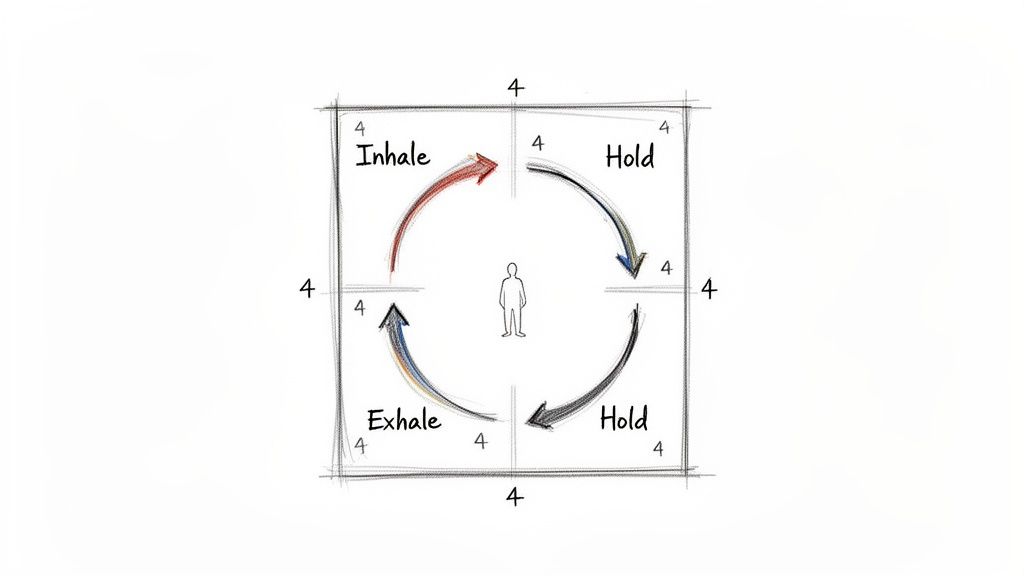
- Inhale Slowly: Breathe in through your nose for a steady count of four. Feel your lungs expand fully, but don’t strain.
- Hold at the Top: Gently hold that breath at the peak for a count of four.
- Exhale Smoothly: Breathe out through your mouth for a count of four, releasing all the air.
- Hold at the Bottom: Pause and hold at the very end of the exhale for a final count of four.
Repeat this cycle for at least two minutes. As you get into the rhythm, try visualizing yourself tracing the sides of a square with each part of the breath—inhale up one side, hold across the top, exhale down the other side, and hold across the bottom.
Sample Guided Script Cue: “Gently bring your awareness to your breath. We’ll begin by inhaling slowly through the nose… one… two… three… four. Now, hold that breath at the top… one… two… three… four. Slowly exhale through your mouth… one… two… three… four. And hold at the bottom… one… two… three… four.”
This simple practice helps down-regulate an overactive nervous system, a key concept in managing our response to stress. If you’re curious to learn more about how your body handles stress and relaxation, you can explore our guide on Polyvagal Theory exercises.
The diagram below shows how a guided breathing technique like this one creates a clear path from feeling overwhelmed to finding a sense of calm.
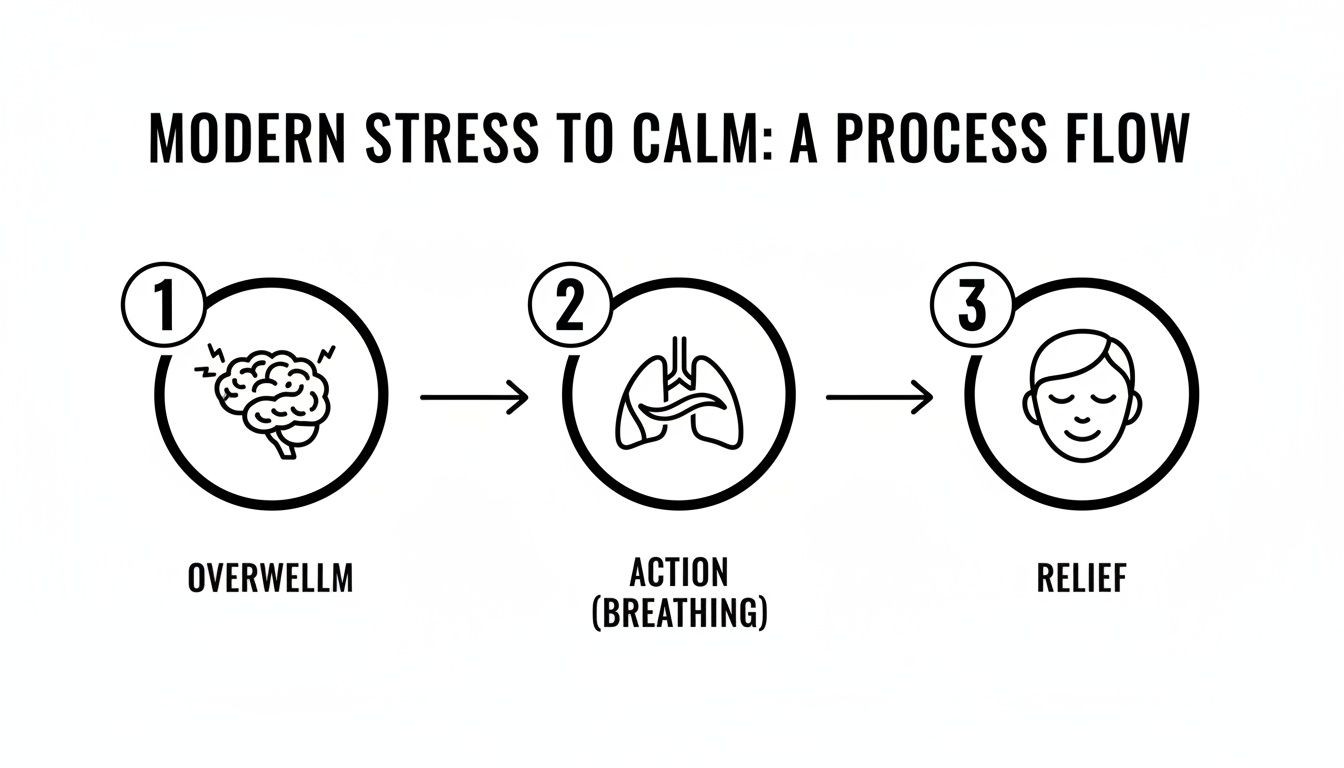
This process shows how a simple, intentional action—like controlled breathing—can serve as a powerful bridge from mental overload to genuine relief.
The Science of Rhythmic Regulation
The effectiveness of techniques like Box Breathing isn’t just anecdotal; it’s backed by science. Research from the International Journal of Environmental Research and Public Health shows that structured breathing directly influences the vagus nerve, which helps control heart rate and blood pressure, leading to a state of calm. One study published in Frontiers in Human Neuroscience found that slow, deep breathing techniques significantly reduce levels of cortisol, the body’s main stress hormone. A separate study confirmed that mindful breathing practices improve emotional regulation and cognitive focus by strengthening neural pathways in the brain’s prefrontal cortex.
This growing body of evidence explains why mindfulness is becoming so mainstream. It’s estimated that global meditation participation will jump from 29% in 2018 to 35% by 2025, with younger generations increasingly turning to guided breathing to navigate a world of digital overload and professional pressures. By mastering Box Breathing, you’re equipping yourself with a reliable tool for immediate calm and focus, whenever and wherever you need it.
Calming Anxiety with the 4-7-8 Breathing Method
When a wave of anxiety hits, it can feel like your body and mind are spiraling out of control. Your heart pounds, your thoughts race, and finding calm seems impossible. In those exact moments, you need a tool that works fast. That’s where the 4-7-8 breathing method, sometimes called the “relaxing breath,” really shines.
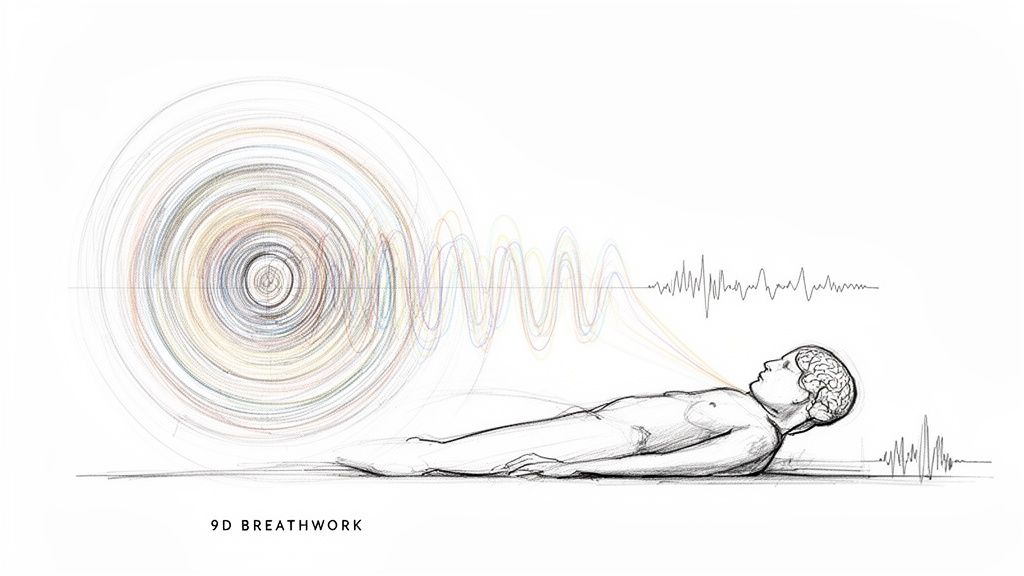
Think of it as a manual override for your nervous system. The technique is designed to shift you out of that frantic “fight-or-flight” mode and into a “rest and digest” state by activating your parasympathetic nervous system. The magic is in the extended exhale—it physically slows your heart rate and sends a powerful signal to your brain that the danger has passed and it’s safe to relax.
A Guided Script for Instant Relief
Ready to try it? Get comfortable, either sitting up straight or lying down. The only real “rule” is to gently rest the tip of your tongue on the ridge of tissue just behind your upper front teeth. Keep it there for the whole exercise.
Now, let’s walk through one cycle:
- Start by exhaling completely through your mouth, making a soft “whoosh” sound. Get all the air out.
- Close your mouth and inhale quietly through your nose to a mental count of four.
- Now, hold that breath for a count of seven.
- Finally, exhale completely through your mouth with another “whoosh” for a count of eight.
That’s it. That’s one full breath. Try to repeat this for three or four cycles, letting your focus settle entirely on the rhythm and the physical sensations.
Sample Guided Script Cue: “As you exhale, imagine the tension melting from your shoulders and jaw. With each new breath, you’re creating a little more space for calm inside. Just let the count guide you, effortlessly, into a state of peace.”
How This Looks in Real Life
Picture a project manager, Sarah, who’s staring down a mountain of urgent emails and a fast-approaching deadline. Her heart is hammering, her thoughts are a tangled mess, and she can feel that familiar tide of panic rising. But instead of just trying to power through it, she stops.
She closes her office door, sits down, and starts the 4-7-8 breath. With the first long exhale, she visualizes all that deadline pressure leaving her body. On the second, she just focuses on her heart rate, feeling it begin to slow. By the end of her third cycle—which takes less than two minutes—the intense physical storm has passed.
The work is still there, of course. But she has successfully regulated her nervous system. Now she can tackle her to-do list with a clear, focused mind instead of from a place of sheer panic. This is a perfect example of how guided meditation breathing isn’t about getting rid of stress, but about fundamentally changing how you respond to it.
For more strategies on taming a chaotic mind, check out our advice on how to quiet your mind.
The Science Behind the Calm
This isn’t just a folk remedy; the power of diaphragmatic breathing techniques like the 4-7-8 method is backed by solid research.
A study in the journal Physiology & Behavior found that slow breathing techniques can significantly lower levels of cortisol, the body’s main stress hormone. Other research published in Psychophysiology confirms that slow, deep breathing measurably reduces physiological signs of anxiety, like heart rate and blood pressure, by stimulating the vagus nerve. What’s more, a 2019 study in Frontiers in Psychology revealed how these techniques actually improve emotional regulation by strengthening the connection between the prefrontal cortex (your rational brain) and the amygdala (your emotional alarm system).
This gives you a credible, trustworthy practice to turn to whenever you feel overwhelmed.
Weaving Mindful Breathing into the Workday
Bringing a few moments of intentional calm into the workday isn’t just a nice-to-have; it’s a powerful strategy for fighting off burnout and sharpening your team’s collective focus. For any leader wanting to genuinely support their people, a short, guided breathing session can be a game-changer. It can completely reset a room’s energy, clarify everyone’s thinking before a big decision, and honestly, just make people feel more connected.
I’m not talking about week-long meditation retreats or anything complicated. This is about using a simple, effective tool that takes just a few minutes. Actionable Step: Instead of jumping straight into a frantic agenda at your next weekly meeting, kick it off with the five-minute guided breathing exercise below. It’s amazing how this one small act can dissolve pre-meeting tension, align the entire team, and set the stage for a much more present and collaborative session—whether you’re all in the same room or connecting on a video call.
The Real Return on a Mindful Pause
When you make space for mindfulness at work, you get back tangible results. The research on this is pretty clear—these practices consistently lead to a significant drop in employee stress and burnout. One study I often point to, published in the Journal of Occupational Health Psychology, found that even a brief, web-based mindfulness program led to a noticeable decrease in stress and a real boost in employee well-being.
That has a direct impact on the bottom line, from lower absenteeism to higher engagement. Another compelling analysis in JAMA Internal Medicine showed that workplace mindfulness programs help people sleep better and feel less stressed, both of which are absolutely critical for anyone to perform at their best. A third study from the American Journal of Health Promotion further validated these findings, showing a significant reduction in perceived stress and an increase in resilience among employees who participated in a mindfulness program.
It’s easy to think you’re “losing” five minutes, but you’re not. You’re investing in your team’s focus, resilience, and overall effectiveness. It’s one of the most low-cost, high-impact things you can do to build a healthier culture.
A 5-Minute Guided Script for Your Team
Here’s a simple, secular script I’ve used many times in corporate settings. It’s designed to be accessible to everyone, focusing purely on clarity and stress reduction.
A Few Tips Before You Start:
- Set the Scene: Keep it simple and direct. “Before we jump into the agenda, let’s take just a few minutes to ground ourselves and get focused.”
- Make It Optional: Always frame it as an invitation. Participation should be encouraged, never forced.
- Your Tone Matters: Speak slowly, softly, and leave plenty of space between your words. The pauses are just as important as the instructions.
(Begin Script)
“Go ahead and find a comfortable way to sit in your chair. Let your feet rest flat on the floor and your hands fall gently into your lap. If you’re comfortable with it, you can close your eyes, or just soften your gaze and look down.
Let’s start together with a slow, deep breath in through your nose… and a long, full exhale out through your mouth.
Now, just let your breathing return to its natural rhythm. You don’t need to control it or change it in any way. Just notice the feeling of the breath as it moves in and out of your body. Maybe you feel the rise and fall of your chest, or your abdomen.
It’s completely normal for your mind to wander—that’s what minds do. When you notice your thoughts drifting, just gently and kindly guide your attention back to the anchor of your breath.
Now, let’s bring our awareness to the present moment. Feel the chair supporting you… the sensation of your feet on the floor. Let these physical feelings ground you right here, right now.
For this last minute, just rest in this quiet awareness. There’s no agenda, nothing to fix or figure out. Just you and your breath.
When you feel ready, you can slowly bring your awareness back into the room. Maybe wiggle your fingers and toes. And whenever it feels right for you, gently open your eyes.”
(End Script)
The power of these simple practices is finally getting the recognition it deserves. In fact, breathwork has become a cornerstone of high performance, with 89.3% of practitioners calling breath awareness a core part of their routine. This simple but profound focus on guided meditation breathing is proving to be just as effective as more traditional methods for managing the pressures of demanding work environments. You can dive deeper into these powerful breathwork trends and their impact here.
Go Deeper with a 9D Breathwork Journey
Simple techniques like Box Breathing and the 4-7-8 method are fantastic for hitting the pause button on daily stress. They’re your go-to for immediate calm. But what if you want to move beyond just managing stress and into a space of profound personal release?
This is where a multi-sensory approach like 9D Breathwork comes in. It’s an immersive experience that weaves guided breathing together with a symphony of other powerful tools. We’re not just talking about calming down—we’re talking about actively working with your subconscious to let go of old emotional baggage and rewrite limiting beliefs.
Fusing Modalities for a Powerful Experience
The real magic of a 9D journey lies in how it layers different elements to work together, all centered around your breath.
- Binaural Beats: Think of these as audio guides for your brainwaves. We use specific frequencies to gently coax your brain into different states. For example, a theta state is incredible for deep relaxation and makes you more receptive to inner work. A 2018 meta-analysis published in Psychological Research confirmed that binaural beats are a solid tool for reducing anxiety.
- Hypnotic Guidance: This isn’t about stage hypnosis. It’s about using intentionally crafted language to speak directly to your subconscious, bypassing the noisy, critical part of your mind. Research in the International Journal of Clinical and Experimental Hypnosis shows that this can effectively help reframe old narratives and install new, empowering ones.
- Subliminal Messaging: We layer positive affirmations just beneath the level of conscious hearing. A study in the Journal of Experimental Social Psychology found that subliminal cues can influence judgments and behavior. As you breathe and immerse yourself in the soundscape, messages of support and empowerment reinforce the work you’re doing, helping to anchor the changes deep within.
The breath opens the door. The sound and language guide you through it. By combining these elements, a guided breathing session becomes a dynamic process of release and rewiring, not just passive relaxation.
What a 9D Journey Actually Feels Like
Let’s make this tangible. Imagine you’re carrying around a deep-seated feeling of not being “good enough.” It’s been holding you back for years.
A 9D journey designed for this would likely start with a powerful, rhythmic breathing pattern. This isn’t gentle, calm breathing; it’s designed to build energy and quiet your overthinking mind. As you get into the rhythm, the soundscape shifts. You’ll start to hear the hum of binaural beats engineered to pull you into a state of deep, focused introspection.
Then, a guide’s voice might come in, using hypnotic language: “And as you breathe, you connect with that infinite well of strength inside you… releasing any old stories that no longer serve… allowing a profound sense of worthiness to fill every cell of your being.”
At the same time, woven subtly into the music, are subliminal messages like “I am capable” and “I am enough.”
This combination—the intense breath, the brainwave-altering sound, and the direct subconscious suggestions—creates an incredibly potent environment for a real breakthrough. We know from peer-reviewed research that focused breathing dramatically alters emotional states. When you add targeted auditory stimulation, those effects are amplified.
To learn more about the foundations of these practices, you can explore the essentials of guided breathwork and its benefits right here. This multi-layered approach is truly the next step in what’s possible with breathwork.
Your Guided Breathing Meditation Questions, Answered
Jumping into a new practice like guided breathing meditation always brings up a few questions. It’s completely normal to wonder if you’re “doing it right.” Let’s walk through some of the most common things people ask, so you can feel confident as you build your practice.
How Long Should I Practice Each Day?
When you’re just starting, consistency is so much more important than duration. Seriously. Aim for just 3-5 minutes a day.
Actionable Step: Set a recurring daily reminder on your phone for a time you know you can commit to—like right after you brush your teeth in the morning or just before you shut your laptop for the day. A daily five-minute session is far more powerful for building a real habit than trying to squeeze in one long, 30-minute session once a week. Even just 60 seconds of Box Breathing before a stressful meeting can completely shift your state of mind.
The goal is to weave this into your life in a way that feels easy and natural, not like another chore on your to-do list.
What if My Mind Keeps Wandering?
First of all, welcome to the human race! That’s exactly what minds are designed to do. The point of guided meditation isn’t to wrestle your mind into silence or force it to be empty. It’s simply to notice when your attention has drifted and then gently, without any judgment, guide it back to your breath.
Think of your breath as an anchor in a restless sea of thoughts. Your mind will wander off—that’s a given. Your only job is to kindly bring it back to the anchor. Every single time you do this, you’re strengthening your mindfulness muscle.
This simple act of noticing and returning is the practice. A landmark study from Yale University, published in PNAS, confirmed this process of attentional control is a key factor in improving how we regulate our emotions and can significantly reduce symptoms of anxiety by quieting the brain’s “me-center” (the posterior cingulate cortex).
Is Guided Meditation Breathing Safe?
For the vast majority of people, foundational techniques like Box Breathing and the 4-7-8 method are incredibly safe. But your safety always comes first, so it’s crucial to listen to what your body is telling you.
You should always have a chat with your doctor before starting any new breathwork practice if you have:
- A pre-existing respiratory condition like asthma or COPD.
- Serious cardiovascular issues, such as high blood pressure.
- A history of panic attacks or if you are currently pregnant.
These considerations are especially important for more intense styles of breathwork. A review in the Journal of Alternative and Complementary Medicine highlighted that while breathwork is generally safe, people with certain psychiatric conditions should proceed with caution and professional guidance. Another study noted that forceful breathing techniques can sometimes induce hyperventilation, so it’s critical to follow guided instructions carefully and never push past your comfort level.
The bottom line is simple: if you ever feel dizzy, lightheaded, or uncomfortable during a session, gently stop. Let your breathing return to its normal, natural rhythm.
Ready to go beyond the basics and explore a truly deep journey? 9D Breathwork layers guided breathing with sound, hypnotic language, and other powerful tools to help you release subconscious blocks and create lasting change.