When we talk about a holistic approach to depression, we’re talking about treating the whole person—not just the symptoms. It’s about looking beyond a diagnosis to see the complete picture: mind, body, and spirit. This means weaving together conventional treatments like therapy with complementary practices like nutrition, movement, and mindfulness to create a truly comprehensive support system.
It’s about expanding the toolkit for mental health, giving you more than one way to find your way back to well-being.
What Holistic Depression Care Really Means
The word “holistic” can sometimes be misunderstood. It doesn’t mean rejecting conventional medicine—far from it. It’s about integration, not exclusion.
Think of your well-being like a garden. To get it to truly flourish, you wouldn’t just use a single type of fertilizer and call it a day. You’d consider the quality of the soil, the amount of sunlight and water, and even the health of the plants around it. Everything is connected.
A holistic approach to depression works the same way. It recognizes that the food you eat, how much you move your body, the quality of your sleep, and your social connections are all deeply intertwined with your mental state. The goal is to build a solid foundation of wellness that supports you from every possible angle.
Beyond a Single Solution
The need for a broader, more inclusive toolkit is urgent. Depression affects more than 332 million people around the world, yet there’s a massive gap in care. In fact, only about 9% of people with depression receive what’s considered adequate treatment.
Part of the problem is systemic; many countries dedicate a mere 2% of their health budgets to mental health. It’s also worth noting that women are about 1.5 times more likely to be diagnosed than men. You can dig deeper into these figures and the global mental health crisis with resources from Project HOPE.
This treatment gap is a stark reminder that relying on a single method simply isn’t enough for many people. Holistic care puts more power back in your hands by adding more tools to your personal support system.
“A holistic approach treats not just the diagnosis, but the whole person. It’s about creating an internal and external environment where the mind can heal by supporting the body, nurturing connections, and calming the nervous system.”
Building a Comprehensive Support System
When you start integrating different practices, you create a far more resilient path to recovery. A holistic plan might pair evidence-based psychotherapy with specific, research-backed lifestyle adjustments. For example, a 2017 study in BMC Medicine found that a dietary intervention, alongside standard care, led to remission in 32% of participants with major depression.
So, what does this actually look like in practice? Here are actionable examples of how to combine strategies for greater effect:
- Combining Therapy and Nutrition: Action: While working with a therapist on Cognitive Behavioral Therapy (CBT), commit to adding one serving of omega-3-rich food (like salmon or walnuts) to your meals three times a week. This pairing addresses negative thought patterns and provides essential brain-building nutrients simultaneously.
- Integrating Movement with Mindfulness: Action: Pair a 30-minute brisk walk—which studies show can be as effective as medication for mild depression—with a 5-minute mindfulness body scan afterward. A study in The Lancet Psychiatry00076-2/fulltext) found mindfulness-based cognitive therapy was just as effective as antidepressants in preventing relapse.
- Balancing Social Connection and Rest: Action: Schedule one phone call or coffee date with a friend each week to combat isolation. At the same time, set a non-negotiable “lights out” time for yourself to prioritize sleep hygiene. Research in the Journal of Affective Disorders confirms that poor sleep is a major predictor of depressive symptoms.
By weaving these different threads together, you’re not just treating a symptom; you’re building a robust, personalized strategy that addresses your well-being from all sides. It’s a much more sustainable way to manage depression for the long haul.
Exploring the Four Pillars of Holistic Wellness
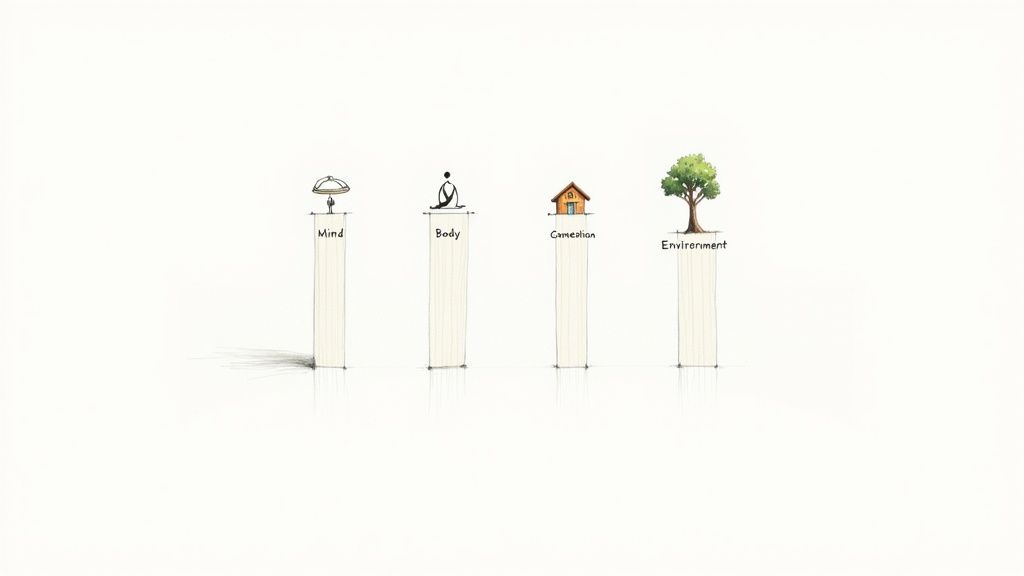
When we talk about “holistic wellness,” it’s easy to get lost in abstract concepts. A much more practical way to think about it is as a structure supported by four core pillars: Mind, Body, Connection, and Environment.
Imagine your well-being as a building. If one pillar starts to crumble, the others have to carry more weight, straining the entire structure. But when you actively reinforce all four, you create a foundation that’s not just stable, but truly resilient. This framework helps you see exactly where you need to focus your energy and gives you concrete places to start.
Let’s break down what each of these pillars means in the real world.
The Mind Pillar: Strengthening Your Inner World
This pillar is all about your internal landscape—your thoughts, your emotions, and the stories you tell yourself. It’s about the very lens through which you see the world. Two of the most effective tools for strengthening your mind are Cognitive Behavioral Therapy (CBT) and mindfulness. Though they work beautifully together, they come at the problem from different angles.
Think of CBT as a personal trainer for your brain. It helps you catch those automatic, unhelpful thought patterns—like jumping to the worst-case scenario or taking things personally—and teaches you how to challenge and reframe them. Actionable example: The next time you catch yourself thinking, “I messed up that presentation, I’m a total failure,” pause and write down a more balanced perspective: “That presentation didn’t go how I wanted, but I know what to work on for next time. One mistake doesn’t define my worth.”
Mindfulness, on the other hand, is more like becoming a curious, neutral observer of your own mind. You aren’t trying to change your thoughts; you’re just practicing noticing them without getting tangled up in them. Actionable example: Try a 3-minute “thought observation.” Sit quietly and as thoughts pop up, mentally label them as “thinking” and imagine them floating by like clouds. This creates space between you and your thoughts, reducing their power.
The Body Pillar: Fueling Your Physical Foundation
Your mind and body aren’t separate entities; they’re in constant conversation through a pathway known as the gut-brain axis. This biological superhighway means that what’s happening in your digestive system directly impacts your mood and brain function. The best way to strengthen this pillar is to nourish that connection.
You don’t have to radically overhaul your entire diet overnight. Small, consistent swaps can make a huge difference. Here are three practical actions to take:
- Action 1: Trade sugary cereal for oatmeal with berries. This stabilizes blood sugar, avoiding mood-tanking crashes. Berries are packed with antioxidants that combat inflammation, a known contributor to depression.
- Action 2: Swap potato chips for a handful of walnuts. Walnuts are a top plant-based source of omega-3 fatty acids, essential for brain health. A landmark study in Molecular Psychiatry linked higher omega-3 intake to a lower risk of depression.
- Action 3: Switch from soda to herbal tea or water. Staying hydrated is non-negotiable for brain function, whereas sugary drinks can fuel inflammation. Aim for one extra glass of water today.
By making these simple, consistent changes, you’re giving your brain the essential building blocks it needs to produce mood-regulating neurotransmitters like serotonin and dopamine.
The Connection Pillar: Building Your Support Network
As humans, we are fundamentally wired for connection. Meaningful relationships aren’t just a nice bonus—they are a biological necessity for our mental health. The key here, however, is the quality of those connections, not just the quantity.
Endlessly scrolling through social media often has the opposite effect, leaving us feeling more disconnected than ever. In fact, a study in the Journal of Social and Clinical Psychology found a direct causal link between limiting social media to just 30 minutes per day and a significant drop in feelings of loneliness and depression.
Here’s an actionable step: try trading 30 minutes of passive scrolling for one intentional act of connection. Actionable examples: Send a text to a friend asking a specific question about their day. Volunteer for one hour at a local animal shelter. Join a local book club or walking group that meets once a week. These active, real-world engagements foster a genuine sense of belonging that digital likes and shares simply can’t replicate.
The Environment Pillar: Shaping Your Surroundings
Your physical space has a powerful, often subconscious, effect on your nervous system. A cluttered, noisy environment filled with digital alerts can keep your body in a constant state of low-grade stress. In contrast, a calm, organized, and natural space can be profoundly restorative.
One of the most powerful ways to use this pillar is by getting a dose of nature. Researchers are now so convinced of its benefits that they’ve started issuing “nature prescriptions.” A study from the International Journal of Environmental Research and Public Health found that spending just 20 minutes in a natural setting can measurably lower levels of cortisol, the body’s main stress hormone.
Actionable step: Schedule a 20-minute “nature break” into your calendar today, like any other appointment. Leave your phone behind, find a nearby park, and actively engage your senses. Notice three things you can see, two things you can hear, and one thing you can smell. It’s a powerful and accessible way to reset your entire system.
Using Mind-Body Therapies for Real Relief
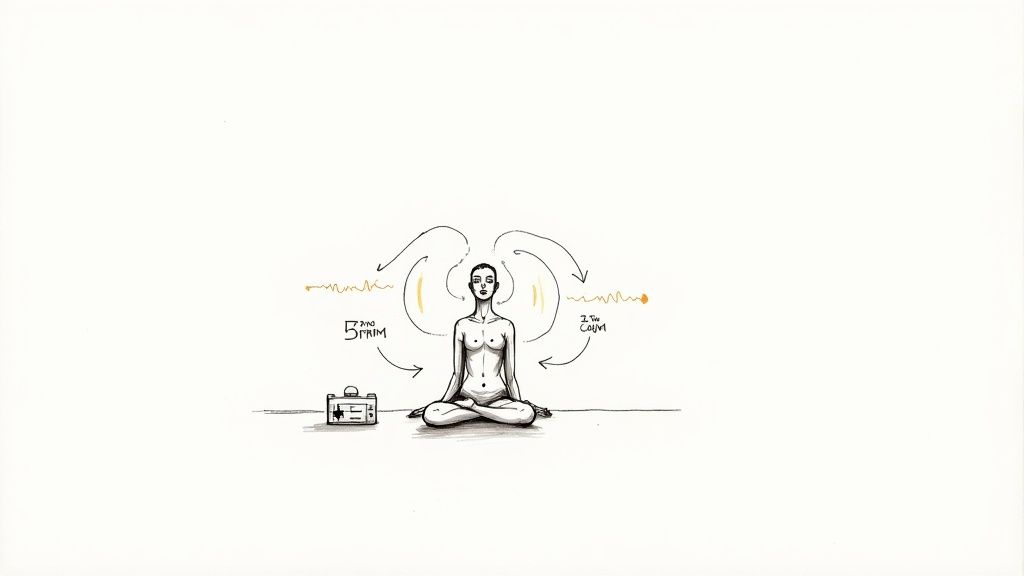
While building a strong mind and body is a great starting point, some of the most powerful holistic methods involve working directly with your body’s own systems. These are called mind-body therapies—practical, evidence-backed techniques that give you the power to actively manage your mental and emotional state right when you need it most.
Think of your nervous system as a car’s engine. When you’re stressed, it’s redlining in “fight or flight” mode, burning through your energy reserves. Mind-body practices act like a gear shift, allowing you to intentionally downshift into the calm, restorative “rest and digest” state. It’s about taking back the controls.
The need for these tools is becoming increasingly clear. Since about 30%-50% of patients don’t get the results they need from traditional antidepressant medications alone, we’re seeing a shift toward integrating complementary strategies.
The Power of Conscious Breathing
One of the simplest yet most profound tools you have is your own breath. Therapeutic breathwork is much more than just taking a few deep breaths; it involves using specific, structured breathing patterns to send direct signals to your brain. A 2023 study in Cell Reports Medicine even found that just five minutes a day of a technique called “cyclic sighing” was more effective at boosting mood than mindfulness meditation.
You don’t need years of practice to feel the benefits. Here’s a simple exercise called Box Breathing that you can try right now.
A 5-Minute Breathing Exercise (Box Breathing)
- Inhale for 4 seconds: Gently breathe in through your nose for a slow count of four.
- Hold for 4 seconds: Hold your breath at the top for another four counts.
- Exhale for 4 seconds: Slowly release the breath through your mouth for four counts.
- Hold for 4 seconds: Pause for a final four counts before the next inhale.
- Repeat: Continue this cycle for 3-5 minutes, focusing only on the rhythm and sensation.
This simple act helps reset your autonomic nervous system, quieting the body’s stress alarms almost instantly. Understanding the many benefits of deep relaxation is key to unlocking the power of the mind-body connection.
Guiding Your Brain into Calmer States
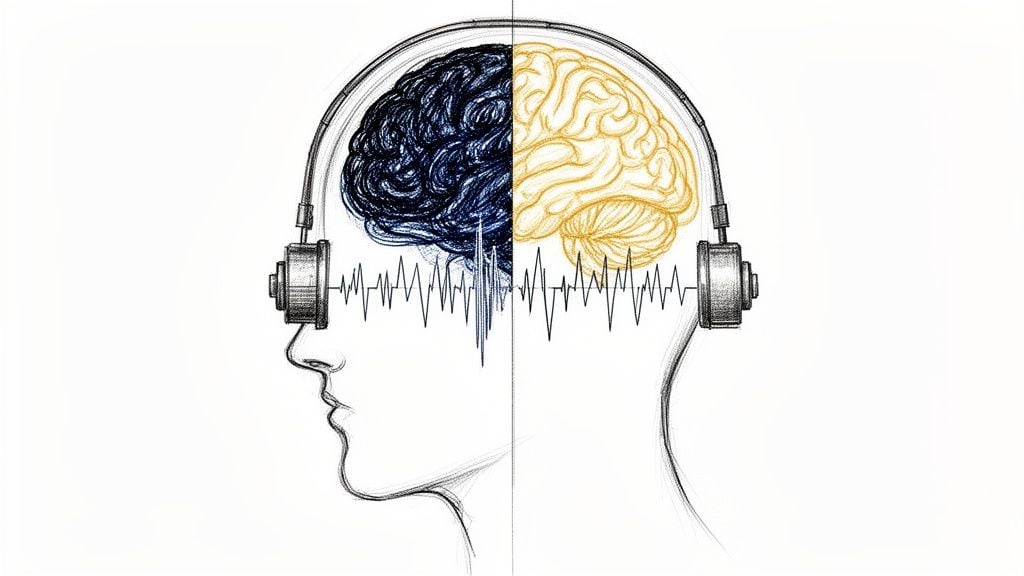
Beyond the breath, other techniques use sound and suggestion to gently nudge your brain into a more relaxed state. These methods work by influencing your brainwaves—the electrical pulses of your brain.
- Binaural Beats: This involves listening to two slightly different sound frequencies, one in each ear. Your brain processes the difference as a single, rhythmic pulse that it starts to sync up with. This can help guide your brain into relaxed alpha waves or even deep meditative theta waves. A meta-analysis in Psychological Research confirmed that binaural beats can significantly lower anxiety. Actionable step: Search for “alpha wave binaural beats” on a music streaming service and listen for 15 minutes with headphones while you work or rest.
- Hypnosis and NLP: Think of hypnosis as a state of deep focus where you become more receptive to positive suggestions. It’s a way to access the subconscious and gently reframe the limiting beliefs that often fuel depression. Neuro-Linguistic Programming (NLP) gives you practical tools to change how you think and respond to events, essentially helping you rewire old mental habits for a healthier outlook.
Advanced Applications: The 9D Breathwork Experience
Modern approaches are now combining these powerful tools to create deeply immersive experiences that get results faster. This is where something like 9D Breathwork comes in. Instead of focusing on just one thing, it layers multiple techniques together for a much bigger impact.
9D Breathwork weaves together guided breathing patterns, binaural beats, hypnotic suggestions, NLP-style coaching, and custom-designed music. This multi-sensory approach creates a powerful environment for releasing old emotional baggage and installing new, empowering beliefs at a deep, subconscious level.
By engaging the mind and body from multiple angles at once, these integrated practices can help create significant shifts in a single session. If you want to learn more, you can explore https://9dbreathwork.com/the-essentials-of-guided-breathwork-benefits-and-starting-points/. The main thing to remember is that you have access to a whole toolkit of science-backed methods to help you regain control over your nervous system and support your journey back to wellness.
Building Your Foundation with Lifestyle Medicine
If you think of mind-body therapies as the specialized tools you use for immediate relief, then lifestyle medicine is the very ground you build your mental wellness on. We’re talking about the daily, foundational habits—what you eat, how you sleep, and how you move your body. These aren’t just nice-to-haves; they are some of the most powerful and readily available ways to manage depression.
It’s a bit like building a house. You can have the most stunning interior design and the latest smart-home gadgets, but if that foundation is cracked, the whole place is at risk. Your daily lifestyle choices are that foundation. They create a stable base that makes every other therapy you try that much more effective.
Fueling Your Mind with Targeted Nutrition
It’s easy to gloss over nutrition with a simple “eat healthy,” but the reality is far more specific. Certain nutrients act like tiny messengers that directly influence your brain chemistry and mood. The link between what’s on your plate and how you feel is incredibly strong, with study after study showing that dietary shifts can make a real difference in depression symptoms.
One major clinical trial even found that switching to a Mediterranean-style diet led to remission for nearly one-third of participants who had moderate to severe depression.
Instead of trying to overhaul your entire diet at once (which can feel impossible), just focus on adding a few key mood-boosting foods to your next grocery run.
Your Mood-Boosting Shopping List (Action Plan):
- Omega-3 Fatty Acids: Critical for brain cell health and tamping down inflammation. Action: Buy a bag of flaxseeds and add one tablespoon to your smoothie or oatmeal each morning. You’ll also find them in salmon and walnuts.
- Magnesium: Often called the “calm mineral” for its role in regulating the nervous system. Action: Pack a small bag of almonds for a midday snack. You’ll also find it in spinach and avocados.
- B Vitamins: These are essential for making neurotransmitters like serotonin. Action: Hard-boil a few eggs at the start of the week for a quick, brain-boosting breakfast. Also found in leafy greens and legumes.
- Probiotics: A happy gut is closely tied to a happy mind. Action: Choose a yogurt with “live and active cultures” for your next grocery trip. Also found in kefir or kimchi.
By consciously adding these foods, you’re giving your brain the raw materials it needs to work its best. For a deeper look at how food can support you, explore these natural remedies for depression.
Reclaiming Restorative Sleep
Depression and sleep have a complicated, two-way relationship—when one is off, it almost always throws the other out of whack. Whether you’re staring at the ceiling with insomnia or feel weighed down by fatigue, improving your sleep habits can be a total game-changer. Good sleep is when your brain gets to work clearing out waste, cementing memories, and regulating emotions.
A 2014 study drove this point home, showing that when participants fixed their insomnia using cognitive behavioral therapy, they were twice as likely to fully recover from depression.
Here are a few practical strategies for a restless mind:
- Action: Create a “Wind-Down” Hour. For the last hour before bed, put all screens away. Instead, read a physical book, do gentle stretching, or listen to calming music. This signals to your brain that it’s time for sleep.
- Action: Stick to a Schedule. Set a daily alarm to go to bed and wake up at the same time, even on weekends. Consistency reinforces your body’s natural sleep-wake cycle.
- Action: Optimize Your Environment. Make your bedroom a cool, dark, and quiet sanctuary. Invest in blackout curtains or use a white noise machine to block out disturbances.
As you build this foundation, it’s also important to tackle related symptoms head-on. You can start by understanding brain fog and fatigue and strategies to overcome them.
Redefining Exercise as Joyful Movement
When you’re in the grip of depression, the thought of a grueling workout can feel completely out of reach. That’s why it’s so important to reframe “exercise” as “joyful movement.” The goal isn’t to punish your body; it’s to find ways of moving that feel good and restorative to you. A massive meta-analysis in the British Journal of Sports Medicine confirmed what many of us know intuitively: physical activity is a highly effective treatment for depression.
The best kind of movement is the one you’ll actually stick with. If you hate the gym, don’t go! Find something else that connects with you.
- Action: Walk in Nature. Schedule a 20-minute walk in a park on your lunch break, paying close attention to the sights and sounds around you.
- Action: Dance in Your Living Room. Create a “Feel Good” playlist and dance to three of your favorite songs. No judgment, just fun.
- Action: Try Gentle Yoga or Stretching. Before bed, follow a 10-minute “yoga for sleep” video on YouTube. Focus on the sensation in your body and the rhythm of your breath.
These three pillars—nutrition, sleep, and movement—aren’t just separate items on a to-do list. They work together, creating a powerful upward spiral that builds the mental and physical resilience you need to truly thrive.
How to Create Your Personalized Care Plan
Turning what you’ve learned into real, meaningful action is where the magic happens. Building a personal care plan isn’t about creating some rigid, complex system you’ll abandon in a week. It’s about choosing a few small, sustainable practices that genuinely resonate with you and gently layering them into your life. Think of this as your roadmap for weaving holistic approaches to depression into a plan that is uniquely yours.
The process is pretty straightforward. It starts with getting honest with yourself, working with professionals, setting goals you can actually achieve, and—most importantly—being kind to yourself along the way. Let’s break down how to create a plan that feels supportive, not overwhelming.
Start with a Gentle Self-Assessment
Before you can build anything, you need to know what you’re working with. A self-assessment is just a moment of honest reflection to see where you need the most support. You can do this by journaling, or even just through some quiet thought.
Ask yourself these questions:
- What are my biggest triggers? Think about specific situations, people, or even times of day that seem to drain your energy or bring your mood down. Is it that stressful weekly meeting at work? Is it the Sunday evening dread before the week starts?
- Where do I feel the most friction in my daily life? Is sleep a constant battle? Does finding the time or energy for a healthy meal feel impossible? Are you feeling isolated?
- What small things bring me even a fleeting moment of calm or joy? It could be the warmth of a cup of tea, listening to a favorite song, or just stepping outside for a breath of fresh air. These are your clues.
This isn’t about judging yourself; it’s just about gathering data. Your answers will point you toward the practices that will give you the biggest return on your effort. For example, if you realize your mood consistently tanks after too much screen time, then a digital detox practice would be a high-impact place to start.
Collaborate with Your Healthcare Team
A holistic plan works best when it complements, not conflicts with, the medical care you’re already receiving. It is absolutely essential to bring your doctor or therapist into the conversation. This ensures your plan is safe, effective, and truly working together with your other treatments.
Approaching your healthcare provider isn’t about asking for permission; it’s about building a partnership. Frame the conversation around your desire to take an active role in your well-being and support your treatment with evidence-based lifestyle changes.
Here’s how you can get that conversation started:
- Be Specific: Instead of vaguely saying, “I want to try holistic things,” try something like, “I’ve been reading about the benefits of magnesium for mood support and was wondering if that’s something I could safely add.”
- Share Your ‘Why’: Explain what you’re hoping to achieve. For instance, “I’m looking for ways to improve my sleep quality so I have more energy during the day to really engage with my therapy.”
- Ask for Their Input: Involve them in the process. You could ask, “Are there any specific types of movement you’d recommend that won’t interfere with my current treatment?”
This kind of collaborative approach gets everyone on the same page. It helps you avoid potential problems, like supplement interactions, and builds a stronger, more supportive team around you.
Set Small, Sustainable Goals
When you’re feeling down, the idea of a massive life overhaul is just plain exhausting. The real secret to lasting change is to start incredibly small. Forget about training for a marathon; right now, the goal is just to put on your shoes and walk to the end of the block. A 2018 study in Health Psychology even showed that forming tiny “micro-habits” is way more effective for long-term change than setting huge, ambitious goals.
Here are some examples of tiny, truly actionable goals:
- Instead of “eat healthier,” try “add one handful of spinach to my lunch.”
- Instead of “exercise more,” try “do a 5-minute stretch right after waking up.”
- Instead of “meditate every day,” try “take three deep, conscious breaths before starting my car.”
These micro-practices take almost no willpower to complete, which is key for building momentum and self-trust. Once a small habit feels automatic, then you can build on it.
This flow shows how the foundational pillars of lifestyle medicine—nutrition, sleep, and movement—work together to form a solid base for your well-being.
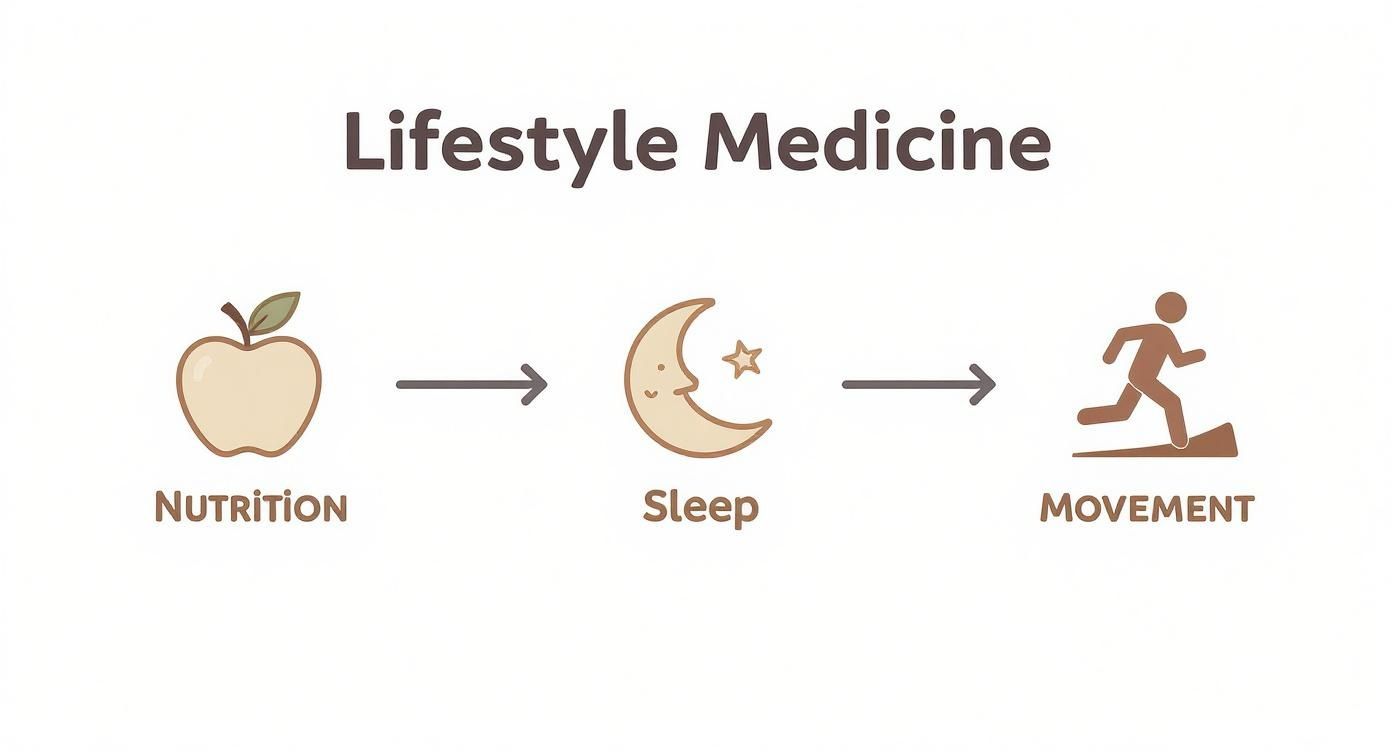
As you can see, small, consistent actions in these key areas create a positive feedback loop that supports your entire system.
Introduce One New Practice at a Time
It’s so tempting to try everything at once, but that’s a fast track to feeling completely overwhelmed. Choose just one new practice from your self-assessment and focus only on that for a week or two. Give yourself time to see how it feels without the pressure of juggling five new habits at once.
For a busy corporate professional, this could look like:
- Week 1: Focus only on a 3-minute breathwork break between meetings. Nothing else.
- Week 3: Keep up the breathwork and now add a 10-minute walk during your lunch break.
- Week 5: You’re still doing the first two habits. Now, just focus on drinking one extra glass of water.
This slow, methodical approach prevents burnout and allows each new practice to become a stable part of your routine before you add another layer. It respects your current energy levels and makes the entire process feel manageable, which is exactly what sets you up for success.
Navigating the Ups and Downs: How to Measure What Really Matters
The path to feeling better isn’t a straight line. It’s more like a winding road with sunny stretches and some unexpected detours. You’ll have days where you feel on top of the world, and other days when old, heavy feelings creep back in. That’s not failure; it’s just part of the process.
Expecting these ups and downs isn’t about being negative. It’s about being realistic. When you anticipate setbacks, you can meet them with kindness and self-compassion instead of beating yourself up.
Losing steam for a day or two doesn’t mean all your hard work is lost. It just means you’re human. The real secret is to gently get back on track. If you planned a walk in nature and missed it, don’t write off the whole week. Just go tomorrow. Remember, consistency over perfection is what truly counts. For a deeper dive into building these new mental habits, check out our guide on how to rewire your brain.
Safety First: Partnering With Your Healthcare Team
Let’s clear up a common misconception: “holistic” does not mean “anti-medication”. A truly holistic approach looks at the whole picture and respects every tool in the toolbox, including conventional medical treatments. Your holistic practices should always support, not replace, the guidance you get from your doctor or therapist.
Before you start any new supplements, make big changes to your diet, or jump into an intense mind-body practice, have a conversation with your healthcare provider. This creates a powerful, collaborative partnership, ensuring your plan is safe, cohesive, and designed specifically for you. It’s about building a support system where every piece works together.
Seeing Your Progress: More Than Just Mood
One of the trickiest parts of this journey is that “feeling better” can be a vague and shifting goal. How do you know it’s working? To keep your motivation strong, you need to track tangible signs of progress. This gives you concrete proof that your efforts are paying off, even on days when your mood doesn’t feel great.
Noticing these small wins is like giving your brain a dose of positive reinforcement. It’s proof that your actions create real, measurable change in your life.
Tracking tangible outcomes moves you from hoping for change to actively observing it. Seeing your sleep quality improve or your ability to handle a stressful meeting grow is what builds long-term commitment and self-trust.
You can measure progress in so many ways beyond just your mood. Think about tracking:
- Sleep Quality: Action: Use a simple journal beside your bed. Each morning, rate your sleep quality from 1 (restless) to 5 (deeply rested) and note how many times you woke up.
- Energy Levels: Action: Set a reminder on your phone for 2 p.m. each day. When it goes off, rate your energy on a scale of 1 to 10. You might see a clear link between your energy and the foods you eat.
- Stress Resilience: Action: At the end of each day, write down one stressful event and how you responded. Did you pause and use a breathing technique instead of reacting impulsively? That’s a huge win.
Globally, depression is a complex issue. Lifetime prevalence in high-income countries is around 14.6%, compared to 11.1% in lower-income nations. This difference shows just how much things like social support, stigma, and access to care matter. Research has found that community programs centered on lifestyle changes and psychosocial support can make a big difference, which just goes to show how powerful these small, measurable, personal changes can be.
Your Questions, Answered
When you start looking into holistic ways to manage depression, it’s natural to have a lot of questions. Let’s tackle some of the most common ones to help you move forward with confidence.
Can Holistic Practices Replace My Medication?
This is probably the most important question, and the answer is straightforward: think “and,” not “or.” Holistic methods are powerful allies, but they should be seen as partners to conventional medical treatment, not replacements.
You should never, ever stop or change your antidepressant medication without talking it through with your doctor. The safest and most effective path is one where your doctor is in the loop, helping you integrate these new practices into your existing care plan.
Think of it this way: medication can be the foundation, while holistic practices are the supportive structures you build on top of it. A 2017 review in the Annals of General Psychiatry found that things like diet and exercise are highly effective when added to standard care. The whole point is to create a complete support system for your mind and body.
How Long Until I See Results?
This really depends on the practice. Some things bring a sense of immediate relief. A single, focused breathwork session, for instance, can calm your nervous system right in the moment.
Other changes are more like planting a garden—they take time to grow. Improving your nutrition or building a consistent exercise habit creates deep, lasting resilience over weeks and months. A study highlighted in the American Journal of Public Health confirmed that the mental health benefits of regular physical activity really add up over time.
The key is patience. Use the quick-relief practices to manage the tough days, while letting the foundational habits quietly build a stronger you in the background.
Do I Need a Big Budget to Do This?
Not at all. In fact, some of the most impactful holistic tools are completely free. Here are actionable, no-cost examples:
- Action: Take a daily 15-minute walk around your neighborhood, focusing on the rhythm of your steps.
- Action: Commit to a consistent sleep schedule by setting a daily “go to bed” alarm on your phone.
- Action: Practice the Box Breathing exercise for three minutes each morning before you check your phone.
These cost nothing but your time and intention. While working with a professional like a therapist or an acupuncturist does involve a cost, you can balance that by making these free, powerful habits the core of your self-care strategy.
Ready to explore a powerful, multi-sensory approach to your well-being? 9D Breathwork brings together guided breathwork, binaural beats, and hypnotic suggestion to help you create profound shifts from the inside out. Discover a journey designed for you.