The landscape of employee wellbeing has evolved far beyond basic perks and a complimentary fruit bowl. Today’s most effective workplace wellness programs are strategic, holistic, and deeply integrated into company culture. They recognize that supporting staff means addressing the full spectrum of their health, from physical and mental to financial and social well-being. At the heart of any effective program is a focus on overall employee well-being, which research shows can significantly boost productivity and retention.
This guide moves past surface-level ideas to provide a detailed blueprint for implementation. We will explore 10 powerful workplace wellness program examples, breaking down their specific objectives, target employees, implementation steps, and key performance indicators. Each example is designed to be practical and actionable, offering a replicable framework you can adapt to your organization.
Forget generic success stories. Instead, this listicle offers a strategic breakdown with specific tactics and customization tips to ensure your initiatives are not just well-intentioned, but genuinely effective. According to a study in the Journal of Occupational and Environmental Medicine, well-designed programs can lead to significant improvements in employee health metrics. Prepare to discover concrete strategies that foster a thriving, resilient, and engaged workforce.
1. Holistic Stress Management & Mindfulness Programs
Holistic stress management and mindfulness initiatives are essential workplace wellness program examples that focus on building long-term resilience. Instead of offering temporary relief, these programs provide employees with a sustainable toolkit of practices like meditation, mindfulness-based stress reduction (MBSR), and advanced breathwork to manage pressure, heighten focus, and improve emotional regulation. The core objective is to address the root causes of workplace stress, fostering a calmer, more productive culture. A study in the Journal of Occupational and Environmental Medicine found that MBSR programs significantly reduce perceived stress and improve sleep quality among employees.
Objectives and Target Audience
- Primary Objective: Equip employees with practical skills to proactively manage stress, prevent burnout, and enhance mental clarity.
- Secondary Objective: Improve team collaboration and communication by fostering greater emotional intelligence and self-awareness.
- Target Employees: Ideal for high-pressure roles (e.g., sales, leadership, project management) and any employee reporting high levels of stress or seeking better work-life integration.
Core Activities and Implementation
A comprehensive program can be structured over a quarter:
- Month 1: Foundation Building. Begin with weekly guided meditation sessions (15-20 minutes) available both in-person and virtually. Actionable Step: Use an app like Calm or Headspace for Business to provide accessible, on-demand sessions. Introduce the core concepts of mindfulness through a kick-off workshop.
- Month 2: Skill Deepening. Host a certified instructor for an 8-week MBSR course. Actionable Step: Partner with a local mindfulness center or a certified virtual provider to deliver the course, ensuring credibility and professional guidance.
- Month 3: Advanced Practice. Introduce specialized techniques like a 90-minute 9D Breathwork journey. This somatic modality uses sound, vocal guidance, and specific breathing patterns to release stored stress from the nervous system, offering a deeper, more transformative experience than traditional mindfulness alone. Research in Frontiers in Psychology highlights how breathwork can significantly reduce symptoms of anxiety and depression.
Strategic Insight: The progression from basic mindfulness to deeper somatic practices like 9D Breathwork caters to different employee needs and readiness levels. It ensures the program remains engaging and provides increasingly powerful tools for those who want to go deeper, preventing participation fatigue. A study in PLOS ONE confirmed that breath-based practices are effective for reducing stress and enhancing mental well-being, supporting this tiered approach.
2. Mental Health and Counseling Services
Mental Health and Counseling Services, often delivered through an Employee Assistance Program (EAP), form a critical pillar of any robust corporate wellness strategy. These programs offer confidential, professional support for employees facing personal and work-related challenges, including stress, anxiety, depression, and grief. The goal is to provide a safe, accessible, and private resource that removes barriers to seeking mental health care, thereby supporting overall employee well-being and organizational health.
Objectives and Target Audience
- Primary Objective: Provide confidential, timely, and professional mental health support to help employees resolve personal issues that may impact their work performance and well-being.
- Secondary Objective: Reduce the stigma associated with mental health in the workplace and promote a culture of psychological safety.
- Target Employees: All employees, particularly those experiencing life transitions, high stress, or symptoms of mental health conditions.
Core Activities and Implementation
A successful program integrates accessibility with proactive engagement:
- Month 1: Program Launch & Awareness. Partner with a reputable EAP provider to offer a suite of services (e.g., 24/7 hotline, virtual therapy sessions, in-person counseling). Actionable Step: Launch with a company-wide campaign featuring a video from the CEO to normalize seeking help and guarantee confidentiality.
- Month 2: Manager Training & Resource Promotion. Equip managers with Mental Health First Aid training to recognize signs of distress and guide employees toward available resources appropriately. Actionable Step: Create a one-page “Manager’s Guide” with conversation starters and direct links to EAP services. Promote content on holistic approaches to depression and other mental health topics.
- Month 3: Somatic Integration. Offer a voluntary 9D Breathwork session focused on emotional release. Research in Frontiers in Psychology highlights how breathwork can significantly reduce symptoms of anxiety and depression. This provides a body-based tool for processing difficult emotions that traditional talk therapy might not address.
Strategic Insight: The most effective workplace wellness program examples for mental health go beyond a passive EAP. By actively training managers and integrating innovative somatic modalities like 9D Breathwork, companies empower employees with a wider range of tools. A meta-analysis in the Journal of Counseling Psychology found that counseling services are highly effective, and integrating them with somatic options addresses both cognitive and physiological aspects of mental health, significantly boosting engagement and impact.
3. Flexible Work Arrangements and Remote Work Options
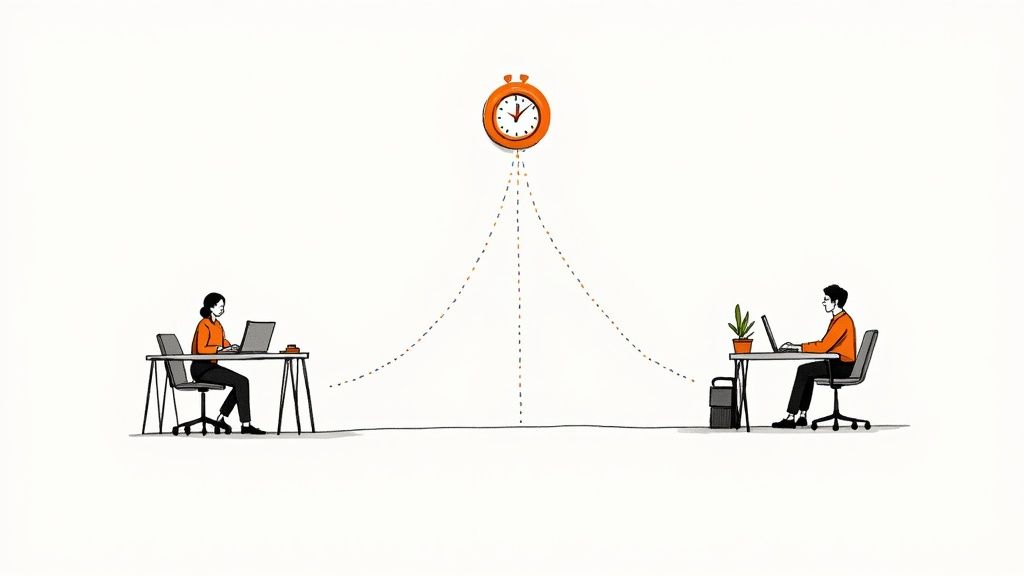
Flexible work arrangements are powerful workplace wellness program examples that empower employees by giving them greater control over their schedules and locations. This includes options like remote work, hybrid models, compressed workweeks, or flexible start and end times. The core principle is trust and autonomy, acknowledging that productivity isn’t tied to a specific desk or a rigid 9-to-5 schedule. By allowing employees to integrate their work and personal lives more seamlessly, companies can significantly reduce commute-related stress and improve overall job satisfaction.
Objectives and Target Audience
- Primary Objective: Increase employee autonomy, reduce burnout, and improve work-life balance by offering adaptable work structures.
- Secondary Objective: Attract and retain top talent by providing modern, flexible work policies that meet diverse employee needs.
- Target Employees: Highly effective for working parents, caregivers, employees with long commutes, and any role that can be performed effectively outside a traditional office setting.
Core Activities and Implementation
A phased rollout can ensure a smooth transition:
- Month 1: Policy and Tech Setup. Develop a clear remote and flexible work policy outlining expectations for communication, availability, and performance. Actionable Step: Create a “Flex Work Playbook” that defines core collaboration hours (e.g., 10 am – 2 pm) and sets clear communication protocols. Invest in essential collaboration tools like Slack, Asana, and high-quality video conferencing software.
- Month 2: Pilot Program and Training. Launch a pilot program with a specific department to identify and resolve potential challenges. A study in the Journal of Business and Psychology highlights the importance of training managers to lead remote teams effectively, focusing on outcomes rather than micromanagement.
- Month 3: Wellness Integration and Expansion. As employees adapt, introduce wellness practices tailored for remote work. Actionable Step: Schedule “no-meeting Fridays” to allow for deep work. Introduce a virtual 9D Breathwork session to help remote staff disconnect and manage the unique stressors of an “always-on” home-office culture. For more tips on maintaining concentration, explore strategies to improve focus at work on 9dbreathwork.com.
Strategic Insight: Flexibility is not just about location; it’s about trust and output-based performance management. Research from Stanford University on remote work showed a 13% increase in productivity. Integrating targeted wellness tools like 9D Breathwork directly addresses the new challenges that arise with remote work, such as digital fatigue and blurred work-life boundaries, making the policy a holistic wellness benefit rather than just a logistical one.
4. Nutrition and Healthy Food Programs
Nutrition and healthy food initiatives are foundational workplace wellness program examples that directly impact employee energy, focus, and long-term health. These programs go beyond simply offering a salad bar; they involve a strategic approach to making healthy eating the easiest choice through nutritious cafeteria options, accessible healthy snacks, and robust nutrition education. The goal is to create a food environment that fuels high performance and demonstrates a tangible investment in employee well-being. A study in the American Journal of Public Health demonstrated that simple environmental changes, like placing healthy options at eye level, significantly increase healthy food selection.
Objectives and Target Audience
- Primary Objective: Improve employees’ physical health and cognitive function by providing easy access to nutritious food and evidence-based dietary education.
- Secondary Objective: Boost employee morale, reduce absenteeism related to diet-influenced health issues, and create a supportive, health-conscious culture.
- Target Employees: Universal applicability, but particularly beneficial for employees with busy schedules who may rely on convenience foods, those with specific dietary needs, and individuals seeking to improve their overall health.
Core Activities and Implementation
A phased rollout can build momentum and ensure sustainable adoption:
- Month 1: Assess and Educate. Launch an anonymous survey to understand employee dietary preferences and restrictions. Actionable Step: Host a kick-off webinar with a registered dietitian on “Nutrition for Peak Performance,” and share a recording for those who can’t attend live.
- Month 2: Enhance Access. Partner with vendors to revamp office snacks, replacing sugary options with fruits, nuts, and yogurts. Actionable Step: Introduce “Healthy Choice” labels in the cafeteria and offer a 10% discount on these items to incentivize selection.
- Month 3: Deepen Engagement. Offer a hands-on healthy cooking class or a workshop on meal prepping for a busy week. Actionable Step: Host a “Healthy Recipe Swap” on an internal communication channel to encourage peer-to-peer engagement and sharing of practical tips. A study published in the Journal of the Academy of Nutrition and Dietetics showed that workplace interventions combining education with environmental changes are most effective.
Strategic Insight: Providing healthy options is only half the battle; education is the other. A study in Preventive Medicine found that multi-component nutrition programs significantly improve dietary habits. Combining access with knowledge transforms the program from a passive perk into an active tool for empowerment. It shifts the focus from company-led provision to employee-led lifestyle change, which is a key differentiator in effective workplace wellness program examples and yields much higher long-term engagement.
5. Stress Management and Mindfulness Programs
Stress management and mindfulness initiatives are foundational workplace wellness program examples that build long-term employee resilience. Rather than offering temporary perks, these programs provide a sustainable toolkit of practices like meditation, mindfulness-based stress reduction (MBSR), and advanced breathwork. The core objective is to address the root causes of workplace stress by equipping employees to manage pressure, heighten focus, and improve emotional regulation, fostering a calmer, more productive culture. A study in the Journal of Occupational and Environmental Medicine found that MBSR programs significantly reduce perceived stress and improve sleep quality among employees.
Objectives and Target Audience
- Primary Objective: Equip employees with practical, science-backed skills to proactively manage stress, prevent burnout, and enhance mental clarity.
- Secondary Objective: Improve team collaboration and communication by fostering greater emotional intelligence and self-awareness.
- Target Employees: Ideal for high-pressure roles (e.g., sales, leadership, project management) and any employee reporting high levels of stress or seeking better work-life integration.
Core Activities and Implementation
A comprehensive program can be structured over a quarter:
- Month 1: Foundation Building. Begin with weekly guided meditation sessions (15-20 minutes) available both in-person and virtually. Actionable Step: Schedule these as recurring calendar events for the entire company so employees can easily opt-in. Introduce core concepts through a kick-off workshop.
- Month 2: Skill Deepening. Host a certified instructor for an 8-week MBSR course. Actionable Step: Offer the course at two different times (e.g., lunchtime and end-of-day) to accommodate various schedules.
- Month 3: Advanced Practice. Introduce specialized techniques like a 90-minute 9D Breathwork journey. This somatic modality uses sound, vocal guidance, and specific breathing patterns to release stored stress from the nervous system. For more details on these approaches, explore effective employee stress management programs.
Strategic Insight: The progression from basic mindfulness to deeper somatic practices like 9D Breathwork caters to different employee needs and readiness levels. A meta-analysis in JAMA Internal Medicine confirmed that mindfulness programs reduce anxiety, depression, and pain. This tiered approach is a hallmark of successful workplace wellness program examples, preventing participation fatigue and providing increasingly powerful tools.
6. Health Screening and Preventive Care Programs
Health screening and preventive care programs are foundational workplace wellness program examples that focus on early detection and proactive health management. These initiatives offer employees confidential biometric screenings (e.g., blood pressure, cholesterol, glucose), health risk assessments (HRAs), and access to preventive services. The goal is to provide employees with a clear, data-driven snapshot of their current health, empowering them to address potential risks before they become serious issues.
Objectives and Target Audience
- Primary Objective: Identify chronic disease risks early, reduce long-term healthcare costs, and empower employees with personalized health data.
- Secondary Objective: Foster a culture of preventive health and demonstrate a tangible corporate investment in employee well-being.
- Target Employees: Universal applicability, but especially valuable for aging workforces, employees in sedentary roles, and those with known family health histories.
Core Activities and Implementation
A phased annual rollout ensures maximum participation and impact:
- Quarter 1: Launch and Screening. Announce the program and launch an on-site or voucher-based biometric screening event. A study in the American Journal of Health Promotion found that on-site screenings with immediate feedback significantly boost participation rates. Actionable Step: Offer a small incentive, like a $25 gift card, for completing the screening to maximize participation.
- Quarter 2: Education and Action. Provide employees with easy-to-understand reports and follow up with workshops on nutrition and chronic disease prevention. Actionable Step: Host a webinar titled “Understanding Your Numbers” where a health professional explains what the screening results mean in practical terms. When designing your program, consider resources that guide you in providing access to nutritious options, such as insights into healthy corporate office snacks.
- Quarter 3-4: Sustained Support. Offer one-on-one health coaching for employees identified as high-risk. Actionable Step: For those managing stress-related health markers like high blood pressure, introduce targeted interventions like a guided 9D Breathwork session to help regulate the nervous system and lower cortisol levels. A study in the Journal of Human Hypertension found that slow breathing practices can significantly reduce blood pressure.
Strategic Insight: The power of this program lies in connecting data to action. A major RAND Corporation study on workplace wellness found that lifestyle management components of wellness programs can reduce risk factors like smoking and improve exercise habits. Successful workplace wellness program examples link HRA data directly to supportive resources like health coaching and stress reduction tools, creating a clear pathway for employees to improve their numbers and overall health.
7. Wellness Challenges and Incentive Programs
Wellness challenges and incentive programs are popular workplace wellness program examples that use gamification to motivate healthy behaviors. By incorporating friendly competition, team goals, and tangible rewards, these initiatives boost engagement in activities like physical fitness, nutrition, and mental health practices. The central idea is to make wellness fun and collaborative, encouraging sustained participation through a sense of shared achievement and progress. A study in the Journal of General Internal Medicine found that gamification and social incentives significantly increased physical activity among participants.
Objectives and Target Audience
- Primary Objective: Drive broad participation in health-promoting activities by making them engaging, social, and rewarding.
- Secondary Objective: Foster team cohesion and a supportive company culture around well-being.
- Target Employees: Excellent for the entire workforce, particularly for engaging employees who may not be intrinsically motivated to join traditional wellness programs.
Core Activities and Implementation
A successful challenge can be implemented over a two-month period:
- Month 1: Physical Activity Challenge. Launch a company-wide “Step-a-Thon.” Actionable Step: Use a platform like MoveSpring or Stridekick to automate tracking and leaderboards. Create teams to foster camaraderie and encourage mutual accountability. Offer rewards for team milestones (e.g., a catered healthy lunch), not just individual winners.
- Month 2: Holistic Wellness Bingo. Introduce a “Wellness Bingo” card with a mix of activities. Actionable Step: Make the bingo card digital and interactive. Include squares like: “attend a virtual yoga class,” “try a 5-minute guided meditation,” “pack a healthy lunch three times,” and “complete a 9D Breathwork session.” This inclusive format allows everyone to participate regardless of physical ability.
Strategic Insight: The key to successful wellness challenges is shifting the focus from individual competition to collective participation. Research in The Lancet Digital Health suggests that social incentives in gamified interventions are more effective than individual ones. By rewarding team achievements and offering a diverse range of activities, companies can avoid alienating employees and instead build a powerful, inclusive culture of health that supports both physical and mental resilience.
8. Financial Wellness and Retirement Planning Programs
Financial wellness initiatives are critical workplace wellness program examples that directly address a major source of employee stress: personal finances. These programs go beyond standard retirement benefits by offering education, tools, and personalized coaching on topics like budgeting, debt management, investing, and retirement planning. The goal is to empower employees with financial literacy, reduce money-related anxiety, and improve their long-term financial security, which in turn boosts focus and productivity at work.
Objectives and Target Audience
- Primary Objective: Improve employees’ financial literacy and confidence, enabling them to reduce debt, build savings, and plan effectively for future goals.
- Secondary Objective: Decrease financial stress, which is a leading cause of absenteeism, presenteeism, and lower overall job satisfaction.
- Target Employees: Universal applicability, but particularly valuable for employees at key life stages, such as recent graduates managing student debt, new parents, and those nearing retirement.
Core Activities and Implementation
A robust financial wellness program can be implemented over several months:
- Month 1: Foundational Education. Launch with a series of webinars covering core topics like “Budgeting 101,” “Understanding Your 401(k),” and “Strategies for Debt Reduction.” Actionable Step: Use a tool like PollEverywhere during the webinar to ask anonymous questions about financial concerns, tailoring the content in real-time.
- Month 2: Personalized Guidance. Offer confidential one-on-one sessions with certified financial planners. A study from the Financial Health Network shows that personalized financial guidance leads to a measurable increase in employees’ financial health scores. Actionable Step: Partner with a service like SmartPath or Your Money Line to provide unbiased, expert coaching.
- Month 3: Advanced Well-being Integration. Host a workshop on the mind-money connection. Actionable Step: Introduce a 9D Breathwork session focused on releasing financial anxiety and scarcity mindsets. A study in the Journal of Financial Counseling and Planning shows a strong link between financial anxiety and well-being, which this somatic approach helps address.
Strategic Insight: The most effective financial workplace wellness program examples connect practical education with emotional support. Integrating a somatic tool like 9D Breathwork to address financial anxiety acknowledges that money issues are not just about numbers; they are deeply emotional. A study published in the Review of Financial Studies confirms that financial distress negatively impacts job performance, making this holistic approach a powerful tool for genuine, lasting change in both financial behaviors and overall well-being.
9. Family and Caregiver Support Programs
Family and caregiver support initiatives are crucial workplace wellness program examples that acknowledge employees’ lives outside of work. These programs offer practical assistance for responsibilities like childcare, elder care, and parental leave, reducing a major source of employee stress and absenteeism. By providing resources such as subsidized backup care, flexible work arrangements, and access to counseling, companies demonstrate a deep commitment to their employees’ overall well-being, fostering loyalty and a more inclusive culture.
Objectives and Target Audience
- Primary Objective: Alleviate the logistical and emotional stress associated with family and caregiving duties, thereby improving focus and productivity.
- Secondary Objective: Enhance employee retention and attract top talent by creating a family-friendly organizational culture.
- Target Employees: Parents of young children, employees caring for aging relatives, expectant parents, and any team member balancing significant personal caregiving responsibilities.
Core Activities and Implementation
A phased rollout can ensure the program meets genuine needs:
- Month 1: Needs Assessment & Resource Curation. Survey employees to identify their most pressing caregiving challenges. Actionable Step: Create a dedicated Slack or Teams channel for parents and caregivers to share resources and support each other, moderated by HR.
- Month 2: Policy Launch & Manager Training. Introduce enhanced parental leave policies and flexible scheduling options. A study in the Journal of Social Policy found that generous parental leave is linked to improved maternal health and child development outcomes. Actionable Step: Provide managers with a toolkit on how to manage team members before, during, and after parental leave with empathy and fairness.
- Month 3: Emotional & Somatic Support. Launch support groups for parents and caregivers. Actionable Step: Offer a specialized 9D Breathwork session focused on releasing caregiver-related stress and emotional fatigue. A study in The Gerontologist highlights the high levels of stress and depression among caregivers, making targeted emotional support crucial.
Strategic Insight: True caregiver support extends beyond logistics; it must also address the profound emotional and mental burden. Combining practical resources like backup care with deep emotional release tools like 9D Breathwork creates a holistic program that supports the employee as a whole person. A study in the Journal of Marriage and Family confirms the significant spillover effect of family stress into the workplace, making this comprehensive approach a defining feature of leading workplace wellness program examples.
10. Ergonomic and Physical Safety Programs
Ergonomic and physical safety initiatives are foundational workplace wellness program examples designed to prevent musculoskeletal disorders and create a physically safe work environment. These programs move beyond basic safety compliance, focusing on proactively optimizing workstations, improving posture, and educating employees on injury prevention. The goal is to reduce physical strain, absenteeism, and workers’ compensation claims by addressing the root causes of workplace injuries, whether in-office or remote.
Objectives and Target Audience
- Primary Objective: Prevent and reduce the incidence of musculoskeletal disorders (MSDs) like back pain and carpal tunnel syndrome through ergonomic assessments and education.
- Secondary Objective: Enhance employee comfort, focus, and overall physical well-being, leading to increased productivity and job satisfaction.
- Target Employees: Universal applicability, but especially critical for employees with desk-based roles, those in manual labor positions, and the growing remote workforce.
Core Activities and Implementation
A phased rollout can ensure maximum impact and adoption:
- Month 1: Assessment and Education. Launch with a company-wide “Ergonomics 101” webinar covering proper posture and workstation setup for both office and home environments. Actionable Step: Provide a downloadable checklist for employees to self-assess their home and office workstations.
- Month 2: Intervention and Adjustment. Provide a stipend for ergonomic equipment (e.g., chairs, keyboards, standing desks) based on assessment recommendations. A study in the Journal of Safety Research found that comprehensive ergonomic programs can reduce MSDs by up to 61%. Actionable Step: Create a curated list of pre-approved ergonomic equipment to simplify the purchasing process for employees.
- Month 3: Somatic Release and Reinforcement. Introduce a “Movement for Desk Workers” series, including office yoga and stretching. Actionable Step: Introduce a 90-minute 9D Breathwork session. This somatic practice helps release deep-seated physical tension held in the body from poor posture and repetitive strain, complementing the external ergonomic adjustments. A study in Work: A Journal of Prevention, Assessment & Rehabilitation showed that workplace physical therapy interventions significantly reduced pain.
Strategic Insight: Combining physical equipment changes with somatic practices creates a powerful, holistic solution. While an ergonomic chair addresses external factors, practices like 9D Breathwork address the internal, stored physical stress. A study in Applied Ergonomics confirms that multi-component ergonomic programs are the most effective. This dual approach is a key differentiator in advanced workplace wellness program examples, ensuring long-term physical resilience and well-being.
Top 10 Workplace Wellness Programs Comparison
| Program | Implementation complexity | Resource requirements | Expected outcomes | Ideal use cases | Key advantages |
|---|---|---|---|---|---|
| On-Site Fitness Centers and Gym Memberships | High — facility buildout, scheduling, staffing | High capital, ongoing maintenance, trainers, space | Increased physical activity; lower long-term healthcare costs; improved morale | Large campuses with available space; employee engagement focus | Convenient access; measurable fitness gains; boosts retention |
| Mental Health and Counseling Services | Medium — vendor selection, confidentiality protocols | Qualified counselors/EAPs, 24/7 access, privacy/data systems | Reduced absenteeism/presenteeism; improved productivity; safer workplace | High-stress environments; organizations addressing mental health | Confidential professional support; crisis intervention; broad wellbeing impact |
| Flexible Work Arrangements and Remote Work Options | Medium — policy changes, manager training, coordination | Collaboration tools, manager training, home-office stipends | Better work-life balance; higher satisfaction and retention; lower overhead | Knowledge work, distributed teams, talent attraction | Increases flexibility; reduces commute; expands talent pool |
| Nutrition and Healthy Food Programs | Medium–High — food service setup and partnerships | Cafeteria/kitchen or vendors, nutritionists, food budget | Improved energy and focus; better health metrics; productivity gains | On-site campuses or offices prioritizing nutrition | Direct dietary influence; visible employer investment; supports weight management |
| Stress Management and Mindfulness Programs | Low–Medium — scheduling and program promotion | Instructors/apps, quiet spaces, minimal equipment | Reduced stress and anxiety; improved focus and emotional regulation | High-stress workplaces; scalable wellbeing initiatives | Low cost relative to benefits; easy to scale; evidence of stress reduction |
| Health Screening and Preventive Care Programs | Medium — compliance, data security, follow-up pathways | Screening providers, testing equipment, HIPAA-compliant systems | Early detection of conditions; reduced future healthcare costs; personalized plans | Large employers seeking preventive ROI; health-risk populations | Detects issues early; enables targeted interventions; measurable outcomes |
| Wellness Challenges and Incentive Programs | Low–Medium — platform setup, rules, inclusivity design | Tracking apps/platforms, modest incentives, admin time | High short-term engagement; improved activity metrics; team bonding | Boosting participation quickly; team-based wellness drives | High engagement; cost-effective; fun and measurable |
| Financial Wellness and Retirement Planning Programs | Medium — vetting advisors, confidentiality measures | Financial advisors, workshops, educational materials | Reduced financial stress; improved focus; greater retirement readiness | Workforces with varied financial needs; benefits enhancement | Addresses major non-health stressor; improves loyalty; life-stage relevance |
| Family and Caregiver Support Programs | High — complex benefits design, legal compliance | Childcare/subsidies, leave administration, partner providers | Reduced caregiving stress; higher retention for parents; lower absenteeism | Employers with many caregivers; family-friendly employer goals | Strong retention benefits; supports gender equity; tangible stress reduction |
| Ergonomic and Physical Safety Programs | Medium — assessments, procurement, training | Ergonomic furniture/equipment, consultants, training time | Fewer musculoskeletal injuries; lower workers’ comp claims; greater comfort | Offices and hybrid setups; roles with physical strain | Reduces injuries/claims; improves comfort and productivity; strong ROI |
Implementing Your Wellness Strategy: Key Takeaways for Lasting Impact
Building a thriving workplace is a journey, not a destination. The diverse workplace wellness program examples detailed throughout this guide are more than just a menu of options; they are strategic blueprints for fostering an environment where employees feel valued, supported, and empowered to do their best work. Moving from inspiration to implementation requires a thoughtful, human-centered approach that transforms these ideas into a sustainable, high-impact reality.
The core principle unifying all successful programs is intentional design. A generic wellness initiative often fails because it doesn’t address the specific needs and stressors of your unique workforce. The most effective strategies are born from listening, adapting, and continuously evolving based on employee feedback and measurable outcomes.
From Blueprint to Reality: Your Actionable Next Steps
To translate the examples in this article into a program that truly resonates, focus on these critical actions:
- Start with Data, Not Assumptions: Before you launch a single initiative, gather baseline data. Actionable Step: Deploy an anonymous survey using a tool like SurveyMonkey or Google Forms to understand employee pain points. Ask specific questions: “On a scale of 1-10, how would you rate your current stress levels?” or “Which of these areas would you most like support in: financial, mental, or physical health?” This information is your compass.
- Secure Authentic Leadership Buy-In: Your program’s success hinges on leadership participation, not just budget approval. Actionable Step: When launching a new program, have a senior leader share a personal story about its importance. When executives openly participate in mindfulness sessions or take walking meetings, it sends a powerful message that employee well-being is a core company value.
- Launch a Pilot Program: You don’t need to implement all ten examples at once. Actionable Step: Select one or two high-impact, low-cost initiatives based on your survey data, such as a mindfulness challenge or a financial literacy webinar series. Run it with a single department as a pilot program to test, learn, and gather testimonials before a full-scale rollout.
- Communicate Relentlessly and Creatively: A brilliant program is useless if no one knows about it. Actionable Step: Create a dedicated “Wellness” channel in your company’s communication platform (like Slack or Teams). Use it to announce programs, share success stories, and post weekly wellness tips.
The Strategic Value of a Holistic Approach
A truly effective wellness strategy recognizes that an employee’s well-being is multifaceted. Neglecting one area, like financial stress, can easily undermine gains made in another, such as mental health. Research consistently validates this integrated approach. A study published in the Journal of Occupational and Environmental Medicine found that comprehensive, multi-component wellness programs yield a significantly higher return on investment than single-focus initiatives.
Furthermore, a 2019 study in JAMA Internal Medicine highlighted that while wellness programs can improve health behaviors, their impact is greatest when they address systemic workplace factors like workload and culture. This reinforces the need to pair programs with policies that support work-life balance and psychological safety. Ultimately, your goal is to create a culture of well-being, where healthy choices are the easiest choices. This cultural shift is the real measure of success, leading to enhanced engagement, reduced absenteeism, and a stronger, more resilient organization.
Ready to introduce a powerful, science-backed tool to combat stress and boost focus in your organization? The workplace wellness program examples above often include mindfulness, and 9D Breathwork offers a transformative, immersive experience that goes deeper. Explore how our guided breathwork journeys can become a cornerstone of your mental health and stress management initiatives at 9D Breathwork.