If you feel constantly on edge, it’s a clear sign your nervous system is stuck in overdrive. Learning how to calm your nervous system is really about intentionally shifting your body out of that high-alert, panic mode and into a state of rest and recovery. This isn’t just about “managing stress”—it’s a vital practice for your long-term physical and mental health.
Why Calming Your Nervous System Is Non-Negotiable
That nagging feeling of being frazzled, anxious, or just plain overwhelmed isn’t all in your head. It’s a very real, biological response. Your body’s built-in control center, the autonomic nervous system, operates in two main modes that function like a gas pedal and a brake.
- The Gas Pedal (Sympathetic Nervous System): This is your classic “fight or flight” response. When you sense a threat—whether it’s a looming project deadline or a real emergency—it floods you with adrenaline and cortisol. Your heart pounds, muscles tighten, and your focus becomes laser-sharp.
- The Brake (Parasympathetic Nervous System): This is your “rest and digest” mode. It’s supposed to take over when the danger is gone, slowing your heart rate, relaxing your body, and letting you recover and conserve energy.
The problem? Modern life has a tendency to keep the gas pedal slammed to the floor. The constant dings from your phone, financial pressures, and endless to-do lists mean many of us are living in a near-permanent state of sympathetic activation.
The Real Cost of a Dysregulated System
When your “fight or flight” response is always on, the consequences are felt throughout your entire body. This is a physiological reality, not just a wellness trend. A 2021 study in the journal Neuron revealed how chronic stress leads to inflammation that can impair cognitive function and memory.
Living in this high-alert state is a direct threat to your long-term health. It’s linked to just about everything, from a weaker immune system and digestive problems to burnout and chronic inflammation. This isn’t a new idea, either. A 2017 study in The Lancet found that people with higher levels of stress-related brain activity had a greater risk of developing cardiovascular disease down the road.
The global scale of this issue is immense. Neurological conditions, which are directly tied to nervous system health, now impact over 40% of the global population. They’ve become the leading cause of ill health and disability worldwide, which really drives home why taking care of your nervous system isn’t a luxury—it’s a necessity.
Your nervous system is the electrical wiring of your body. When it’s frayed from constant stress, every system it connects to—from your gut to your brain—starts to short-circuit. Regulation is the act of repairing that wiring.
Reclaiming Control Starts Now
Here’s the good news: you have more influence over this than you might think. You can consciously hit the parasympathetic “brake” using simple, practical techniques. A great starting point is learning how to reduce cortisol levels naturally to get a handle on the main stress hormone.
Simple practices like deep breathing, a moment of mindfulness, or even gentle physical touch can send powerful signals of safety to your brain, helping it find balance again. In fact, research from a 2018 study in Health Psychology shows that even very brief mindfulness exercises can measurably reduce stress and improve emotional regulation. You don’t need to meditate for hours to feel a difference.
Actionable Step: Right now, place a hand over your heart. Feel its warmth and the gentle pressure. Take three slow, deep breaths. This simple act of self-touch can be enough to start activating your parasympathetic nervous system.
Certain tools can also be incredibly helpful. For example, exploring the various benefits of weighted blankets shows how deep pressure stimulation can be a powerful way to help activate the parasympathetic nervous system and bring on a sense of calm.
Simple Techniques for Immediate Stress Relief
When your heart is pounding and your thoughts are racing, you don’t have time for a long, complicated routine. You need something that works now.
These are the tools for those moments—when you’re overwhelmed at your desk, feeling a wave of anxiety in the grocery store, or just need to hit the reset button on a stressful day. The goal is to use your body to send a powerful signal of safety straight to your brain, interrupting the fight-or-flight spiral and activating your natural calm-down system.
The Power of the Physiological Sigh
One of the fastest ways to hijack your stress response is with a technique called the physiological sigh. You already do this instinctively. It’s that double-inhale, long-exhale you do before falling asleep or when you’re about to cry. It’s your body’s built-in reset button.
Actionable Step: Try this the next time you feel a wave of stress before a meeting.
- Take a deep, full breath in through your nose.
- Then, without letting any air out, take another quick sip of air in to expand your lungs completely.
- Finally, let it all go with a long, slow, complete exhale through your mouth.
That’s it. Just one or two of these can make a world of difference. The double-inhale pops open the tiny air sacs in your lungs (the alveoli), maximizing oxygen exchange. The long exhale then dumps carbon dioxide and immediately slows your heart rate. A 2023 study in Cell Reports Medicine even confirmed that this specific pattern out-performed other breathing techniques for improving mood and calming the body.
When you’re feeling completely overwhelmed, combining this with other breathing techniques for anxiety attacks can provide an immediate sense of grounding.
This flowchart maps out a simple way to think about responding when you feel that familiar spike of stress.
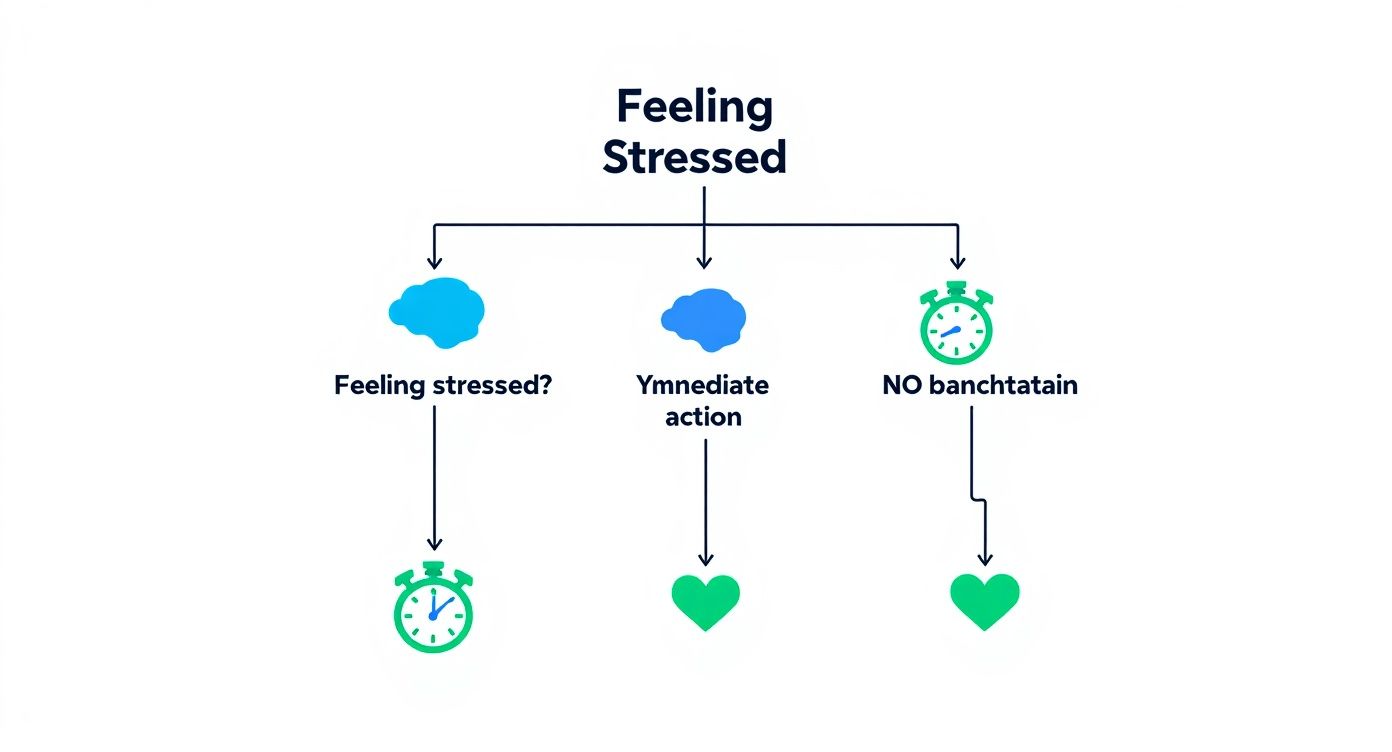
The big takeaway here? Just noticing you’re stressed is the first step. Having a simple plan of action is what puts you back in control.
Ground Yourself with the 5-4-3-2-1 Method
When your mind is caught in a loop of worry, grounding techniques are your best friend. They work by pulling you out of your head and back into the physical world, using your senses as an anchor. The 5-4-3-2-1 method is one of the easiest to remember and use.
Actionable Step: Use this while you’re stuck in traffic and feeling frustrated.
- 5 things you can see: The red tail lights ahead, the steering wheel, your own reflection, a crack in the windshield, a distant billboard.
- 4 things you can feel: The texture of your clothes, the hum of the engine vibrating through the seat, your feet inside your shoes, the cool air from the vent on your hand.
- 3 things you can hear: The radio, the sound of other cars, the whir of the air conditioning.
- 2 things you can smell: The car’s air freshener, the faint smell of exhaust.
- 1 thing you can taste: The lingering taste of your morning coffee.
By deliberately shifting your attention, you break the cycle of anxious thoughts and send a clear message to your nervous system: “I am right here, right now, and I am safe.”
Use Cold to Trigger Your Vagus Nerve
For an even faster, more physical jolt back to the present, cold exposure is incredibly effective. Splashing cold water on your face or even just holding an ice cube activates the mammalian dive reflex.
This is an ancient, hardwired response in all mammals. When cold water hits your face, it automatically slows your heart rate and redirects blood to your vital organs, kicking your calming parasympathetic nervous system into gear.
Actionable Step: Keep a reusable ice pack in your work freezer. When you feel overwhelmed, take it to the restroom, and press it gently against your neck and wrists for 30-60 seconds. Research from a 2018 study in Biology of Sport found that applying cold to the neck is a particularly effective way to activate the vagus nerve, which is a master regulator of your relaxation response.
Combining this kind of physical intervention with targeted breathing exercises to lower heart rate can give you an even more powerful sense of immediate calm.
Building Long-Term Nervous System Resilience
Quick interventions are fantastic for putting out fires in the moment, but if you want to become truly unflappable, you need to build a more resilient nervous system from the ground up. This isn’t about avoiding stress—that’s impossible. It’s about training your body and mind to handle pressure more effectively and bounce back to a state of calm much faster.
Think of it as strengthening a muscle. The more you work on it, the more robust it becomes.
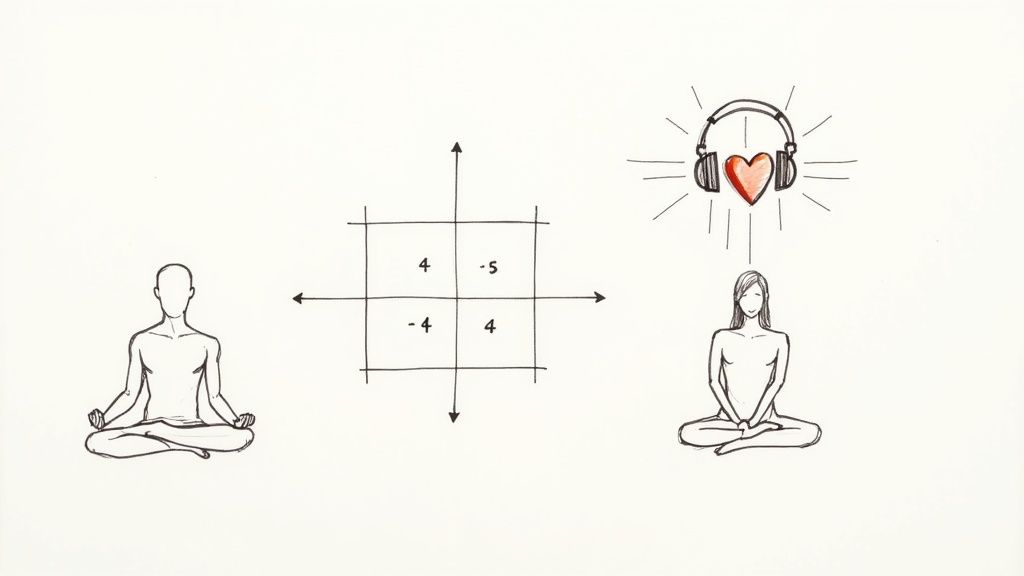
Lasting change happens when you weave consistent practices into the fabric of your daily life. These methods work cumulatively, gradually strengthening your parasympathetic nervous system—your body’s built-in “brake”—over time.
Master Your Breath with Box Breathing
One of the most structured and reliable methods for building this kind of resilience is Box Breathing. If it’s good enough for Navy SEALs to stay calm under extreme pressure, it’s definitely a powerful tool for the rest of us.
The beauty of this technique is its simplicity. You just visualize a square and let your breath follow its four equal sides:
- Inhale slowly through your nose for a count of four.
- Hold your breath at the top for a count of four.
- Exhale slowly through your mouth for a count of four.
- Hold your breath at the bottom for a count of four.
This rhythmic pattern is doing much more than just slowing your breathing down. Those holds actually create a tiny, manageable stress that improves your body’s tolerance for carbon dioxide. This, in turn, strengthens your vagal tone—a key measure of how well your vagus nerve (the superhighway of your parasympathetic system) is functioning. A 2017 study in Frontiers in Psychology confirmed that slow, paced breathing techniques like this enhance vagal activity and improve heart rate variability, which are key indicators of a resilient nervous system.
Using Sound to Guide Your Brainwaves
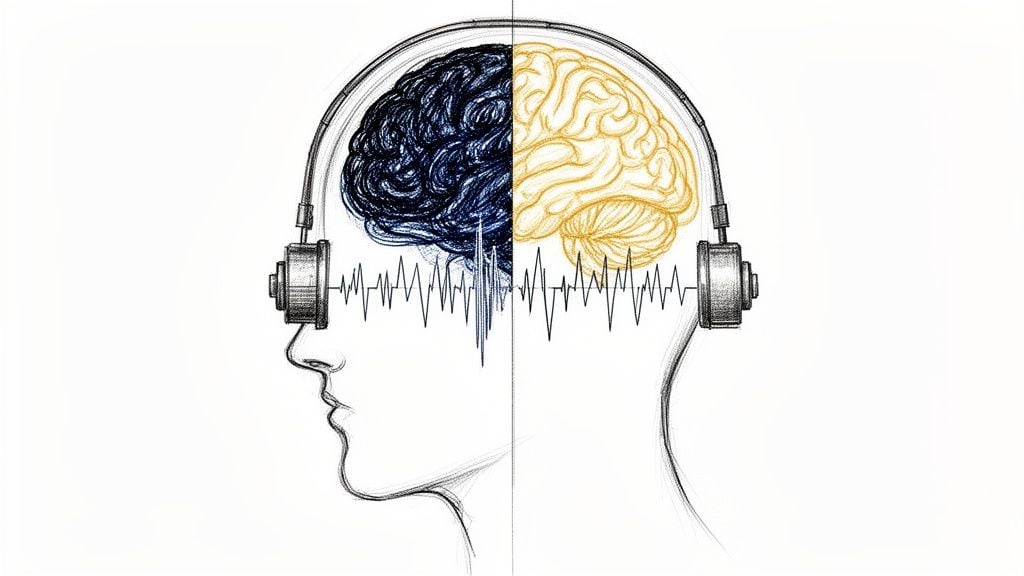
Another incredible tool for gently coaxing your brain into a calmer state is binaural beats. It sounds complex, but it’s just an auditory illusion. When you listen to two slightly different frequencies—one in each ear through headphones—your brain perceives a third, pulsating beat at the frequency of the difference between the two.
This perceived beat can gently influence your brainwaves, encouraging them to sync up. For relaxation, you’ll want to look for tracks in the alpha (8-13 Hz) or theta (4-8 Hz) range.
- Alpha Waves: Associated with that feeling of relaxed wakefulness, like when you’re daydreaming or just letting your mind wander.
- Theta Waves: Connected to deep meditation, light sleep, and that flow state where creativity seems to pour out.
Think of binaural beats as a gentle nudge for your brain. Instead of forcing yourself to relax, you’re providing an auditory guide that makes it easier for your mind to settle down and find a more peaceful state.
This isn’t just theory; a 2018 study in Psychological Research found that listening to binaural beats can significantly cut down on anxiety. People who listened to a theta-frequency beat for 20 minutes reported a major drop in their anxiety scores. The next time you feel scattered or overwhelmed, pull up a 10-minute binaural beats track on an app or YouTube and see how it feels.
Starting a Sustainable Mindfulness Practice
Mindfulness meditation is probably the most well-researched practice for improving how your nervous system regulates itself. It’s all about learning to observe your thoughts and feelings without getting swept away by them, which helps break the reactive cycle of stress. One of its most powerful benefits is the proven ability to improve Heart Rate Variability (HRV).
HRV is simply the measure of the tiny variations in time between each heartbeat. A high HRV is a great sign—it means you have a healthy, adaptable nervous system that can easily switch between high alert and deep calm. Low HRV, on the other hand, is often linked to chronic stress and a sympathetic nervous system that’s stuck in the “on” position.
A 2019 meta-analysis in JAMA Internal Medicine found that mindfulness-based stress reduction programs consistently lead to small but significant improvements in markers of inflammation, stress, and overall mental health. The global impact of neurological health is massive, as highlighted by the World Health Organization.
Actionable Step: The “One-Minute Mindful Check-In”
- Set a timer for 60 seconds. You can do this at your desk or even in the bathroom.
- Close your eyes and ask: “What’s happening in my body right now?” Notice any tension in your shoulders, your jaw, or your gut without judgment.
- Notice the feeling of your breath. Feel the air entering your nostrils and filling your lungs.
- When the timer goes off, you’re done. That’s it. Do this once or twice a day to build the muscle of self-awareness.
By consistently showing up for these practices, you’re not just calming down for a few minutes. You are actively rewiring your brain through a process called neuroplasticity. You can learn more about this in our guide on how to rewire your brain. You are teaching your nervous system new, more resilient ways to respond, one breath at a time.
Build Your Foundation with Daily Habits for a Calmer State
True, lasting calm isn’t something you achieve in a single moment of crisis. It’s something you build, piece by piece, through the small, consistent choices you make every single day. When you design a lifestyle that naturally supports your nervous system, you stop playing defense and constantly putting out fires. Instead, you create an environment where your body feels safe, balanced, and resilient by default.
This is the shift from being reactive to being proactive. By weaving simple, intentional habits into your daily rhythm, you build a foundation of stability that makes navigating life’s inevitable stressors so much easier.
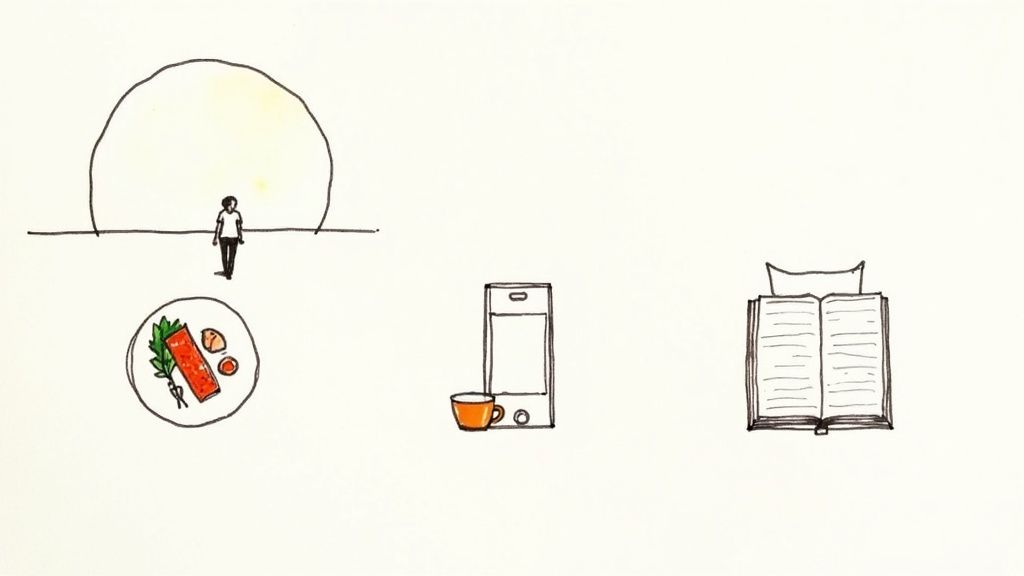
Anchor Your Day with Morning Sunlight
If there’s one non-negotiable habit to adopt, it’s getting natural sunlight in your eyes within the first hour of waking. This simple act is one of the most powerful things you can do for your internal biology.
That early morning light exposure signals your brain to dial down melatonin (the sleep hormone) while kickstarting a healthy, gradual release of cortisol to help you feel awake and alert. Most importantly, it anchors your circadian rhythm—your body’s 24-hour internal clock that governs everything from sleep cycles to hormone regulation. Research from a 2017 study in Sleep Health has confirmed that good morning light exposure is directly linked to better sleep quality and lower feelings of depression.
Actionable Step: For the next week, before you look at your phone, step outside for 10 minutes. Leave your sunglasses behind. Drink your morning coffee or tea on your porch or just stand by an open window. Notice the quality of the light and the air. This small habit sets the tone for your entire day.
Choose Movement That Soothes, Not Stresses
High-intensity workouts are great, but when your primary goal is to soothe a frazzled nervous system, gentle movement is often far more effective. Intense exercise is a form of physical stress, and if you’re already running on empty, it can sometimes push an over-activated system even further into high alert.
Gentle activities, on the other hand, are a direct invitation for your parasympathetic nervous system to take the lead, promoting relaxation and recovery.
- Yoga: The combination of slow, mindful movement with deep, intentional breathing is a fantastic way to improve your vagal tone.
- Tai Chi: Often called “meditation in motion,” this ancient practice is incredible for building body awareness and melting away stress.
- Walking in Nature: Sometimes called “forest bathing,” simply being among trees has been shown to lower cortisol, reduce blood pressure, and calm the fight-or-flight response. A 2019 study in Frontiers in Psychology showed that just 20 minutes in a natural setting can significantly lower stress hormone levels.
Actionable Step: Find a park or green space near your home or office. Schedule a 20-minute “nature break” into your calendar twice this week, just like you would a meeting. Leave your phone on silent and just walk, paying attention to the sights and sounds around you.
Your body holds the score of your stress. Gentle movement is a way of communicating back to it, letting it know that it is safe to release tension and find ease.
Fuel Your Brain for Calmness
The link between your gut and your brain—the gut-brain axis—is a superhighway for nervous system regulation. What you eat has a direct and profound impact on your mood, resilience, and baseline level of calm.
To support your system, focus on foods rich in these key nutrients:
| Nutrient | Why It’s Important | Best Food Sources |
|---|---|---|
| Magnesium | Often called the “relaxation mineral,” it helps regulate the neurotransmitters that promote calm and is essential for a healthy stress response. | Leafy greens (spinach, kale), nuts and seeds (almonds, pumpkin seeds), and even dark chocolate. |
| Omega-3s | These healthy fats are crucial for brain structure, helping to reduce inflammation and support communication between your brain cells. | Fatty fish (salmon, mackerel), walnuts, flaxseeds, and chia seeds. |
| B Vitamins | These are workhorses for producing mood-regulating neurotransmitters like serotonin and dopamine. Deficiencies are often linked to anxiety. | Whole grains, eggs, legumes, and lean meats. |
It’s not just theory. A 2018 meta-analysis published in JAMA Network Open found compelling evidence that supplementing with omega-3s can significantly reduce symptoms of clinical anxiety, highlighting just how deeply your nutrition is tied to your mental state.
Actionable Step: This week, add one of these foods to your grocery list. Try adding a handful of spinach to your smoothie, snacking on almonds instead of chips, or having salmon for dinner one night. Small, consistent changes are more powerful than a complete diet overhaul.
Practice Intentional Digital Wellness
In our always-on world, our nervous systems are under constant siege from digital overstimulation. The endless pings, notifications, and blue light exposure keep us simmering in a low-grade state of sympathetic activation. Reclaiming your calm means setting real, firm boundaries with your technology.
A great place to start is with a “wind-down” routine that tells your body it’s time to rest. This means no screens for at least 60-90 minutes before bed. The blue light from our phones and laptops is notorious for suppressing melatonin, making it harder to fall asleep and wrecking your sleep quality.
Actionable Step: Tonight, set a “tech-off” alarm for 90 minutes before your planned bedtime. When it goes off, plug your phone in to charge—outside of your bedroom. Pick up a book, listen to some calm music, or do some gentle stretching instead of scrolling.
By consciously disconnecting, you give your nervous system the precious time it needs to downshift, repair, and recover. This isn’t about ditching technology, but about using it with intention—so it serves you, not the other way around.
How to Track Your Progress and Handle Setbacks
When you first start working on calming your nervous system, it can feel a bit… abstract. How do you actually know if anything is changing? The shifts are often quiet at first, happening under the surface before you really notice them. Tracking progress isn’t about reaching some final destination; it’s about learning to spot the small, cumulative signs that show you’re moving toward a more regulated state.
We’re talking about more than just “feeling better.” You’ll start to see tangible, physical proof that your body is spending more time in that healing “rest and digest” mode. This is the real-world evidence that your daily efforts are paying off.
Recognizing the Signs of Regulation
Progress is rarely a straight line. It’s more like a series of small wins that build on each other over time. You might even notice positive changes in areas you never directly connected to stress. Keeping a simple journal for a few weeks can be a great way to help you connect the dots and see these patterns emerge.
So, what are you looking for? Here are a few key indicators that you’re on the right track:
- Deeper Sleep: It’s not just about the hours you’re in bed, but the quality of that time. You might start waking up feeling genuinely refreshed for the first time in a long time.
- Smoother Digestion: Annoying issues like bloating or general stomach upset might begin to fade. This is a classic sign your parasympathetic system is getting back online.
- Lower Resting Heart Rate: If you use a fitness tracker, you might see your resting heart rate drop by a few beats per minute. This is a solid sign your baseline stress level is decreasing.
- Higher Heart Rate Variability (HRV): This is a fantastic metric for measuring nervous system resilience. A higher HRV means your body is more adaptable and can shift from stressed to calm much more efficiently.
The goal isn’t to eliminate stress completely—that’s impossible. The real win is shortening your recovery time. Progress means you still get triggered, but you find your center again much faster than you used to.
You’ll also notice the changes in your emotional and mental landscape. Maybe a passive-aggressive email from a colleague doesn’t send you into a tailspin for the rest of the day. Or perhaps you find yourself handling a tough conversation with a loved one with more patience and clarity. These moments are huge. Research from the journal NeuroImage backs this up, showing that consistent mindfulness practices can physically change brain structures involved in emotional regulation.
Navigating Setbacks with Self-Compassion
Let’s be real: you’re going to have bad days. A terrible night’s sleep, a sudden crisis, or just an inexplicable wave of overwhelm can make you feel like you’re right back at square one. This isn’t a failure. It’s a completely normal and expected part of the process.
Think of a setback as your nervous system communicating its current limits. It’s not a moral failing; it’s just feedback. Your body is telling you it needs more support. In fact, a 2018 study in the Journal of Personality on self-compassion found that treating yourself with kindness during these moments dramatically reduces the negative impact of stress, making it far easier to get back on your feet.
Actionable Step: Create a “Hard Day” Plan
- Acknowledge, Don’t Judge. Say this phrase out loud: “This is a hard moment.” This simple validation from Kristin Neff’s work on self-compassion can be incredibly powerful.
- Pick Your Go-To Tool. What’s the easiest thing you can do? Maybe it’s two physiological sighs, five minutes of a favorite calming song, or stepping outside for fresh air. Decide on your one “emergency” tool now so you don’t have to think about it when you’re overwhelmed.
- Lean on Co-Regulation. A 2017 study in Nature Communications showed that even simple hand-holding with a partner can sync brainwaves and reduce the sensation of pain and stress. Text a friend, hug your partner, or spend a few minutes petting your dog. Connection is a powerful regulator.
Treat a setback the way you’d treat a sprained ankle—with rest, care, and a gentle return to your routine. This journey is all about becoming an expert on your own nervous system, learning to navigate its rhythms with more confidence and self-awareness.
Common Questions About Calming Your Nervous System
When you first start exploring ways to regulate your nervous system, it’s natural to have a few questions. Let’s walk through some of the most common ones I hear from people just getting started.
How Long Until I Notice a Difference?
This is the big one, and the honest answer is: it depends. You’ll likely feel some things shift right away, while other changes take a little more time.
You can get immediate relief from a spike of stress with a quick technique like the physiological sigh. Seriously, just a few of these deep, double inhales followed by a long exhale can make a noticeable difference in a matter of seconds. A 2023 study in Cell Reports Medicine actually confirmed that this specific breathing pattern gives you a rapid mood boost and dials down your body’s stress response almost instantly.
But for those deeper, more lasting changes—that feeling of being less reactive and more resilient day-to-day—consistency is everything. Think of it like going to the gym. You won’t see a change after one workout, but if you keep showing up, you’ll build strength over time. Studies on mindfulness suggest that with consistent daily practice of even 10-20 minutes, most people start feeling more grounded and less emotionally volatile within about four to eight weeks.
Are There Any Risks or Side Effects?
For the most part, the practices we’ve talked about are incredibly safe. Gentle grounding exercises, a mindful walk, or simple, slow breathing are foundational tools that carry virtually no risk. Anyone can do them, anytime.
That said, you’ll want to be a bit more mindful with the more intensive techniques.
- Intense Breathwork: Some powerful breathwork styles are designed to be activating. If you have a history of trauma, cardiovascular issues, or respiratory conditions, it’s best to work with a trained guide who can create a safe space for you.
- Prolonged Cold Exposure: Cold plunges are fantastic for building resilience, but they are a big ask for your body. It’s really important to start slow—maybe just 30 seconds at first—and pay close attention to what your body is telling you.
The golden rule is simple: if you ever feel dizzy, unwell, or overly anxious during a practice, just stop. Take a break, breathe normally, and come back to it later.
The real goal here is to build a better relationship with your body. Learning to listen when it says “that’s enough” is just as valuable as learning to push your edge.
Can I Do This If I’m On Medication?
Absolutely. Think of these practices as powerful allies that can support what you’re already doing with your doctor or therapist. They work beautifully alongside conventional treatments. For example, a 2018 meta-analysis in Psychotherapy and Psychosomatics found that mindfulness-based therapies are effective at reducing symptoms of anxiety and depression, complementing traditional treatments.
These tools are here to empower you and give you an active role in your own well-being. They are not, however, a substitute for professional medical advice. It’s always a great idea to chat with your doctor or therapist about any new practices you’re incorporating to make sure everything works together in your overall care plan.
At 9D Breathwork, we build our guided journeys on a foundation of science, using specific breath patterns and binaural beats to help you forge deep, lasting nervous system resilience. If you’re ready to start rewiring your response to stress, you can explore our approach to guided breathwork and find a journey that’s right for you.