Anxiety can feel like a relentless undercurrent in our daily lives, particularly for driven professionals juggling high-stakes careers and personal well-being. While conventional treatments are effective for many, a growing number of people are looking for ways to expand their toolkit. Exploring alternative therapies for anxiety offers a pathway to manage symptoms by addressing the intricate connection between mind, body, and environment. This guide is built for action, not just information. It’s for anyone feeling overwhelmed who wants practical, non-pharmaceutical options to regain a sense of control and calm.
We will bypass abstract theories and dive straight into ten evidence-informed therapies, from somatic practices like yoga to cognitive tools and lifestyle adjustments. Each section provides a clear breakdown: what the therapy is, who it’s best suited for, and tangible steps you can take to implement it immediately. Consider this your roadmap to building a more resilient and balanced state of being. For a deeper dive into embracing natural pathways to well-being, exploring holistic strategies to manage anxiety naturally can provide a comprehensive framework. Our goal here is to empower you with choices and the confidence to integrate these powerful techniques into your life, starting today.
1. Mindfulness Meditation
Mindfulness meditation is a mental training practice that involves focusing your awareness on the present moment. Instead of getting entangled in anxious thoughts about the past or future, you observe your thoughts, feelings, and bodily sensations without judgment. This practice helps train your attention and creates a mental space between you and your reactions, calming the nervous system’s fight-or-flight response.
This approach is one of the most well-researched alternative therapies for anxiety, with programs like Mindfulness-Based Stress Reduction (MBSR) being successfully implemented in hospitals and clinical settings for generalized anxiety disorder. It works by rewiring the brain’s neural pathways, reducing activity in the amygdala (the brain’s fear center) and strengthening the prefrontal cortex, which is responsible for emotional regulation.
How to Get Started
To begin your practice, you don’t need a special cushion or a silent retreat. Just a few minutes a day can make a difference.
- Actionable Step: Download an app like Calm or Headspace tonight. Set a reminder on your phone to complete one 5-minute guided session tomorrow morning before checking your email.
- Practical Use: When you feel your mind racing before a big meeting, anchor your attention. Focus on the physical sensation of your feet on the floor and take three slow, deliberate breaths. Notice the coolness of the air as you inhale and the warmth as you exhale.
- Try a Body Scan: Lie down before bed and, starting with your toes, bring awareness to each part of your body. Notice any tension in your feet, then your calves, then your thighs, and so on, without judgment. This can help release physical stress and prepare you for sleep.
- Stay Consistent: Dedicate just 5-10 minutes each day. Consistency is more important than duration when you’re building a new habit.
This practice is particularly useful for corporate professionals experiencing chronic stress and overwhelm, as it provides a practical tool to manage racing thoughts during a high-pressure workday. For more ways to find calm, you can learn more about how to calm anxiety naturally.
2. Cognitive Behavioral Therapy (CBT)
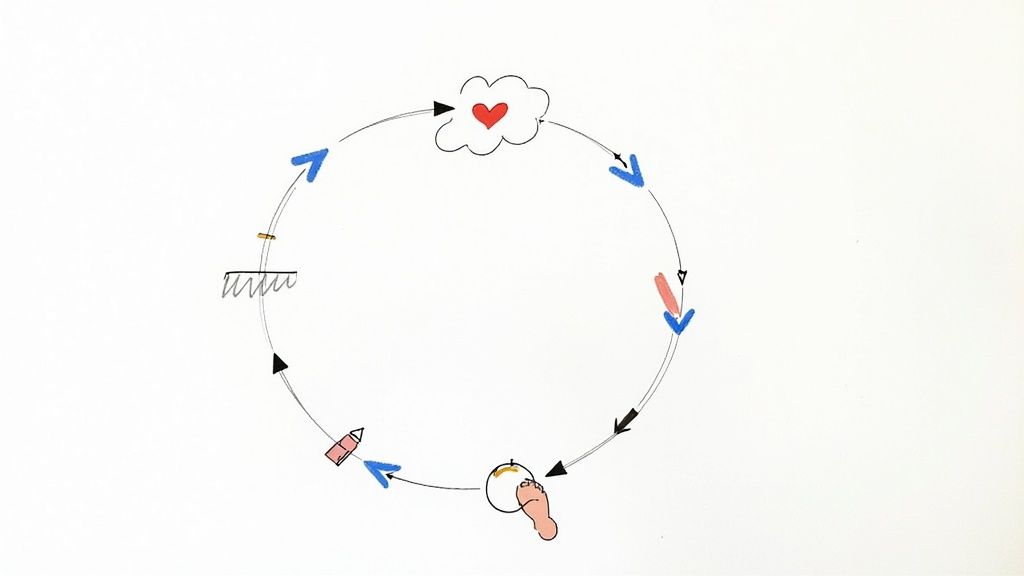
Cognitive Behavioral Therapy (CBT) is a structured, goal-oriented form of psychotherapy that helps people identify and change destructive thinking patterns and behaviors. It operates on the core principle that our thoughts, feelings, and actions are interconnected. By learning to reframe negative thoughts that trigger anxiety, you can change your emotional response and behavior, breaking the cycle of distress.
While often considered a mainstream treatment, CBT stands out among alternative therapies for anxiety because of its strong evidence base and practical, skills-focused approach. Research consistently shows significant symptom reduction, with some studies indicating a 50-80% improvement for conditions like panic disorder. Its effectiveness has led to its adaptation in various formats, from intensive clinical programs to widely accessible online platforms like BetterHelp.
How to Get Started
CBT provides practical tools you can start using immediately, often with the guidance of a trained professional. The key is active participation.
- Actionable Step: The next time you feel a wave of anxiety, grab a notebook. Write down the situation, the automatic thought (“I’m going to fail this presentation”), and the feeling (fear, dread).
- Practice Cognitive Restructuring: Challenge that automatic thought. Ask yourself: “What’s the evidence for this? Have I succeeded before? What’s a more balanced perspective?” For example, you might reframe it as: “I’m nervous, but I’ve prepared well, and I’m capable of handling questions.”
- Use Behavioral Experiments: Test your anxious predictions. If you avoid speaking in meetings because you fear judgment, set a small goal: make one comment in your next team call. Observe what actually happens. This provides real-world data to counter your fears.
- Find a Certified Therapist: Use a directory from the Academy of Cognitive Therapy or the Association for Behavioral and Cognitive Therapies to find a qualified CBT practitioner in your area.
This method is highly effective for professionals dealing with performance anxiety or imposter syndrome, as it provides a logical framework for dismantling the irrational thoughts that undermine confidence at work.
3. Yoga and Breathwork (Pranayama)
Yoga is an ancient practice that combines physical postures (asanas), controlled breathing techniques (pranayama), and meditation. This integration directly impacts the nervous system by activating the relaxation response, which helps lower heart rate, blood pressure, and cortisol levels. It works by improving interoception (awareness of internal bodily sensations), which allows you to notice and regulate the physical symptoms of anxiety before they escalate.
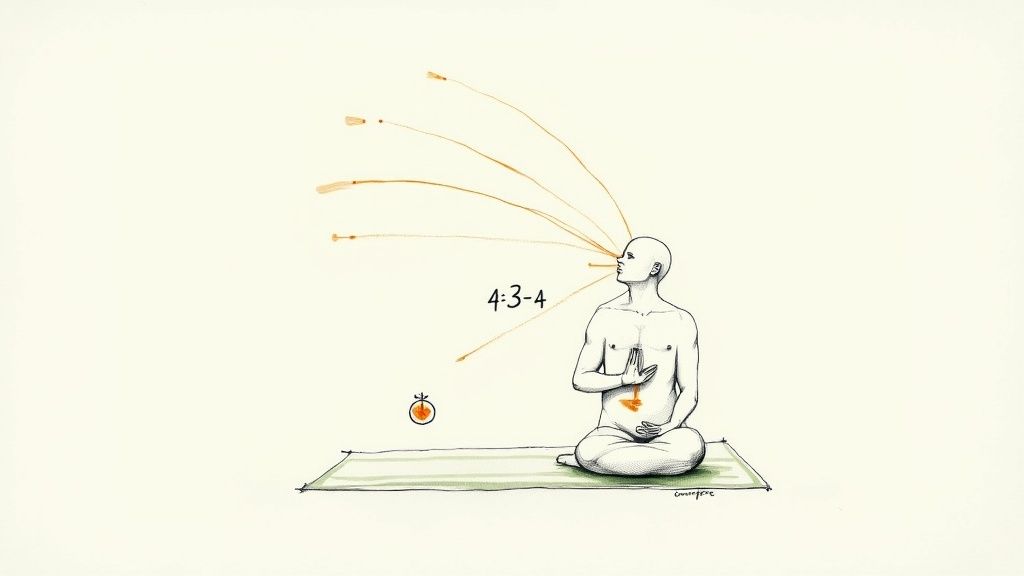
This holistic approach is one of the more established alternative therapies for anxiety, with studies highlighting its effectiveness. For example, trauma-sensitive yoga programs are widely used for PTSD and anxiety, while some veterans’ yoga initiatives have demonstrated significant anxiety reduction. The practice enhances GABA levels, a neurotransmitter that helps calm nerve activity, producing a tranquilizing effect similar to anti-anxiety medications.
How to Get Started
Getting started is as simple as finding a quiet space and a mat. You don’t need to be flexible; the goal is mindful movement, not perfect poses.
- Actionable Step: Find a “Yoga for Anxiety” video on YouTube (like those from Yoga with Adriene). Commit to doing a 20-minute practice three times this week. Put it in your calendar.
- Practice Box Breathing: Right now, try this: Inhale slowly for a count of four. Hold your breath for four. Exhale slowly for four. Hold the exhale for four. Repeat this cycle five times. This simple exercise can calm your nervous system in under two minutes.
- Focus on Gentle Styles: When looking for a class, search for Hatha, Yin, or Restorative yoga. These slower-paced styles are designed for deep relaxation and are perfect for beginners.
- Aim for Consistency: A 15-minute home practice four times a week will yield more benefits than one 90-minute class on the weekend. Build a sustainable routine.
This practice is ideal for professionals who store stress physically in their bodies, such as in their neck and shoulders. It provides a way to release this tension while simultaneously calming a racing mind after a demanding day.
4. Acupuncture
Acupuncture is a key component of Traditional Chinese Medicine (TCM) that involves inserting very thin needles into specific points on the body. This practice is believed to rebalance the flow of energy, or “qi.” From a Western perspective, acupuncture stimulates nerve endings, triggering the release of pain-relieving endorphins and activating the parasympathetic nervous system, which shifts the body from a state of high alert into one of rest and recovery.
As one of the more established alternative therapies for anxiety, acupuncture is increasingly used in integrative medicine settings. For instance, it’s offered in VA hospitals to help veterans manage PTSD and anxiety, and some corporate wellness programs now include it to combat workplace stress. Research has shown it can be highly effective, with some studies demonstrating a significant reduction in anxiety symptoms after just a few weeks of consistent treatment.
How to Get Started
Acupuncture sessions are typically calm and restorative. Finding a qualified practitioner is the most important first step.
- Actionable Step: Use the practitioner directory on the National Certification Commission for Acupuncture and Oriental Medicine (NCCAOM) website to find three licensed acupuncturists near you. Read their reviews and schedule a consultation with one this week.
- Ask the Right Questions: During your consultation, ask: “What is your experience treating anxiety? What would a typical treatment plan look like for someone with my symptoms?”
- Prepare for Your First Session: Eat a light meal an hour before your appointment to prevent lightheadedness. Wear loose, comfortable clothing that can be easily rolled up to your elbows and knees.
- Track Your Progress: Use a simple 1-10 scale to rate your anxiety level before and after each session. This gives you and your practitioner concrete data on how the treatment is working.
This therapy is particularly beneficial for individuals whose anxiety manifests in physical symptoms like tension headaches or digestive issues, as it addresses both the mental and physical components of stress.
5. Herbal Remedies and Adaptogens
Herbal remedies involve using plant-based substances, such as adaptogens, to help the body manage stress and reduce anxiety symptoms. Adaptogens are unique plants that help stabilize physiological processes and promote homeostasis, effectively enhancing the body’s resistance to physical, chemical, or biological stressors. Common options include ashwagandha, passionflower, lavender, and L-theanine (an amino acid found in green tea).
These natural compounds are gaining traction as evidence-backed alternative therapies for anxiety. For instance, clinical trials have shown ashwagandha can significantly lower cortisol levels and reduce anxiety scores. Similarly, lavender, used in aromatherapy and supplements, has demonstrated calming effects comparable to low-dose benzodiazepines in some hospital settings. They work by modulating neurotransmitters like GABA and serotonin, which play a key role in mood regulation.
How to Get Started
Integrating herbal remedies requires careful consideration and a methodical approach. It’s crucial to consult a healthcare provider, especially if you take other medications.
- Actionable Step: Schedule a consultation with your doctor or a naturopathic physician to discuss if an herb like Ashwagandha (for chronic stress) or L-theanine (for acute focus and calm) is right for you. Do not start taking supplements without professional guidance.
- Choose Certified Products: When purchasing, look for supplements with third-party testing seals like NSF, USP, or ConsumerLab.com. This verifies the product’s purity and potency.
- Start with a Single Herb: Introduce one remedy at a time and take it consistently for at least four weeks. This allows you to accurately gauge its effect on your anxiety before adding anything else.
- Practical Example: If you often feel wired but tired, ashwagandha may help regulate your cortisol rhythm. If you get jittery from coffee but need focus, adding L-theanine can promote a state of calm alertness.
This approach is especially beneficial for professionals seeking a non-pharmaceutical way to buffer the physiological impact of chronic workplace stress, helping to restore balance to an overtaxed nervous system.
6. Exercise and Physical Activity
Regular physical activity is a powerful tool for managing anxiety, functioning much like a natural anti-anxiety medication. When you exercise, your body releases endorphins, which are potent mood-boosting neurochemicals. This process also helps regulate the nervous system, decreases sensitivity to the body’s fight-or-flight response, and improves sleep quality, all of which contribute to lower anxiety levels.
Exercise is one of the most evidence-backed alternative therapies for anxiety, with organizations like the American Psychological Association actively promoting it for mental health. It works by reducing stress hormones like cortisol and increasing brain-derived neurotrophic factor (BDNF), which supports brain health and resilience. From corporate running clubs that demonstrably lower employee stress to community fitness classes providing social connection, the benefits are well-documented.
How to Get Started
Integrating movement into your routine doesn’t require a gym membership or intense workouts. The key is finding a sustainable activity you enjoy.
- Actionable Step: Block out three 20-minute “movement breaks” in your calendar for this week. This could be a brisk walk, a quick bike ride, or dancing to a few songs in your living room.
- “Snack” on Exercise: You don’t need a long session. When feeling anxious at your desk, do 2 minutes of jumping jacks or run up and down the stairs. This quick burst can immediately shift your mental state.
- Make it Enjoyable: The best exercise is the one you’ll stick with. If you hate running, don’t force it. Try a team sport, a hiking group, or a dance class instead.
- Practical Use: If you have an important presentation, go for a 15-minute walk beforehand. The movement will help burn off excess adrenaline and improve your focus.
This approach is highly effective for busy professionals, as even a short walk during a lunch break can help manage stress and improve focus. To understand more about how physical activity influences stress hormones, you can learn how to reduce cortisol levels naturally.
7. Aromatherapy and Essential Oils
Aromatherapy is a holistic healing treatment that uses natural plant extracts, known as essential oils, to promote well-being. When inhaled, the aromatic molecules travel from the olfactory nerves directly to the brain’s emotional center, the amygdala, and the limbic system. This direct pathway allows specific scents, like lavender or bergamot, to trigger a calming physiological response and lower stress hormone levels.
This is a widely accessible alternative therapy for anxiety, with studies showing its effectiveness in various settings. For example, diffusing lavender oil in hospital waiting rooms has been shown to reduce pre-procedure anxiety in patients. It works by influencing brain wave activity and neurotransmitter systems, such as serotonin and GABA, which help regulate mood and induce relaxation without the need for conscious effort.
How to Get Started
Integrating aromatherapy into your routine is simple and can be done almost anywhere. A few key practices can help you get the most benefit safely.
- Actionable Step: Purchase one high-quality, 100% pure essential oil known for calming properties, such as lavender or bergamot. Also, get a small ultrasonic diffuser for your desk or nightstand.
- Create a Ritual: Add 3-5 drops of your chosen oil to the diffuser and run it for 20 minutes while you wind down before bed. Associate the scent with relaxation.
- On-the-Go Relief: Place one drop of lavender oil on a tissue. When you feel anxiety rising during the day, discreetly bring the tissue to your nose and take three deep, slow breaths. This is a powerful and portable anchor to calm.
- Apply Topically with Caution: Never apply pure essential oils to the skin. Mix 1-2 drops with a teaspoon of a carrier oil (like jojoba or fractionated coconut oil) and apply to your wrists or the back of your neck.
This practice is particularly beneficial for professionals who need a discreet and immediate way to manage acute stress. Pairing a calming scent with a deep breathing exercise can create a powerful, on-the-spot relaxation ritual.
8. Progressive Muscle Relaxation (PMR)
Progressive Muscle Relaxation (PMR) is a physical technique where you systematically tense and then release different muscle groups throughout your body. Developed by Dr. Edmund Jacobson, this method works on the principle that mental anxiety and physical tension are linked; by consciously relaxing your muscles, you can send signals of calm to your mind, effectively reducing feelings of anxiety and stress.
This powerful mind-body practice is a cornerstone of many evidence-based alternative therapies for anxiety, frequently incorporated into Cognitive Behavioral Therapy (CBT) protocols and stress-management programs for military personnel. Its effectiveness comes from teaching you to recognize the subtle physical signs of stress and giving you a direct method to counteract them, interrupting the cycle of tension that often accompanies anxious thoughts.
How to Get Started
You can practice PMR anywhere you can sit or lie down comfortably. It is a physical skill that improves with consistent practice.
- Actionable Step: Find a guided PMR audio track on YouTube or a mindfulness app. Tonight, before you go to sleep, listen to a 10-minute session in bed.
- Practice a Mini-Session: Right now, at your desk: Clench your fists and raise your shoulders up to your ears, holding the tension for 5 seconds. Now, release completely with a sigh. Notice the difference between tension and relaxation. You can do this discreetly during a stressful workday.
- Work Systematically: A full session involves moving through the body. Start with your feet (curl your toes), then legs (tighten your thighs), torso (clench your abdomen), and so on up to your face (scrunch your eyes and forehead). Tense for 5-7 seconds, then release for 20-30 seconds, feeling the warmth of relaxation.
- Enhance with Breathing: Coordinate your breath with the action. Inhale as you tense the muscle group, and exhale fully as you release it.
This technique is particularly effective for individuals who hold stress physically, such as corporate professionals with neck and shoulder pain. It provides a tangible way to release built-up tension after a long day. For other physical techniques to induce calm, you can explore breathing exercises to lower your heart rate.
9. Nature Therapy and Ecotherapy
Nature therapy, also known as ecotherapy, involves therapeutic engagement with the natural world to improve mental well-being. The core principle is that humans have an innate connection to nature, and spending time in environments like forests, parks, or near water can significantly reduce stress, lower blood pressure, and calm the anxious mind. It works by decreasing cortisol levels and activating the parasympathetic nervous system, shifting you from a state of high alert to one of rest and recovery.
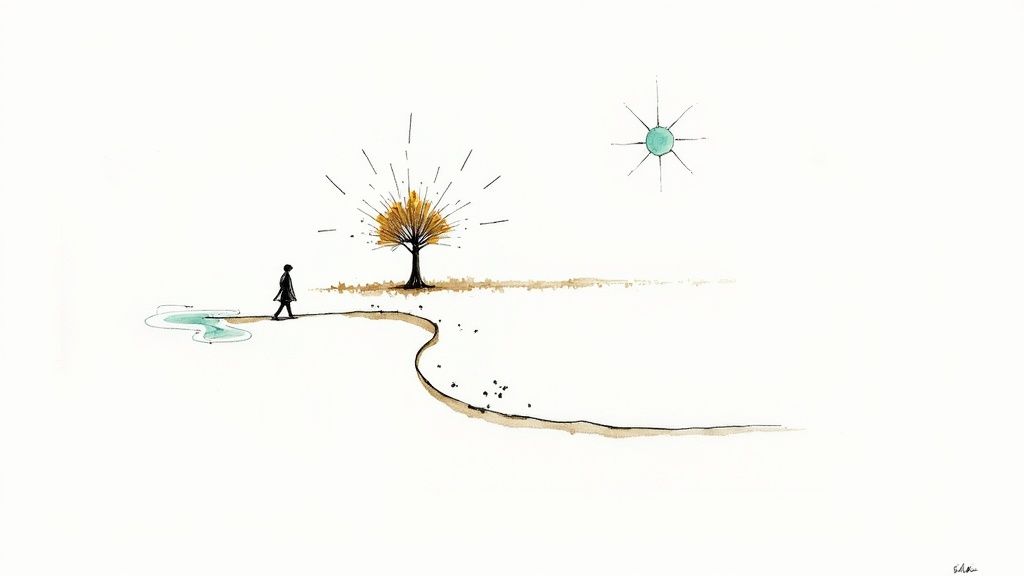
This approach is one of the more accessible alternative therapies for anxiety, with research from Japan on “forest bathing” (Shinrin-yoku) showing significant reductions in stress hormones after just a short time spent among trees. It’s not just about hiking; urban community gardens have also been shown to decrease anxiety in city dwellers. Ecotherapy provides a restorative break from the overstimulation of modern life, helping to ground you in the present moment through sensory engagement.
How to Get Started
Integrating nature into your routine doesn’t require a remote wilderness trip. You can find its benefits right outside your door.
- Actionable Step: Identify the nearest park or green space to your home or office. Schedule a 20-minute “Nature Break” in your calendar for tomorrow’s lunch hour. Leave your phone in your pocket.
- Practice “Forest Bathing”: During your walk, engage all your senses. Your task is to notice five things you can see, four things you can feel (the breeze, the rough bark of a tree), three things you can hear (birds, leaves rustling), two things you can smell, and one thing you can taste. This grounds you in the present.
- Bring Nature Indoors: If you can’t get outside, buy a small, low-maintenance plant (like a snake plant or pothos) for your desk. The simple act of caring for it and having greenery in your sightline can be calming.
- Find an Accountability Partner: Ask a colleague to join you for a daily walk outside instead of taking a break in the office kitchen. This combines nature, movement, and social connection.
This practice is ideal for professionals feeling disconnected or burned out from excessive screen time, offering a simple and powerful way to reset the nervous system and regain a sense of perspective.
10. Art and Music Therapy
Art and music therapy are creative expression practices that engage non-verbal parts of the brain to process difficult emotions. Instead of struggling to find words for what you feel, these therapies provide an outlet to express and release anxiety through painting, drawing, or engaging with music. This creative process helps shift focus away from ruminating thoughts and can activate the brain’s relaxation response.
These approaches are powerful alternative therapies for anxiety because they bypass the analytical mind, which can often get stuck in anxious loops. Studies have shown significant success, with hospital art therapy programs reducing patient anxiety by 25-40% and music therapy effectively calming behavioral anxiety in dementia care settings. It works by providing a sensory experience that grounds you in the present moment, reducing cortisol levels and promoting a sense of accomplishment and control.
How to Get Started
You don’t need to be a skilled artist or musician to benefit. The goal is expression, not perfection.
- Actionable Step: Buy an adult coloring book and a set of colored pencils. Spend 15 minutes coloring tonight instead of scrolling on your phone. Focus on the physical sensation of the pencil on the paper.
- Create an “Anxiety-Relief” Playlist: Go to your preferred music app and build a playlist of songs that make you feel calm and grounded. Use instrumental or ambient music without lyrics for best results when you need to focus. Play it during stressful work tasks.
- Try “Scribble and Release”: Take a piece of paper and a crayon or marker. Close your eyes, think about your anxiety, and just scribble furiously on the page for one minute, releasing the energy. Then, look at the page, take a deep breath, and throw it away.
- Join a Group: Look on sites like Meetup.com for local community art classes, pottery workshops, or drumming circles. This provides structure and social connection.
This practice is especially beneficial for individuals who find it difficult to talk about their feelings, providing a tangible way to externalize and understand internal emotional states.
10 Alternative Anxiety Therapies Compared
| Method | Implementation complexity | Resource requirements | Expected outcomes | Ideal use cases | Key advantages |
|---|---|---|---|---|---|
| Mindfulness Meditation | Low–Moderate (habit formation) | Minimal (time, guided apps) | ≈25–30% anxiety reduction with regular practice | Mild–moderate anxiety, stress management, adjunct therapy | Low cost, strong research base, widely accessible |
| Cognitive Behavioral Therapy (CBT) | High (structured, therapist-led) | Trained therapist, 12–20 sessions, homework | Strong evidence; large symptom reduction for many anxiety disorders | Clinical anxiety (GAD, panic, social anxiety, OCD), targeted change | Evidence-based, practical skills, durable gains |
| Yoga & Breathwork (Pranayama) | Moderate (learn postures & breathing) | Instructor/classes or online, 45–90 min sessions | 20–30% cortisol reduction; anxiety improvement over 8–12 weeks | Anxiety with physical tension; mind–body preference | Combines physical exercise and relaxation; scalable intensity |
| Acupuncture | Moderate (professional administration) | Licensed acupuncturist, multiple sessions (6–12) | Variable; some studies ~30–33% reduction in weeks | Adjunctive treatment, those open to TCM approaches | Well-tolerated, promotes relaxation, non-pharmacologic |
| Herbal Remedies & Adaptogens | Low–Moderate (selection & monitoring) | Supplements/teas, third-party testing, 4–6 weeks to act | Variable by herb; some trials show substantial reductions | Mild anxiety, preference for natural or adjunctive options | Affordable, generally well-tolerated, supports overall wellness |
| Exercise & Physical Activity | Moderate (routine building) | Minimal equipment, 150 min/week recommended | 30–40% symptom reduction; comparable to meds for mild–moderate | General anxiety, comorbid physical health goals, mood support | Multiple health benefits, sustainable coping strategy |
| Aromatherapy & Essential Oils | Low (easy to implement) | Oils, diffuser or carrier oil for topical use | Immediate but typically temporary calming effects | Situational anxiety, sleep prep, adjunct to other treatments | Fast-acting, pleasant, portable, inexpensive |
| Progressive Muscle Relaxation (PMR) | Low (simple technique) | Time 15–30 min, guided recordings optional | 15–25% anxiety reduction; immediate relaxation response | Acute tension, pre-sleep routine, adjunct therapy | Quick to learn, no equipment, immediate calming |
| Nature Therapy & Ecotherapy | Low–Moderate (access dependent) | Access to green/blue spaces, time 20+ minutes | Reduced cortisol and anxiety; benefits accumulate with regular exposure | Those with access to outdoors, lifestyle-based management | Low cost, holistic benefits (exercise, sunlight, social) |
| Art & Music Therapy | Moderate (therapist-guided or self-directed) | Art materials or instruments; trained therapist for clinical use | Anxiety reduction reported (varying studies, e.g., 25–40%) | Non-verbal expression, trauma, those preferring creative outlets | Engages emotional processing, enjoyable, alternative expression |
Crafting Your Personalized Anxiety Toolkit
Navigating the landscape of alternative therapies for anxiety can feel overwhelming, but it’s a journey of empowerment. We’ve explored a diverse array of practices, from the cognitive reframing of CBT to the grounding energy of nature therapy, and the somatic release offered by yoga and Progressive Muscle Relaxation. The key takeaway isn’t to find a single magic bullet, but to thoughtfully curate a personalized toolkit that addresses your unique needs.
The true power of these approaches lies not in isolation, but in integration. Your path to managing anxiety is not about choosing between mind-based and body-based therapies; it’s about understanding how they can work in harmony. You have the agency to design a system of support that fits your lifestyle, preferences, and daily rhythms.
Building Your Integrated Practice
The most effective anxiety management plans are dynamic and layered. Think of it as creating a recipe for your well-being, where different ingredients serve different purposes. The goal is to build resilience through consistent, intentional action, not to achieve a flawless state of calm overnight.
Here’s a practical framework for getting started:
- Select Your Foundation: Choose one “daily practice” from this list. A great starting point is a 5-minute guided meditation each morning or a 15-minute walk after lunch. Commit to it for one week.
- Create a “First-Aid” Kit: Identify one “in-the-moment” technique for when anxiety spikes. Examples: Box Breathing (from the Yoga section), Progressive Muscle Relaxation of just your hands and shoulders, or inhaling a calming essential oil from a tissue. Practice it when you’re calm so it’s ready when you’re stressed.
- Schedule and Track: Put your daily practice in your calendar with a reminder. In a notebook, create two columns: “Anxiety Trigger” and “Tool I Used.” This helps you see what’s working and builds a sense of control. For example: “Trigger: Critical email from boss. Tool: Did 2 minutes of Box Breathing. Felt 20% calmer.”
The Power of Experimentation and Consistency
Remember, this is a process of self-discovery. What works wonders for one person may not resonate with you, and that’s perfectly okay. Give yourself permission to experiment. If acupuncture feels too intense, perhaps the gentle rhythm of art therapy is a better fit. If herbal remedies don’t sit well with you, maybe a dedicated ecotherapy practice will provide the relief you seek.
Key Insight: Consistency will always trump intensity. A daily 5-minute commitment to a practice is far more beneficial than a sporadic 60-minute session once a month. Small, sustainable actions are what build new neural pathways and create lasting change.
By actively engaging with these alternative therapies for anxiety, you are moving from a passive state of enduring anxiety to an active role of managing it. You are equipping yourself with the tools to self-regulate, build resilience, and cultivate a deeper sense of control and inner peace, transforming your relationship with your own mental well-being.
If you found the sections on breathwork compelling and want to explore a powerful, transformative modality, consider 9D Breathwork. It combines deep, rhythmic breathing with a multidimensional sound experience to help you release stored emotional baggage and rewire your nervous system. Learn more about this profound approach to healing at 9D Breathwork.