Stress management training isn’t some fluffy “nice-to-have” perk anymore. It’s a core business strategy, plain and simple. Giving your team the tools to handle pressure is a direct investment in building a resilient, high-performing workforce that can actually move the needle on your goals.
This isn’t just about combating burnout. It’s about protecting your bottom line by boosting the two things that matter most: productivity and retention.
The High Cost of Ignoring Employee Stress
Let’s be blunt: unmanaged workplace stress is a silent killer of profits. It quietly chips away at productivity, sends your best people heading for the door, and suffocates innovation.
When your employees are constantly in a state of high alert, their ability to think creatively or focus deeply plummets. It’s not their fault; it’s just human biology. This creates a ripple effect you can feel across the entire organization.
Actionable Example: Think about a customer service team battling chronic stress. They’re far more likely to be reactive and short-tempered, which can do real damage to customer loyalty. Or what about a product team under constant pressure? They’ll probably start playing it safe, avoiding the very risks that lead to breakthrough ideas and a competitive edge. The solution isn’t just to tell them to “relax.” It’s to train them in de-escalation breathing techniques they can use between difficult calls, or run workshops on setting digital boundaries to prevent after-hours burnout.
The problem has hit a boiling point. A massive Gallup survey across more than 160 countries found that employee engagement has cratered to just 21%. Even more alarmingly, 44% of workers feel more stressed now than they did five years ago. You can dig into the specifics in the full Workplace Pulse survey from Mindful Leader. This isn’t just a morale issue—the economic stakes are huge.
From Hidden Drain to Strategic Advantage
Shifting your perspective to see stress management training for employees as a strategic investment changes everything. It stops being a line item on the expense sheet and becomes a powerful lever for building a stronger, more adaptive organization.
The science backs this up. A meta-analysis published in the Journal of Occupational Health Psychology looked at 36 different studies and found a clear pattern: stress management programs consistently led to big drops in psychological distress, including anxiety and burnout. The researchers specifically noted that programs blending cognitive-behavioral skills with relaxation techniques were the most effective.
When you equip your team with the skills to manage stress, you’re not just improving their wellbeing; you’re unlocking their full potential to contribute to the company’s success. It becomes a catalyst for a more engaged, innovative, and resilient culture.
The Tangible Business Outcomes
The benefits of a solid stress management program go way beyond just making people feel better. They show up directly on your balance sheet.
A study in the International Journal of Environmental Research and Public Health confirmed what many of us have seen firsthand: a direct link between high work-related stress and employees thinking about quitting. By actively reducing that stress, you’re not just improving morale; you’re strengthening retention and slashing the massive costs that come with recruiting and training new hires.
It gets better. Another study published in Frontiers in Psychology found that mindfulness-based programs actually improved employees’ working memory and executive functioning. These are the critical cognitive skills needed for complex problem-solving and strategic thinking. This creates a clear, undeniable path from individual wellbeing to better team performance and, ultimately, stronger business results.
The connection between corporate wellness programs and their business benefits is no longer up for debate—it’s essential for long-term growth.
Let’s break down exactly what that return on investment looks like.
The Tangible ROI of Stress Management Training
This table breaks down the concrete business benefits you can expect from a well-executed stress management program.
| Key Business Metric | Impact of Effective Training | Supporting Statistic |
|---|---|---|
| Employee Retention | Significantly reduces turnover by addressing a primary cause of burnout and disengagement. | Companies with high employee engagement see 43% less turnover. (Hay Group) |
| Productivity | Improves focus, decision-making, and cognitive function, leading to higher output and quality of work. | Mindful employees are 14% more productive than their peers. (iOpener Institute) |
| Absenteeism | Lowers rates of sick days and unscheduled absences related to stress and mental health issues. | Stress is a leading cause of workplace absenteeism, costing U.S. businesses up to $300 billion annually. (American Institute of Stress) |
| Healthcare Costs | Reduces medical claims related to stress-induced conditions like hypertension and anxiety. | Workplace stress accounts for an estimated $190 billion in U.S. healthcare costs each year. (Harvard Business School) |
Investing in stress management isn’t just an HR initiative; it’s a foundational piece of a thriving, high-performance culture where both your people and your business can truly flourish.
Designing a Program That Actually Works
Let’s be honest: a generic, one-size-fits-all approach to stress management is a fast track to low engagement and wasted money. A one-off yoga class or a mindfulness app subscription won’t fix burnout rooted in systemic workload issues.
To create a program that genuinely connects with your people and delivers real results, you have to start by understanding the unique pressure points within your organization. This is why a thorough needs assessment is completely non-negotiable. Think of it as the diagnostic phase—it ensures you’re treating the actual problem, not just slapping a bandage on the symptoms.
Uncovering the Real Stressors
Getting honest, actionable feedback means creating a safe space for employees to share what’s really going on. I’ve found that a multi-pronged approach using different feedback channels works best.
- Anonymous Surveys: Use simple tools like Google Forms or SurveyMonkey to ask pointed questions. Actionable step: Don’t just ask, “Are you stressed?” Ask specific questions like, “On a scale of 1-5, how manageable is your current workload?” or “How often do you feel you have to work after hours to keep up?” This gives you data you can act on.
- Confidential Focus Groups: Small, professionally facilitated group discussions can uncover nuances that surveys always miss. Try grouping employees by department or role to reveal team-specific challenges that might be flying under the radar.
- Manager Interviews: Don’t forget to talk to your leaders. Speak with managers to understand the stressors they see on their teams and the challenges they face in supporting their people. This gives you a vital leadership perspective.
Only by weaving together these different threads of insight can you build a stress management training for employees that actually gets to the root causes of workplace pressure.
The visual below drives this point home. It shows just how directly unchecked stress undermines key business functions, making this upfront diagnostic step absolutely critical.
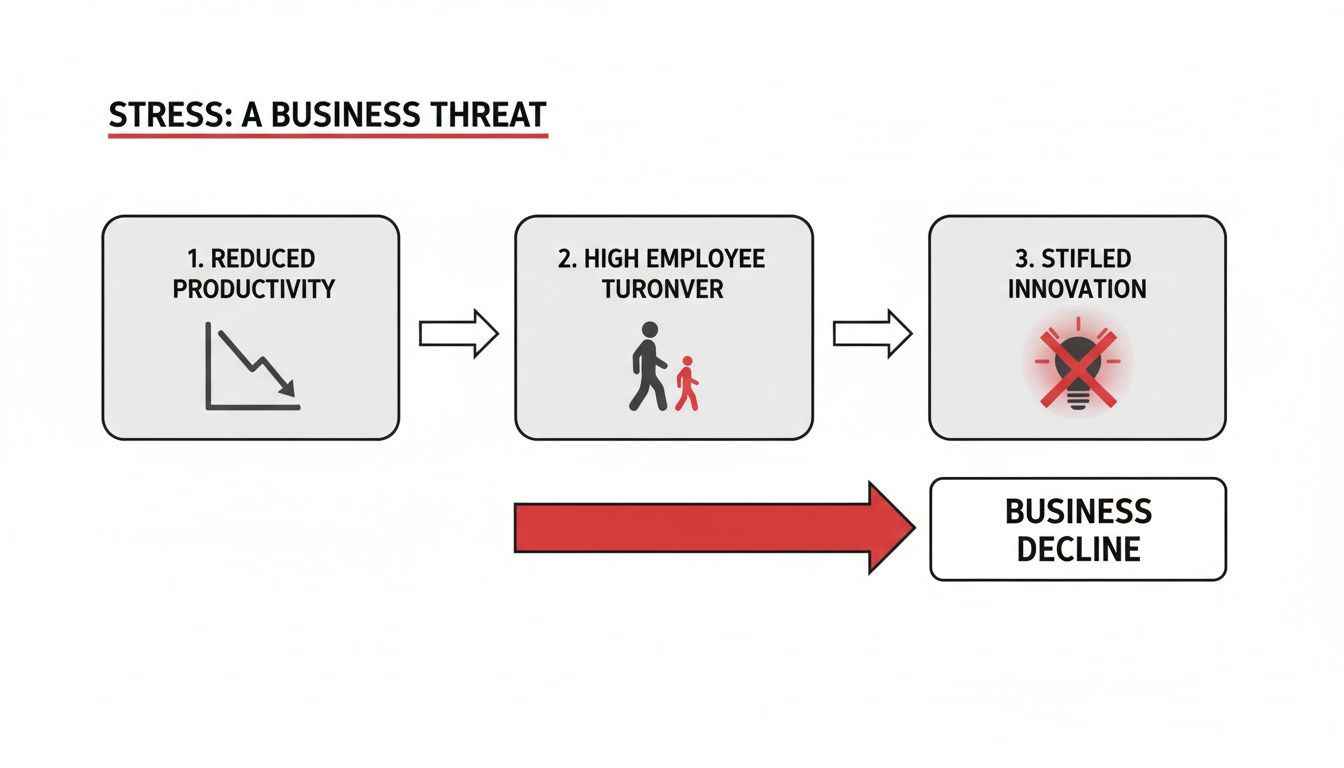
This isn’t a “soft” issue. As you can see, stress is a direct threat to the operational and creative health of your company.
Building a Curriculum That Sticks
Once you know what the problems are, you can design a curriculum that provides the right solutions. From my experience, the most effective programs balance three core pillars: psychoeducation, practical skills, and somatic practices.
This isn’t just a hunch; it’s backed by solid research. A study in the Journal of Occupational and Environmental Medicine found that programs combining education with skill-building were significantly more effective at reducing stress than single-focus interventions.
Curriculum Pillars Explained
- Psychoeducation (The ‘Why’): This is where you explain the science behind the stress response. When employees understand what’s happening in their brains and bodies (like the role of cortisol and adrenaline), stress becomes less mysterious and far more manageable.
- Resilience Skills (The ‘How’): Here’s where you equip employees with practical, in-the-moment tools. Actionable Example: Instead of just talking about cognitive reframing, walk them through a real-life scenario: “When you get critical feedback from your boss, your first thought is ‘I’m failing.’ A reframe could be, ‘This feedback is a tool to help me grow.’ Let’s practice that.” You can learn more about effective workplace stress management strategies in our detailed guide.
- Somatic Practices (The ‘Embodiment’): Stress is a physical experience, so the response has to be physical, too. This pillar is all about guided mindfulness, meditation, and structured breathwork sessions that directly regulate the nervous system.
A robust program gives employees the knowledge to understand stress, the cognitive tools to reframe it, and the physical practices to release it from the body. Neglecting any one of these pillars leaves a critical gap in their toolkit.
This comprehensive approach is catching on. A striking 87% of companies worldwide now have formal wellness programs, a huge jump from just 61% in 2020. A key part of this is mindfulness and stress-relief training, with 49% of organizations providing guided sessions—leading to a measurable 25% reduction in stress-related absenteeism.
When you’re designing your program, remember to take a holistic view. This means incorporating stress management strategies that connect mind and body, reinforcing that overall health is fundamental to managing stress effectively.
This shift reflects a deeper understanding that passive perks just don’t cut it anymore. Proactive training consistently yields better outcomes. For instance, a study in Stress and Health showed that employees in a resilience training program not only reported lower stress but also showed improved sleep and less fatigue compared to a control group.
Similarly, a study published in The Lancet Psychiatry found that mindfulness-based cognitive therapy was as effective as antidepressants in preventing a relapse of depression, highlighting the power of cognitive skills in managing mental health. This shows that equipping employees with the right mental frameworks creates lasting change, moving them from just reacting to stress to proactively managing their well-being.
Choosing the Right Delivery Model for Your Team
Once you’ve got a killer curriculum designed, your next big decision is how you’re going to get it to your people. The delivery model you choose for your stress management training for employees is just as critical as the content itself. Get it right, and the training feels accessible, relevant, and lands with impact. Get it wrong, and you’re looking at disengaged employees and a poor return on your investment.
There’s no single “best” method here. The right answer really depends on your company’s unique landscape—your budget, your team’s setup (in-office, remote, or a mix), and the culture you already have.
Let’s break down the three main ways you can deliver this training so you can figure out what makes the most sense for you.
Developing Certified Internal Trainers
One of the most powerful moves you can make is to certify some of your own people—often from HR, L&D, or just passionate wellness champions in the ranks—to become in-house facilitators. This approach weaves the skills directly into your company culture, creating a resource that sticks around for the long haul.
Think about it: an internal trainer already gets the lingo, the inside jokes, and the specific challenges your teams face every day. That built-in context allows them to frame examples and guide discussions in a way an outsider never could, which builds a much deeper level of trust and psychological safety.
Of course, this path isn’t free. It requires a real investment upfront in a solid “train-the-trainer” certification. Actionable Step: Before you invest, pilot the idea by identifying 2-3 potential champions and asking them to co-facilitate a small lunch-and-learn. This lets you gauge their aptitude and passion before committing to a full certification program.
Key Takeaway: Using internal trainers is a long-term play. It’s about building a self-sustaining capability for stress management within your organization, making it part of your DNA rather than a one-time event.
Hiring External Experts
Bringing in an external facilitator—like a certified coach or a seasoned corporate wellness consultant—gives you immediate access to specialized expertise. These pros live and breathe this stuff. They bring a fresh perspective and are often masters of managing group dynamics, skillfully navigating sensitive conversations with total impartiality.
This model is perfect if you need to get a program off the ground quickly or want to send a clear signal to your team that you’re investing seriously in their well-being by bringing in a recognized expert. In fact, research from the Journal of Consulting and Clinical Psychology has shown that the facilitator’s expertise is a huge factor in how well workplace mental health programs succeed.
The obvious downside is the cost, which can add up, especially if you plan on running sessions regularly. There’s also the risk of a mismatch if the expert doesn’t take the time to really dig in and understand your company’s specific culture and stressors.
Using Scalable Digital Platforms
For companies with teams spread all over the map or those just needing maximum flexibility, digital platforms are a game-changer. These can be anything from on-demand video modules and guided audio exercises to live virtual workshops.
Digital delivery means everyone can access the training, no matter where they are or what their schedule looks like. It’s an approach that fits perfectly with modern work, letting people engage with the material at their own pace. You can see this kind of flexibility is a common thread in many of the most successful workplace wellness program examples out there today. A study published in the Journal of Medical Internet Research even found that web-based stress management programs were highly effective in reducing perceived stress and improving mental health outcomes, proving that tech can deliver these critical skills.
The main challenge with a digital-only model is creating that feeling of real connection. Without a live facilitator to read the room and spark discussion, some employees might feel a bit isolated or lose motivation. That’s why a lot of companies land on a blended approach—mixing digital, self-paced content with live virtual Q&A sessions to get the best of both worlds.
Comparing Facilitator Models for Your Program
Use this breakdown of the advantages and disadvantages of each delivery model to find the right approach for your organization.
| Model | Pros | Cons | Best For |
|---|---|---|---|
| Internal Trainer | – Culturally aligned – Cost-effective long-term – Builds internal capability |
– Requires upfront training investment – Potential time constraints for trainers |
Companies committed to embedding wellness into their long-term culture. |
| External Expert | – Deep subject matter expertise – Fresh, objective perspective – Signals strong company investment |
– Higher per-session cost – May lack specific company context |
Organizations needing a quick launch or specialized knowledge for a specific issue. |
| Digital Platform | – Highly scalable and flexible – Cost-effective for large teams – Accessible for remote workers |
– Risk of lower engagement – Lacks personalized, live interaction |
Geographically dispersed companies or those seeking a flexible, self-paced option. |
Ultimately, choosing your delivery model is a strategic decision that will shape the success of your entire program. Weigh your options carefully against your company’s goals, resources, and culture.
Launching Your Program to Maximize Engagement
You can build the most brilliant, evidence-backed stress management training in the world, but it won’t matter if you’re speaking to an empty room. A successful launch isn’t about sending a calendar invite; it’s about building a groundswell of genuine interest from the ground up.
The secret? It comes down to smart communication, visible leadership support, and making participation feel like a genuine opportunity, not just another corporate obligation. Think of your launch not as a single event, but as a carefully orchestrated campaign that starts long before the first session and continues well after the last. The goal is to get people from simply knowing about the program to being truly excited to join.
Crafting Communication That Connects
Your communication strategy is the engine that drives everything. Generic, top-down announcements from HR are an instant tune-out. You have to get personal and answer the one question every single employee is asking: “What’s in it for me?”
Frame the training not as a fix for being “stressed,” but as a professional development tool for building resilience, sharpening focus, and boosting career longevity. A compelling study in Personnel Psychology found that when employees perceive high organizational support, their commitment and performance increase significantly. Your emails, Slack messages, and all-hands announcements need to reflect this by hitting on real, tangible benefits.
How to Make Your Communication Stick:
- Segment Your Messaging: Don’t blast the same generic email to everyone. For your sales team, frame it as a way to manage pressure during high-stakes negotiations. For your engineers, talk about tools to maintain deep focus while untangling complex problems. Make it relevant to their world.
- Lean on Peer Testimonials: If you run a small pilot program first, capture short video clips or quotes from participants. A recommendation from a respected teammate is infinitely more powerful than any memo from the C-suite.
- Create a Central Hub: Actionable Step: Set up a simple, clean intranet page using a tool like SharePoint or Confluence. Include all the key info: schedules, facilitator bios, session descriptions, and FAQs. This gives people one easy place to find everything without having to dig through old emails.
Getting Leadership and Manager Buy-In
If you take away one thing, make it this: manager involvement is the single most critical factor for success. Full stop. Employees take their cues from their direct supervisors. When a manager champions the training, it sends a powerful signal that this is a real priority, not just lip service.
But there’s a huge disconnect here. Data shows that while 74% of leaders believe they involve their teams in shaping change, only 42% of employees actually feel they have a say. Closing that gap is everything.
Your managers have to become your program’s biggest advocates. You need to equip them to not only promote the training but to model the very behaviors it teaches. When a manager openly blocks off their calendar for a “resilience session,” they give their entire team explicit permission to do the same.
Here’s How to Empower Your Managers:
- Train Them First: Host a managers-only session before the company-wide rollout. This gives them a firsthand experience of the content and preps them to answer their team’s questions with confidence.
- Give Them a Toolkit: Actionable Step: Create a simple one-pager in a shared document. Include key talking points, benefits, and email templates they can copy and paste to send to their teams. Make it dead simple for them to have supportive, informed conversations.
- Encourage Calendar Integration: Ask managers to proactively help their teams block off time for the sessions, treating them with the same importance as any critical project meeting.
Executing a Phased Rollout
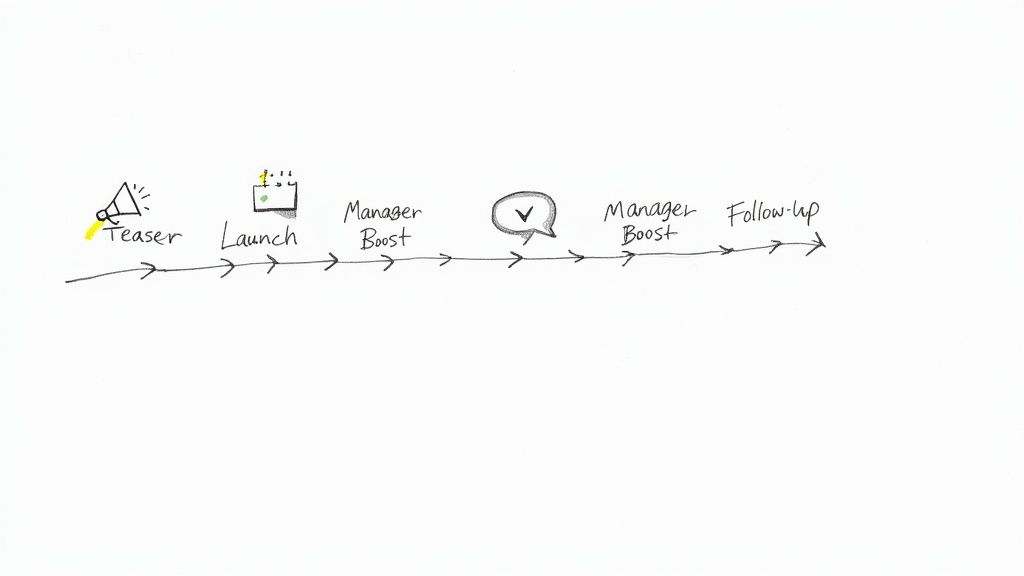
A well-paced rollout builds anticipation and momentum. Avoid the “big bang” approach where you announce and launch on the same day—it just gets lost in the noise. Instead, build a steady drumbeat of communication.
Here’s a sample timeline you can adapt for your own launch:
| Phase | Timeline | Key Actions |
|---|---|---|
| Pre-Launch (Teaser) | 2-3 Weeks Out | – Announce the upcoming program in a company all-hands meeting. – Post teaser content on internal channels (e.g., Slack, Teams). – Share a “Why this matters now” message from a senior leader. |
| Launch (Registration) | 1-2 Weeks Out | – Open registration with clear links and instructions. – Send targeted emails from department heads encouraging sign-ups. – Managers discuss the program in their team meetings. |
| During Program | Throughout | – Send reminder notifications 24 hours before each session. – Share anonymous, positive quotes from participants after the first session to build social proof. |
| Post-Launch (Follow-Up) | 1 Week After | – Distribute a feedback survey to gather insights for improvement. – Share a summary of key takeaways and resources for continued practice. – Announce plans for ongoing support or future sessions. |
This structured approach ensures your stress management training for employees feels like a thoughtful, well-supported initiative. It shows you respect their time and are genuinely invested in creating a program that will make a real difference.
Measuring Success and Demonstrating Real ROI
Let’s be honest: to keep your stress management program funded and get executives excited, you have to prove it works. It’s not enough to say people showed up. You need to tell a compelling, data-driven story that connects the training to real-world results for both your people and the bottom line.
The game is to shift the conversation from activity (how many people attended a session) to impact (what actually changed because they did). When you can draw a straight line from new coping skills to a dip in absenteeism or a bump in engagement, you’re speaking the language of leadership. That’s how you prove undeniable ROI.
Moving Beyond Participation Rates
Knowing your attendance numbers is a decent start, but it tells you absolutely nothing about whether the training was effective. The real magic happens when you capture data before and after the program. This gives you a clear baseline to measure against, showing tangible progress over time.
Think about it this way: a study in the Journal of Occupational Health Psychology found that the most successful stress management programs were the ones that actually tracked specific outcomes. They saw significant drops in perceived stress and burnout. It proves that measuring the right things is critical.
Actionable Step: Use free tools to create your surveys. A pre-training survey could include the Perceived Stress Scale (PSS), a scientifically validated 10-question survey that’s easy to administer. Track the aggregate score before and after your training to show a measurable reduction.
- Pre-Training Survey: This is your “before” photo. Get a snapshot of current stress levels, self-reported resilience, and how confident people feel in their ability to cope with pressure.
- Post-Training Survey (Immediate): Send this out right after the program wraps up. It’s perfect for capturing gut reactions, what they found valuable, and their immediate takeaways.
- Follow-Up Survey (30-60 Days Later): This is the one that really counts. It tells you if employees are actually using the new skills back on the job and if those positive changes are sticking around.
Connecting Training to Business Outcomes
This is where you build your business case. By laying your survey data alongside core HR and operational metrics, you can show exactly how employee well-being fuels organizational health. It’s a powerful narrative.
Focus on tracking a few key metrics before and after your program gets rolling:
- Absenteeism Rates: Keep an eye on unscheduled absences. When people are less stressed and feel better, they tend to take fewer sick days. It’s often one of the first metrics to move.
- Employee Turnover: Look at your voluntary turnover data, especially for teams with high participation in the training. A study from the International Journal of Environmental Research and Public Health confirmed what most of us already know: high stress is a massive predictor of someone’s intent to leave.
- Engagement Scores: If you’re already running pulse or annual engagement surveys, dig into the results. Look for improvements in scores tied to well-being, psychological safety, and overall job satisfaction.
Proving ROI isn’t just about justifying the budget; it’s about validating your investment in your people. When you can show a 5% drop in absenteeism or a 10% increase in engagement scores after the training, you’ve got a story that leadership will listen to.
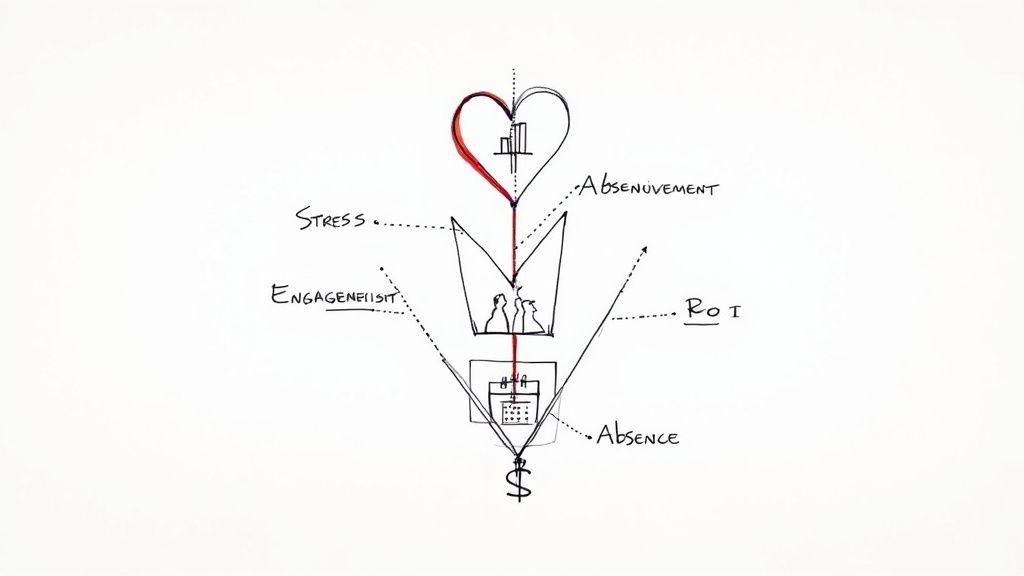
This data-first approach is quickly becoming the standard. The PwC Global Workforce Hopes and Fears Survey found that companies actively tracking their wellness initiatives see a remarkable 11% lower turnover rate. Even more, when employees feel high psychological safety—a direct outcome of effective stress management—they are 72% more motivated.
Telling a Compelling Story with Data
Once you have your numbers, the final piece of the puzzle is to weave them into a clear narrative. Don’t just dump a spreadsheet on someone’s desk. Create a simple dashboard or a couple of slides that visualize the link between your stress management training for employees and the positive business results.
Actionable Example: Create a single PowerPoint slide. On the left, show a bar chart with “Pre-Training Absenteeism Rate.” On the right, a bar chart with “Post-Training Absenteeism Rate,” showing a clear decrease. Below it, add a powerful quote from a participant survey. This visual one-two punch is far more effective than raw numbers alone.
A simple, comparative statement like that makes the program’s value crystal clear. It instantly reframes the training from a “nice-to-have” expense into a strategic imperative for a healthier, more productive organization.
Sustaining Momentum Beyond the Initial Training
A one-off workshop might create a nice buzz for a week, but let’s be honest—it rarely sticks. Real, lasting change happens when you weave stress management and resilience into the very fabric of your company culture. It’s about shifting from a single event to a continuous, shared practice.
The goal here is to build a supportive ecosystem where managing stress is just part of the daily routine, not another thing on the to-do list. We’re talking small, consistent reinforcements that make it easy for people to apply what they learned in the flow of their actual workday.
Weaving Wellness into Daily Workflows
The trick is to create “micro-learning” moments that keep these new skills top-of-mind without feeling like a burden. Forget scheduling another hour-long meeting. Instead, think about small, digestible practices that fit into the natural rhythm of the day.
Here are a few simple ideas you can implement right away:
- Guided Audio Pauses: Actionable Step: Create a dedicated Slack channel called
#wellness-moment. Schedule a bot to post a 5-minute guided breathwork or mindfulness exercise video every day at 2:30 PM. This automates the reminder and makes participation easy. - Weekly Resilience Nudges: Tuck a practical stress management tip into a weekly all-hands email or newsletter. It could be a quick reminder about a cognitive reframing technique or a link to a helpful article.
- Calendar Templates: Create optional 15-minute calendar blocks that employees can drag and drop into their schedules for “focus time” or a “tech-free break.” It’s a simple way to encourage proactive rest.
These little nudges compound over time, making wellness a visible and integrated part of how your team operates.
Empowering Managers and Peer Champions
Your managers and influential team members are your best allies in making this stick. When they model healthy behaviors, it gives everyone else permission to do the same. This is where you move from just teaching skills to truly inspiring a cultural shift.
A recent study from McKinsey & Company on employee mental health found that supportive management was one of the most significant factors in mitigating burnout. This is exactly where managers and peer networks can make a huge difference.
You have to equip your leaders for this. Actionable Step: Arm your managers with a “Manager’s Wellness Toolkit”—a simple shared document with conversation starters for team check-ins (e.g., “What’s one thing we could do to make this week feel more manageable?”) and practical tips for spotting early signs of burnout.
At the same time, think about creating a voluntary “wellness champion” network. These are passionate employees from different departments who can act as your grassroots advocates. They can help organize informal peer support groups, share resources, and give you honest feedback on what’s actually working. For those champions looking to support their teams, sharing resources on topics like mental health caring for your mind and body can be a fantastic start.
Ultimately, building a resilient workforce is a long game. For a deeper dive, check out our complete guide on how to build mental resilience. By putting these continuous support structures in place, you ensure the impact of your training doesn’t just fade away—it becomes a core part of how your organization thrives.
Got Questions? We’ve Got Answers.
Even with the best intentions, rolling out a new program can stir up some tough but important questions from leaders and managers. Getting ahead of these concerns is the key to building trust and showing that this is a valuable tool, not just another box-ticking corporate initiative.
Let’s tackle some of the most common questions head-on.
How Do We Get Employees to Actually Want to Participate?
The secret here is all about the framing. You have to remove the stigma and crank up the appeal.
Instead of positioning this as a fix for people who are “stressed”—which nobody wants to admit—market it as a professional development opportunity. Frame it as a way to build resilience, sharpen focus, and boost career longevity. It’s not about fixing a problem; it’s about gaining a competitive edge.
And here’s the most powerful move you can make: offer the sessions during paid work hours. This sends a crystal-clear message that the company genuinely values well-being and sees this as a core part of the job, not something employees have to cram into their personal time.
A study in the Journal of Applied Psychology found that when employees feel the organization genuinely cares for their well-being, their performance and citizenship behaviors increase significantly. You can also build social proof by having respected peers share their experiences from a pilot session. When people see their colleagues getting real value, voluntary participation becomes a no-brainer.
Isn’t This Just Another “Wellness” Program?
Not at all. Think of it like a general health check-up versus a visit to a specialist.
A broad corporate wellness program is fantastic—it covers the waterfront with things like nutrition challenges, fitness tracking, and financial literacy workshops. It’s all about promoting overall healthy living.
Stress management training, however, is a targeted psychological and physiological intervention. It’s about giving your people specific, actionable skills to actively manage their response to pressure. We’re talking about practical tools they can use tomorrow, like:
- Cognitive Reframing: Actionable Example: An employee learns to catch the thought “There’s no way I can finish this project on time” and reframe it to “What’s the most important first step I can take right now?”
- Boundary-Setting: Learning to use a polite but firm script like, “I can’t get to that today, but I can schedule it for tomorrow morning.”
- Mindfulness Techniques: Using the “5-4-3-2-1” grounding technique during a stressful meeting: notice 5 things you can see, 4 you can feel, 3 you can hear, 2 you can smell, and 1 you can taste.
A general wellness program is the destination—a healthy, thriving workforce. Stress management training is the specific map and toolkit they need to navigate the tough mental and emotional terrain of today’s workplace.
How Can We Make This Work for Our Remote Team?
For remote and hybrid teams, flexibility and connection are everything. A successful remote program has to fight screen fatigue and create the sense of community that’s so easily lost when you’re not sharing physical space.
First, break up your content into shorter, more digestible modules. Aim for sessions that are 60-90 minutes, max. Actionable Step: Use the polling feature in Zoom or Teams to ask engaging questions throughout the session to keep energy high. Use virtual breakout rooms to get people talking in smaller groups; it’s a great way to mimic the intimacy of an in-person chat.
Most importantly, you have to tailor the content to address remote-specific stressors. That means tackling things like digital presenteeism (that pressure to be “always on”), the isolation that can creep in, and the very real challenge of separating work from home life. Make sure all your resources—especially guided audio exercises or digital tools—are a breeze to access on any device, from anywhere.
Expert Tip: A blended model is often the sweet spot for remote teams. Combine live, interactive virtual workshops with a library of on-demand resources people can tap into whenever they need them. It’s the best of both worlds: structured learning and flexible support.
What’s the Single Most Critical Factor for Success?
If I had to pick just one thing, it would be active and visible manager involvement. No question.
Employees are always looking to their direct leaders for cues on what the company really values. When managers show up, talk openly about why the program matters, and even model healthy behaviors themselves, it gives their teams the psychological safety to do the same.
The research here is stark: a Gallup study found that managers account for at least 70% of the variance in employee engagement scores. A manager who says, “I’m blocking off 30 minutes for a breathwork session to reset,” does more to legitimize the program than a dozen all-hands emails.
So, your first move should be to train your managers. They need to understand the techniques not just for themselves, but so they can confidently coach and support their people in applying them. When your managers become your program’s biggest champions, its success is practically guaranteed.
At 9D Breathwork, we provide the tools to build a resilient, focused, and engaged workforce. Our programs are designed to slot seamlessly into your corporate wellness strategy, whether your team is in the office, remote, or somewhere in between.
Discover how our unique fusion of breathwork, sound, and guidance can disrupt stress patterns at their root and empower your people. Explore our corporate programs.