In a world of constant digital noise and high-stakes pressure, the link between our mental state and physical health has never been more critical. We often treat the mind and body as separate entities, addressing stress with mindset hacks and physical tension with massage, without realizing they are two sides of the same coin. This disconnect is a primary driver of chronic anxiety, burnout, and that pervasive feeling of being 'stuck.'
True wellness isn't found in a single solution; it's unlocked by intentionally strengthening the communication pathways between your brain and your body. This article is not just another list; it's a practical, evidence-based toolkit designed to help you harness this powerful internal system. We will explore ten powerful mind body connection exercises, moving beyond generic advice to provide you with actionable tools for profound, lasting change.
Inside, you will find a curated roundup of techniques including breathwork, somatic awareness, and nervous system regulation. For each exercise, you'll receive:
- Step-by-step instructions for immediate implementation.
- Scientific backing from peer-reviewed studies to explain why it works.
- Practical modifications for managing stress and anxiety.
- Guidance on integration, including how these practices complement advanced modalities like 9D Breathwork for deeper transformation.
This is your guide to moving from simply managing symptoms to fundamentally rewiring your system from the inside out. You will learn not just what to do, but how to become the architect of your own well-being, empowering you to reclaim control and build unshakable resilience.
1. Breathwork & Conscious Breathing Techniques
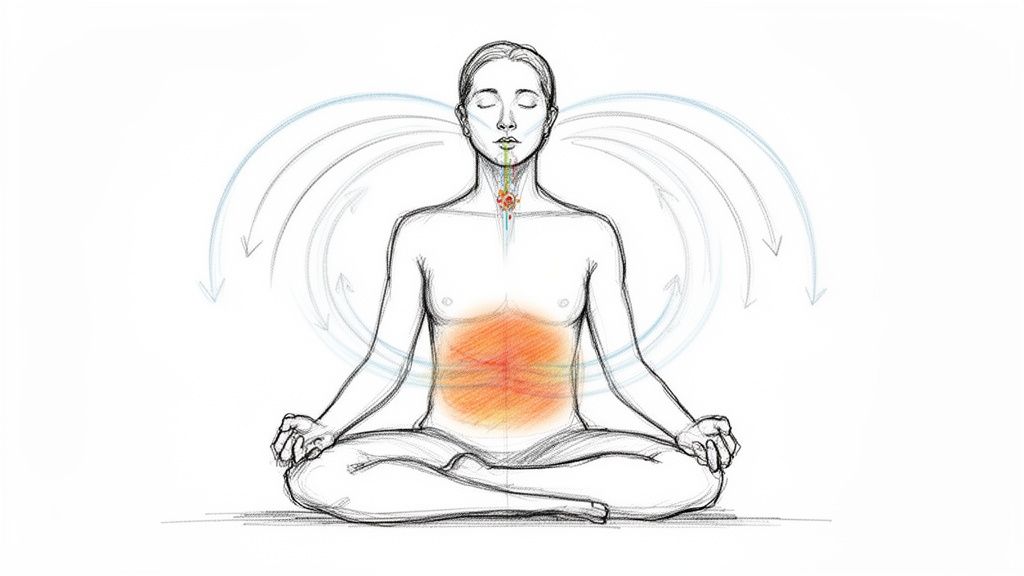
Breathwork encompasses a variety of intentional breathing patterns designed to regulate the nervous system, enhance self-awareness, and facilitate emotional release. Unlike automatic breathing, conscious breathwork directly influences physiological states by engaging the vagus nerve, which activates the parasympathetic "rest-and-digest" response. This powerful intervention creates a bridge between our conscious mind and subconscious processes, making it one of the most direct and effective mind body connection exercises.
The science behind its effectiveness is robust. A 2023 study published in Cell Reports Medicine found that just five minutes of daily cyclic sighing (a form of breathwork) was more effective at improving mood and reducing physiological arousal than mindfulness meditation. Similarly, research in the Journal of Affective Disorders linked slow-breathing practices to significant reductions in symptoms of anxiety and depression. A study in the Journal of Alternative and Complementary Medicine also found that a single session of diaphragmatic breathing could reduce negative affect and physiological stress markers, highlighting its immediate impact.
How to Implement Breathwork
To begin, try the simple yet potent Box Breathing technique, often used by first responders to manage acute stress.
- Inhale: Find a comfortable seat. Breathe in slowly through your nose for a count of four, feeling your belly expand.
- Hold: Gently hold your breath at the top for a count of four.
- Exhale: Exhale slowly and completely through your mouth for a count of four.
- Hold: Hold your breath at the bottom for a count of four before repeating.
Continue this cycle for 3-5 minutes. Actionable Step: Set a timer on your phone for three minutes right now and complete one cycle. Notice the shift in your physical state.
Actionable Tips for Integration
- Start Small: Begin with 5-minute sessions daily, perhaps as a reset between demanding work meetings or to decompress after your workday.
- Create a Safe Space: Practice in a comfortable, quiet environment where you won't be interrupted to maximize focus.
- Track Your Progress: Keep a simple journal to note changes in your mood, energy levels, and mental clarity after each session. This helps reinforce the mind-body connection you are building. For a deeper dive, explore how do you reprogram your subconscious mind.
2. Binaural Beats & Brainwave Entrainment
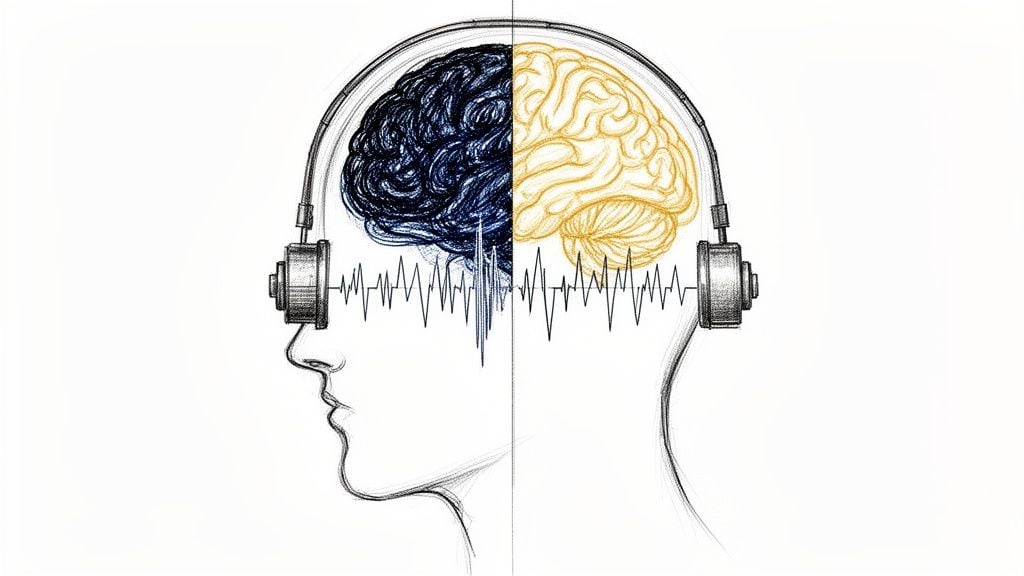
Binaural beats are a form of auditory brainwave entrainment that occurs when you hear two different sound frequencies, one in each ear. Your brain processes these two tones and perceives a third, phantom frequency, which is the mathematical difference between the two. This perceived beat can gently guide your brain's electrical activity into a desired state, such as deep relaxation (delta waves) or enhanced focus (beta waves). This neuro-auditory phenomenon provides a passive yet powerful way to influence your mental state, making it a unique and accessible tool among mind body connection exercises.
The science validating brainwave entrainment is compelling. A meta-analysis in Psychological Research found that listening to binaural beats significantly reduced anxiety levels across multiple studies. Research published in Frontiers in Human Neuroscience demonstrated that alpha-frequency binaural beats enhanced creative cognition. Furthermore, a study in the Journal of Pediatric Nursing showed that delta-wave binaural beats improved sleep quality in hospitalized children, highlighting its calming effects on the nervous system.
How to Implement Binaural Beats
Getting started is simple, but quality audio is key. You will need a good pair of stereo headphones to ensure each ear receives the correct frequency.
- Select a Frequency: Choose a binaural beat track designed for your desired outcome. For example, use theta waves (4-8 Hz) for creativity or beta waves (13-30 Hz) for concentration.
- Find a Quiet Space: Settle into a comfortable position where you can listen without distractions for at least 15-20 minutes.
- Listen and Relax: Close your eyes, breathe naturally, and allow your mind to attune to the sound. You don't need to do anything but listen.
Actionable Step: Search for a "15-minute theta wave binaural beat" track on a music streaming service. Put on your headphones and listen to it during your next break to experience its effects firsthand.
Actionable Tips for Integration
- Use Quality Headphones: Over-ear or in-ear stereo headphones are essential for the binaural effect to work correctly, as each ear must hear a distinct frequency.
- Pair with Specific Tasks: Use beta-wave tracks during deep work blocks to enhance focus, or listen to theta-wave tracks during brainstorming sessions to boost creativity.
- Create a Wind-Down Ritual: Incorporate a 20-minute session with delta-wave beats into your evening routine to signal to your mind and body that it's time to prepare for sleep.
- Experiment and Observe: Try different frequencies and notice their effects. Keep a brief log of how you feel, noting changes in focus, relaxation, or mood to find what works best for you.
3. Hypnotherapy & Hypnotic Guidance
Hypnotherapy utilizes guided relaxation, intense focus, and heightened attention to achieve a trance-like state, allowing access to the subconscious mind. Far from the theatrics of stage hypnosis, clinical hypnotherapy is a therapeutic tool that bypasses the critical conscious mind to address deep-seated beliefs, trauma, and behavioral patterns. This focused state of awareness makes the mind more receptive to new suggestions and perspectives, offering a direct pathway to reframe negative thought loops and is one of the most transformative mind body connection exercises.
The scientific community has increasingly recognized its efficacy. A meta-analysis in the International Journal of Clinical and Experimental Hypnosis confirmed that hypnotherapy is an effective treatment for anxiety, particularly when integrated with other psychological therapies. Further research in Pain Management highlighted its significant impact on reducing pain perception and associated anxiety in chronic pain patients. Another study in the Journal of Clinical Psychiatry found it beneficial for treating symptoms of PTSD by helping individuals reprocess traumatic memories in a safe, controlled state.
How to Implement Hypnotherapy
While professional guidance is recommended for deep therapeutic work, you can explore self-hypnosis for general well-being. A basic approach involves these steps:
- Induction: Find a quiet space. Close your eyes and use progressive muscle relaxation, tensing and releasing each muscle group from your toes to your head to enter a relaxed state.
- Deepening: Imagine walking down a staircase, feeling more relaxed with each step you take. Count down from ten to one.
- Suggestion: Once in a deeply relaxed state, introduce positive affirmations related to your goal (e.g., "I am calm and in control," or "I feel confident and capable").
- Emergence: When ready, count back up from one to five, feeling more alert and awake with each number.
Actionable Step: Record yourself reading a simple script with positive affirmations like "Each day, I become more confident." Listen to this 5-minute recording before bed for one week.
Actionable Tips for Integration
- Define Your Goal: Be specific about what you want to address, whether it's public speaking anxiety, smoking cessation, or improving self-esteem.
- Use Permissive Language: Frame suggestions positively and permissively (e.g., "You may begin to feel a sense of ease" instead of "You will relax now").
- Record Your Sessions: Create an audio recording of your self-hypnosis script to listen to daily. Repetition is key to reinforcing subconscious change.
4. Neuro-Linguistic Programming (NLP)
Neuro-Linguistic Programming (NLP) is a powerful psychological approach that models how language and behavioral patterns influence our neurology and subjective experiences. It provides a toolkit for understanding and "reprogramming" the mind's inner software, focusing on how successful individuals achieve their goals and replicating those patterns. By changing limiting beliefs, reframing perspectives, and aligning our internal states with desired outcomes, NLP offers a structured way to enhance the dialogue between our conscious thoughts and bodily responses, making it a pivotal mind body connection exercise.
The efficacy of NLP techniques is supported by research into cognitive reframing and behavioral change. A study in the Journal of Counseling Psychology found that cognitive reframing techniques, a cornerstone of NLP, significantly reduced anxiety and improved coping skills among participants. Further, research published in Frontiers in Psychology highlighted how language patterns directly impact emotional regulation and perception. A study in the journal Research in Psychotherapy also demonstrated that NLP-based interventions could produce rapid and lasting therapeutic change for phobias, underscoring its ability to rewire ingrained neural pathways.
How to Implement NLP
A foundational NLP technique is Anchoring, which involves creating a deliberate trigger for a desired emotional state. Use it to summon confidence before a presentation or calmness during a stressful moment.
- Recall a Resourceful State: Close your eyes and vividly remember a time you felt completely confident. See what you saw, hear what you heard, and feel the emotions fully.
- Amplify the Feeling: As the feeling peaks, intensify it. Make the colors brighter, the sounds clearer, and the feelings stronger.
- Set the Anchor: At the absolute peak of this feeling, create a unique physical anchor. For example, press your thumb and index finger together firmly for a few seconds.
- Break State & Test: Open your eyes and think of something neutral (like what you had for breakfast). Then, fire the anchor by pressing your thumb and index finger together again. The resourceful feeling should return.
Actionable Step: Practice this anchoring technique right now for the feeling of "calm." Repeat it five times to strengthen the neurological link.
Actionable Tips for Integration
- Reframe Limiting Beliefs: When you catch yourself thinking "I can't do this," consciously reframe it to "What would happen if I could?" or "What do I need to learn to be able to do this?"
- Use Sensory Language: Pay attention to whether you process information visually ("I see what you mean"), auditorily ("That sounds right"), or kinesthetically ("That feels true"). Using sensory-rich language in your self-talk makes it more impactful.
- Model Excellence: Identify someone who excels in an area you want to improve. Ask yourself: What do they believe? How do they carry themselves? What is their mindset? Adopt those patterns to accelerate your own growth.
5. Subliminal & Subconscious Programming
Subliminal and subconscious programming involves using stimuli presented below the threshold of conscious awareness to influence thoughts, feelings, and behaviors. These messages are designed to bypass the critical, analytical mind and directly access the subconscious, which governs our deeply ingrained beliefs and automatic responses. When paired with states of deep relaxation, such as those achieved through breathwork or hypnosis, the mind becomes more receptive, allowing for the effective reprogramming of limiting patterns and the installation of empowering new ones. This makes it a sophisticated tool among mind body connection exercises for deep-seated change.
The scientific basis for this approach lies in how the brain processes information outside of conscious perception. A study in the Journal of Consumer Psychology demonstrated that subliminal priming could influence choice and behavior, confirming that messages we don't consciously register can still affect our decisions. Further research in Frontiers in Psychology highlighted how non-conscious emotional information can modulate neural activity and emotional responses. Another study in Neuroscience of Consciousness found that subliminal cues could impact motor responses, suggesting a direct link between non-conscious information and physical action.
How to Implement Subconscious Programming
A practical way to begin is by integrating subliminal audio tracks into your daily routine, especially during activities where your conscious mind is occupied or relaxed.
- Select a Focus: Identify a specific limiting belief you want to change (e.g., "I am not good enough") and the new belief you wish to install (e.g., "I am worthy and capable").
- Source Material: Find or create high-quality subliminal audio that targets your goal. This can be layered with calming music or ambient sounds.
- Consistent Listening: Play the audio daily, ideally during sleep, meditation, or breathwork sessions when the subconscious is most accessible.
- Reinforce Consciously: Support the subliminal work with conscious actions and affirmations that align with your desired outcome.
Actionable Step: Find a free subliminal audio track for "positive thinking" online. Play it quietly in the background while you work for the next hour to begin the integration process passively.
Actionable Tips for Integration
- Pair with Breathwork: Use subliminal audio during a breathwork session to lower cognitive defenses and deepen subconscious access for maximum impact.
- Establish a Routine: For measurable shifts, commit to listening for at least 15-30 minutes daily for 30 consecutive days to allow new patterns to encode.
- Personalize Messages: Whenever possible, use subliminal affirmations that are tailored specifically to your personal goals and challenges for a more potent effect.
- Set Conscious Intentions: Before each session, consciously state your intention for the practice. This aligns your conscious and subconscious minds toward a unified goal.
6. Yoga & Somatic Body Awareness
Yoga is an ancient practice that harmonizes physical postures (asanas), breathing techniques (pranayama), and meditation to cultivate a profound union between the mind and body. Modern somatic approaches enhance this by focusing on internal sensations and proprioception, teaching us to listen to the body's subtle cues. This combination fosters embodied pattern recognition, making it a cornerstone among mind body connection exercises for identifying and releasing stored emotional tension and trauma held within the physical tissues.
The efficacy of yoga for mental and physiological health is well-documented. A 2017 meta-analysis in the Journal of Psychiatric Practice confirmed that yoga is an effective treatment for major depressive disorder. Research published in Frontiers in Human Neuroscience highlighted how yoga practices modulate stress response systems, decreasing physiological arousal. Furthermore, a study in the Journal of Clinical Psychiatry found that trauma-sensitive yoga significantly reduced symptoms of PTSD, demonstrating its power in processing deep-seated trauma.
How to Implement Yoga & Somatic Awareness
To start, you can integrate a simple, grounding yoga flow that emphasizes internal sensation over perfect form. Try a Cat-Cow (Marjaryasana-Bitilasana) with Somatic Focus.
- Start: Begin on all fours, with your wrists under your shoulders and knees under your hips.
- Inhale (Cow): As you inhale, drop your belly, lift your chest and tailbone, and look forward. Focus on the sensation of expansion across your chest and the gentle curve in your spine.
- Exhale (Cat): As you exhale, round your spine toward the ceiling, tucking your chin to your chest. Pay attention to the feeling of release and stretch in your upper back and shoulders.
Actionable Step: Get on the floor right now and perform ten rounds of Cat-Cow. Close your eyes and focus entirely on the physical sensations in your spine and torso.
Actionable Tips for Integration
- Combine with Breathwork: Schedule a 15-minute gentle yoga session before a breathwork practice to prime the nervous system and deepen physical awareness.
- Track Sensations: During practice, mentally scan your body and ask, "Where do I feel this emotion?" Keep a journal to note connections between physical tension (e.g., tight shoulders) and emotional states (e.g., stress).
- Practice Trauma-Informed Yoga: If working with stress or anxiety, choose slower-paced styles like Hatha or Yin and prioritize a sense of safety and choice in every movement.
7. Meditation & Mindfulness Practices
Meditation and mindfulness are practices centered on cultivating present-moment awareness to quiet the mind, decrease emotional reactivity, and foster resilience. While meditation often involves sustained, focused attention, mindfulness specifically hones the skill of non-judgmental observation of one's thoughts, feelings, and bodily sensations. These disciplines work together as potent mind body connection exercises by fundamentally reshaping the brain’s response to stress.
The scientific evidence is compelling. Research published in Social Cognitive and Affective Neuroscience demonstrates that mindfulness training strengthens the prefrontal cortex, the hub of executive function, while reducing the size and reactivity of the amygdala, the brain's fear center. A meta-analysis in JAMA Internal Medicine confirmed that mindfulness programs can significantly improve anxiety and depression. Furthermore, a study in Frontiers in Human Neuroscience linked regular meditation to increased gray matter density in brain regions associated with learning, memory, and emotional regulation, showing its direct physical impact.
How to Implement Meditation
A simple way to begin is with a Body Scan Meditation, which is excellent for building somatic awareness and grounding yourself in physical sensations.
- Get Comfortable: Lie down or sit in a comfortable position, closing your eyes gently.
- Focus on Breath: Take a few deep breaths, noticing the feeling of the air entering and leaving your body.
- Scan Your Body: Bring your attention to the toes on one foot. Notice any sensations-tingling, warmth, pressure-without judgment.
- Move Upward: Slowly move your awareness up your body, from your feet to your legs, torso, arms, and finally to your head, spending 20-30 seconds on each part.
Actionable Step: Lie down for five minutes and perform this body scan. Notice which parts of your body hold tension you weren't consciously aware of before.
Actionable Tips for Integration
- Start with Guided Sessions: Use apps like Calm or Insight Timer for 5-minute guided meditations to build a consistent habit before trying longer, unguided sessions.
- Pair with Breathwork: Practice meditation immediately after a breathwork session. The regulated state achieved through breathing provides deeper access to meditative states.
- Observe, Don't Judge: Use your practice to notice thoughts and emotions as they arise without getting attached to them. Acknowledge them like clouds passing in the sky.
- Journal Post-Meditation: Combine your practice with journaling to process any insights, patterns, or feelings that emerged, solidifying the mind-body connection.
8. Nervous System Regulation & Polyvagal Theory
Understanding nervous system regulation through the lens of Polyvagal Theory, developed by Dr. Stephen Porges, is a transformative approach to wellness. This theory explains how our autonomic nervous system constantly scans for safety and shifts between three primary states: the ventral vagal state (safe, social, calm), the sympathetic state (fight-or-flight mobilization), and the dorsal vagal state (freeze, shutdown). Recognizing these states within ourselves is the foundation of intentional regulation and one of the most profound mind body connection exercises.
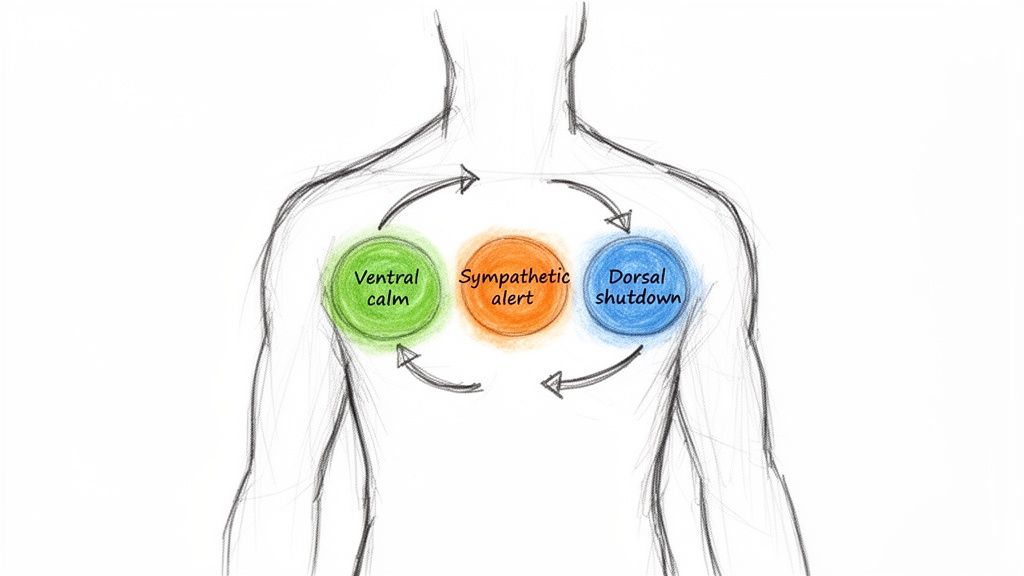
The science validates this framework by highlighting the vagus nerve's role as a primary regulator. A 2018 study in Frontiers in Psychology demonstrated that stimulating the vagus nerve enhances emotional regulation and cognitive function. Furthermore, research published in Psychological Science connects a healthy "vagal tone" with increased positive emotions and social connectedness. Another study in the journal Autonomic Neuroscience showed that practices like slow breathing directly improve vagal tone, providing a physiological basis for these exercises.
How to Implement Nervous System Regulation
A simple way to begin is by becoming an observer of your own nervous system. When you feel anxious, notice the physical signs of sympathetic activation (e.g., rapid heart rate, shallow breathing). When you feel numb or disconnected, recognize it as a potential dorsal vagal response. This awareness is the first step toward change.
- Identify: Notice your current state. Are you feeling activated (fight/flight), shut down (freeze), or calm and engaged?
- Acknowledge: Acknowledge the state without judgment. It is your body's attempt to keep you safe.
- Introduce a Ventral Vagal Anchor: Use a tool to signal safety to your nervous system. A simple sigh, a slow exhale, or humming can activate the ventral vagal pathway.
Actionable Step: The next time you feel stressed, place a hand on your heart, take one deep breath, and let out a long, audible sigh. This simple act physically signals safety to your nervous system.
Actionable Tips for Integration
- Map Your System: Create a personal "map" of your nervous system states, listing triggers and resources for each state to build self-awareness.
- Use the "Vagal Brake": Think of your breath as a "vagal brake" that can slow down a hyper-activated system. A long, slow exhale is your most immediate tool to apply it.
- Incorporate Daily Resilience: Build vagal tone with small, daily habits like humming, gargling, cold water face splashes, or connecting with a loved one.
- Consider Holistic Support: To complement the profound impact of mind-body practices on calming the nervous system, individuals might also consider exploring natural stress relief supplements for additional support in managing daily pressures.
9. Visualization & Guided Imagery
Visualization and guided imagery are powerful cognitive techniques that use deliberate mental rehearsal to create specific neurological and physiological responses. The practice involves creating vivid, multi-sensory experiences in the mind, which activates the same neural pathways as the actual experience. This means the brain processes a visualized success, a peaceful scene, or a healed state in a way that is strikingly similar to reality, making it one of the most transformative mind body connection exercises for rewriting neural patterns.
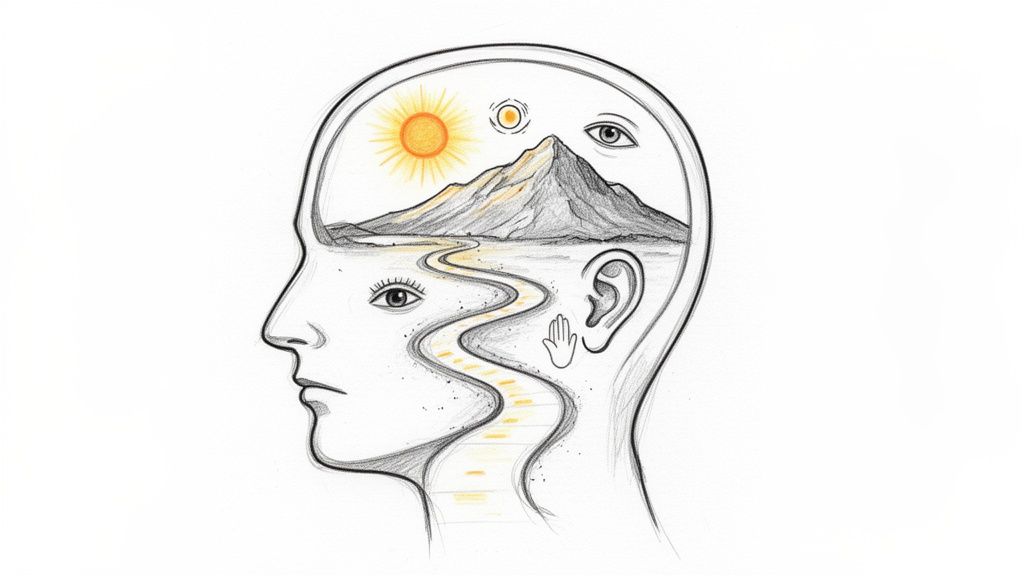
The scientific backing for visualization is extensive, particularly in performance and clinical settings. Research in the Journal of Neurophysiology demonstrated that mental imagery of a muscle contraction can produce significant gains in muscle strength, showing a direct mind-to-body link. A study published in PLOS ONE found that guided imagery effectively reduced pre-operative anxiety in patients. Furthermore, research in the Journal of Consulting and Clinical Psychology has shown its efficacy in reducing symptoms of PTSD by helping individuals create and internalize images of safety and control.
How to Implement Visualization
To start, you can practice a simple Success Visualization exercise, often used in executive coaching and sports psychology to build confidence and prime the brain for optimal performance.
- Define a Goal: Clearly identify a specific goal you wish to achieve, such as successfully delivering a presentation.
- Engage the Senses: Close your eyes and vividly imagine the entire scenario from start to finish. See the room, hear the applause, and feel the confidence in your body.
- Embody the Feeling: Focus on the emotions of success. Feel the pride, relief, and accomplishment as if it has already happened.
- Repeat: Practice this mental rehearsal for 5-10 minutes daily leading up to the event to build powerful new neural pathways.
Actionable Step: Take two minutes to visualize your ideal morning tomorrow. See yourself waking up refreshed, moving with ease, and starting your day with a sense of calm purpose.
Actionable Tips for Integration
- Pair with Breathwork: Practice visualization after a breathwork session. The regulated nervous system creates a more receptive state for positive imagery to take root.
- Use Multi-Sensory Details: Go beyond just seeing. Incorporate sounds, smells, tastes, and physical sensations into your mental imagery to make it more potent and believable for your brain.
- Record Personalized Sessions: Create and record your own guided imagery scripts tailored to your specific goals. Listening to them repeatedly enhances integration and reinforces the desired outcome.
- Notice Somatic Responses: As you visualize, pay close attention to how your body responds. Notice areas of tension or relaxation, which provides direct feedback on your mind-body connection.
10. Energy Work & Somatic Release Techniques
Energy work and somatic release techniques are powerful mind body connection exercises that operate on the principle of releasing stored tension and trauma held within the body's tissues and nervous system. Practices like Trauma Release Exercises (TRE) and vocal toning intentionally induce natural physiological responses like shaking or sound, allowing the body to discharge deeply held stress and emotional energy that conscious thought alone cannot access. This process facilitates a profound reconnection between mental states and physical sensations, resetting the nervous system.
The efficacy of these methods is increasingly supported by scientific research. A 2018 study in Frontiers in Psychology demonstrated that somatic experiencing interventions significantly reduced PTSD symptoms by helping individuals process trauma-related bodily sensations. Further, research published in the Journal of Traumatic Stress found that neurogenic tremors, the core of TRE, were effective in decreasing anxiety and chronic pain. Another study in Medical Science Monitor highlighted how sound vibrations from toning can positively influence autonomic nervous system activity, promoting relaxation.
How to Implement Somatic Release
A simple way to begin is with intentional therapeutic shaking, a core component of TRE developed by Dr. David Berceli.
- Lie Down: Start by lying on your back with your knees bent and feet flat on the floor, about hip-width apart.
- Activate Tremors: Gently bring the soles of your feet together and let your knees fall out to the sides in a butterfly position. Slowly raise your pelvis off the floor an inch or two and hold.
- Allow Shaking: Slowly lower your pelvis and begin to bring your knees back together. As you do, you may notice a natural, gentle shaking or vibrating begin in your legs.
- Observe: Allow this involuntary shaking to continue for a few minutes, breathing deeply and simply observing the sensations without judgment. Stop if you feel overwhelmed.
Actionable Step: Before bed tonight, try the therapeutic shaking exercise for just five minutes. Pay attention to the feeling of release in your hips and legs, common storage areas for tension.
Actionable Tips for Integration
- Combine with Breathwork: Use gentle shaking or vocal toning after a breathwork session to deepen the release of any emotions or physical tension that surfaced.
- Create a Safe Container: Practice in a private, comfortable space where you feel secure enough to allow for involuntary movements or sounds without self-consciousness.
- Educate on Emotional Release: If you are a coach, inform clients that emotional expressions like crying or laughing during release are a normal and healthy part of the healing process.
- Ground Afterward: Following a release, use grounding techniques like walking barefoot on grass or holding a warm cup of tea to reintegrate and calm your system.
Top 10 Mind–Body Exercises Comparison
| Technique | Implementation complexity | Resource requirements | Expected outcomes | Ideal use cases | Key advantages | Key limitations |
|---|---|---|---|---|---|---|
| Breathwork & Conscious Breathing Techniques | Low–Moderate (simple to advanced techniques) | Minimal (space); facilitator for advanced protocols; optional HRV biofeedback | Rapid parasympathetic activation, stress/anxiety reduction, increased bodily awareness, gateway to subconscious material | Quick workplace resets, pre-therapy priming, daily stress management | Fastest way to stimulate vagal tone; measurable effects; highly adaptable | Can provoke emotional release; risk of hyperventilation; contraindicated in some respiratory/cardiac conditions |
| Binaural Beats & Brainwave Entrainment | Low (listen-and-apply) | Quality stereo headphones; curated frequency recordings; optional EEG for research | Accelerated entry into targeted brain states (focus, creativity, sleep); enhanced meditation depth | Focus sessions, meditation enhancement, sleep support, paired with breathwork | Passive integration; measurable EEG entrainment; synergistic with other modalities | Requires headphones; individual responsiveness varies; many low-quality recordings exist |
| Hypnotherapy & Hypnotic Guidance | High (requires trained practitioner) | Certified hypnotherapist or high-quality recordings; private space | Deep subconscious reframing, reduced anxiety, behavioral change (habits, phobias) | Long-term behavior change, trauma-informed therapy, pattern rewiring | Direct access to subconscious; high efficacy for targeted issues; recordable for reinforcement | Needs skilled practitioner; variable client responsiveness; stigma/misconceptions; may require multiple sessions |
| Neuro-Linguistic Programming (NLP) | Moderate (training/practice required) | Practitioner training or self-practice resources; scripts and exercises | Rapid shifts in perspective, belief restructuring, improved communication and performance | Executive coaching, sales training, rapid behavior change work | Practical, language-based tools; can be self-applied after training; integrates with other modalities | Skill-dependent; can be perceived as manipulative; inconsistent long-term evidence for some techniques |
| Subliminal & Subconscious Programming | Low–Moderate (creation and deployment) | High-quality subliminal audio/content; consistent daily exposure; ethical consent | Gradual subconscious influence and reinforcement of new beliefs over weeks–months | Background reinforcement, daily habit support, multi-sensory integration with breathwork | Bypasses conscious resistance; cost-effective once produced; pairs well with altered states | Efficacy debated; ethical/consent concerns; results variable and slow; market quality varies |
| Yoga & Somatic Body Awareness | Moderate (instructor-guided; self-practice possible) | Space, mat, trained instructor for trauma-informed work | Improved body awareness, somatic pattern recognition, nervous system regulation over time | Corporate wellness, trauma-informed therapy, embodied coaching | Integrates movement, breath, mindfulness; sustainable daily practice; reduces physiological stress markers | Requires consistent practice; physical limitations can restrict access; potential trauma triggers if not trauma-informed |
| Meditation & Mindfulness Practices | Low–Moderate (habit formation required) | Minimal (apps, guided recordings recommended for beginners) | Improved attention, reduced rumination, emotional regulation, long-term resilience | Foundational self-care, corporate mindfulness programs, ongoing anxiety management | Strong evidence base; low cost; complements other techniques | Benefits accumulate slowly; requires daily practice; may initially increase distress in some trauma survivors |
| Nervous System Regulation & Polyvagal Theory | Moderate (education and assessment needed) | Practitioner training, client education materials, optional monitoring tools | Clear framework for dysregulation; targeted interventions to shift states and build resilience | Trauma-informed care, coaching about stress responses, program design for workplace wellness | Unifying model for interventions; explains physiological mechanisms; guides tailored interventions | Requires client education; not every technique works for all systems; may take time to map personal patterns |
| Visualization & Guided Imagery | Low (guided or self-led) | Recorded scripts or live guides; quiet space | Neural rehearsal of desired outcomes, reduced performance anxiety, enhanced resource states | Performance enhancement, leadership visualization, therapeutic imagery work | Rapidly builds neural pathways for goals; accessible and easy to learn | Vividness varies by individual; risk of reinforcing negative imagery; needs focused time and practice |
| Energy Work & Somatic Release Techniques | Moderate–High (practitioner-guided for depth) | Skilled facilitator, safe container, space for movement/sound | Release of held tension/emotion, somatic regulation, cathartic processing | Deep trauma release, somatic therapy, intensive transformational sessions | Facilitates profound emotional release; complements breathwork for full-body integration | Mechanisms debated scientifically; potential for overwhelming releases; practitioner quality and cultural concerns vary |
From Theory to Transformation: Integrating Your Mind-Body Practice
You have journeyed through a comprehensive map of ten powerful mind body connection exercises. From the primal rhythm of conscious breathing to the intricate neural pathways targeted by NLP and brainwave entrainment, each practice offers a unique gateway to greater self-awareness, nervous system regulation, and profound healing. But knowledge, however deep, is merely a collection of signposts. The real transformation begins when you step onto the path and start walking.
Integrating these practices isn't about adding another stressful item to your to-do list. It’s about a fundamental shift in your relationship with yourself, moving from a state of disconnection to one of conscious partnership between your mind and body. This is where the theoretical becomes tangible, and the abstract becomes a lived reality.
Building Your Personal Practice: The Power of Consistency
The most common pitfall is overwhelm. Faced with ten powerful options, it's easy to feel paralyzed by choice. The key to sustainable change lies in starting small and prioritizing consistency over intensity.
Actionable Insight: Choose one exercise from this article that resonated most deeply with you. Commit to practicing it for just five minutes a day for one week. The goal isn't mastery; it's simply showing up.
Consider these practical starting points:
- For the Overwhelmed Professional: Begin your workday with three minutes of box breathing before opening your email. This small act signals to your nervous system that you are starting the day from a place of calm, not chaos.
- For Anxiety Management: When you feel the familiar stirrings of anxiety, try a 5-minute progressive muscle relaxation session. This somatic practice directly addresses the physical tension that often fuels the anxious mind.
- For Cultivating Self-Awareness: End your day with a simple 10-minute body scan meditation. Notice sensations without judgment, building the crucial skill of mindful presence.
This consistent, gentle engagement creates new neural pathways. Research published in the journal NeuroImage has shown that even short periods of regular mindfulness practice can induce measurable changes in brain regions associated with memory, self-awareness, and compassion. By committing to a small, daily practice, you are literally rewiring your brain for a new way of being. As you integrate mind-body practices into your daily life, you may want to discover resources for overall well-being that complement your transformative journey.
From Individual Exercises to Integrated Transformation
As you build confidence with individual mind body connection exercises, you may notice a desire for a more profound and integrated experience. While practicing one technique is beneficial, the synergistic effect of combining them can accelerate your progress exponentially. This is where a structured, multi-sensory modality becomes invaluable.
Think of it this way: breathwork opens the door to your subconscious, guided imagery provides the map, and binaural beats create the optimal brainwave state for the journey. Weaving these elements together creates a holistic experience that can disrupt deeply ingrained patterns and install new, empowering beliefs at a cellular level. Studies in the Journal of Alternative and Complementary Medicine have highlighted how multi-modal interventions, such as combining meditation with somatic techniques, can lead to more significant reductions in stress and improvements in psychological well-being than single-modality approaches.
The true power of mastering the mind-body connection lies not just in managing stress, but in reclaiming your agency. It is the key to unlocking creativity, deepening your relationships, and living with a sense of purpose and vitality. It's about moving from reacting to life to consciously creating it. This journey from theory to transformation is the most important one you will ever take.
Ready to experience the synergistic power of these modalities combined? 9D Breathwork integrates advanced breathwork, binaural beats, and hypnotic guidance into a single, immersive journey designed to release stored trauma and reprogram your subconscious for a new reality. Explore the transformative potential of a fully guided experience at 9D Breathwork.