When you feel your heart pounding, taking a deep breath isn’t just a folk remedy—it’s a direct physiological command telling your body to stand down. That simple, conscious act of controlling your inhales and exhales is one of the most powerful tools you have to manage stress and actively lower your heart rate.
Why Your Breath Is the Remote Control for Your Heart
Ever wonder why a sigh of relief feels so physically good? Or why a sudden gasp of fear can make your heart leap into your throat? The connection is hardwired directly into your nervous system. Your body runs on a brilliant, automatic system that, luckily for us, we can consciously influence through the rhythm of our breath.
This internal operating system is called the autonomic nervous system. Think of it as having two main branches: a gas pedal and a brake for all your body’s key functions, especially your heart rate.
The Gas Pedal and the Brake
The gas pedal is your sympathetic nervous system. When you sense a threat—whether it’s a looming work deadline or a car cutting you off in traffic—it slams into “fight or flight” mode. Your system gets a jolt of adrenaline, making your heart pound and your breathing become quick and shallow.
Your parasympathetic nervous system, on the other hand, is the brake. It’s in charge of the “rest and digest” response, slowing everything down to conserve energy and promote recovery. This is where your breath becomes your superpower. When you deliberately breathe slowly, you are intentionally engaging this braking system.
The secret to this control lies in a master communicator called the vagus nerve. This crucial nerve runs from your brain all the way down to your abdomen, acting as the main information highway for your parasympathetic system. When you breathe slowly and deeply, especially with a long, controlled exhale, you physically stimulate this nerve.
That stimulation sends a clear signal up to your brain: “All clear. You can relax now.” In response, your brain tells your heart it’s safe to slow down, effectively pumping the brakes on your body’s stress response.
Research consistently shows that breathing at a slow, steady pace—around 6 to 10 breaths per minute—can significantly improve heart rate variability (HRV), a key indicator of your body’s resilience to stress.
Here’s a quick breakdown of how this all works together to calm your heart.
How Controlled Breathing Calms Your Heart
This table offers a quick look at the direct physiological benefits of using breathing exercises to manage an elevated heart rate.
| Benefit | How It Helps Lower Your Heart Rate |
|---|---|
| Vagus Nerve Stimulation | Slow, deep breaths, particularly with a long exhale, directly activate the vagus nerve, which signals the heart to slow down. |
| Increased Oxygen Efficiency | Deep, diaphragmatic breathing improves gas exchange in the lungs, allowing your heart to pump more efficiently and with less effort. |
| Reduced Stress Hormones | Activating the “rest and digest” system helps lower levels of stress hormones like cortisol and adrenaline, which cause the heart to race. |
| Improved Heart Rate Variability (HRV) | Consistent practice enhances your body’s ability to adapt to stress, reflected in a higher HRV and a more regulated heart rhythm. |
By learning to control your breath, you’re not just hoping for calm—you’re actively creating it from the inside out.
Beyond just breathwork, exploring various natural methods to lower your resting heart rate can give you a more complete toolkit for managing your cardiovascular wellness. It’s all about building a set of strategies that support your body’s natural state of balance.
Here are five powerful breathing techniques you can use to find immediate calm.
The theory behind why breathwork is so effective is fascinating, but knowing how to use it in the heat of the moment is what really matters. These five exercises are designed to lower your heart rate, and each one has its own unique feel and application.
Don’t think of this as a rigid list you have to master. Instead, see it as a toolkit. Your job is to experiment and find which tool works best for you and when.
This simple visual breaks down the process, showing how a single deep breath acts as a bridge, connecting your brain’s alarm bells to your heart’s ability to slow down and relax.
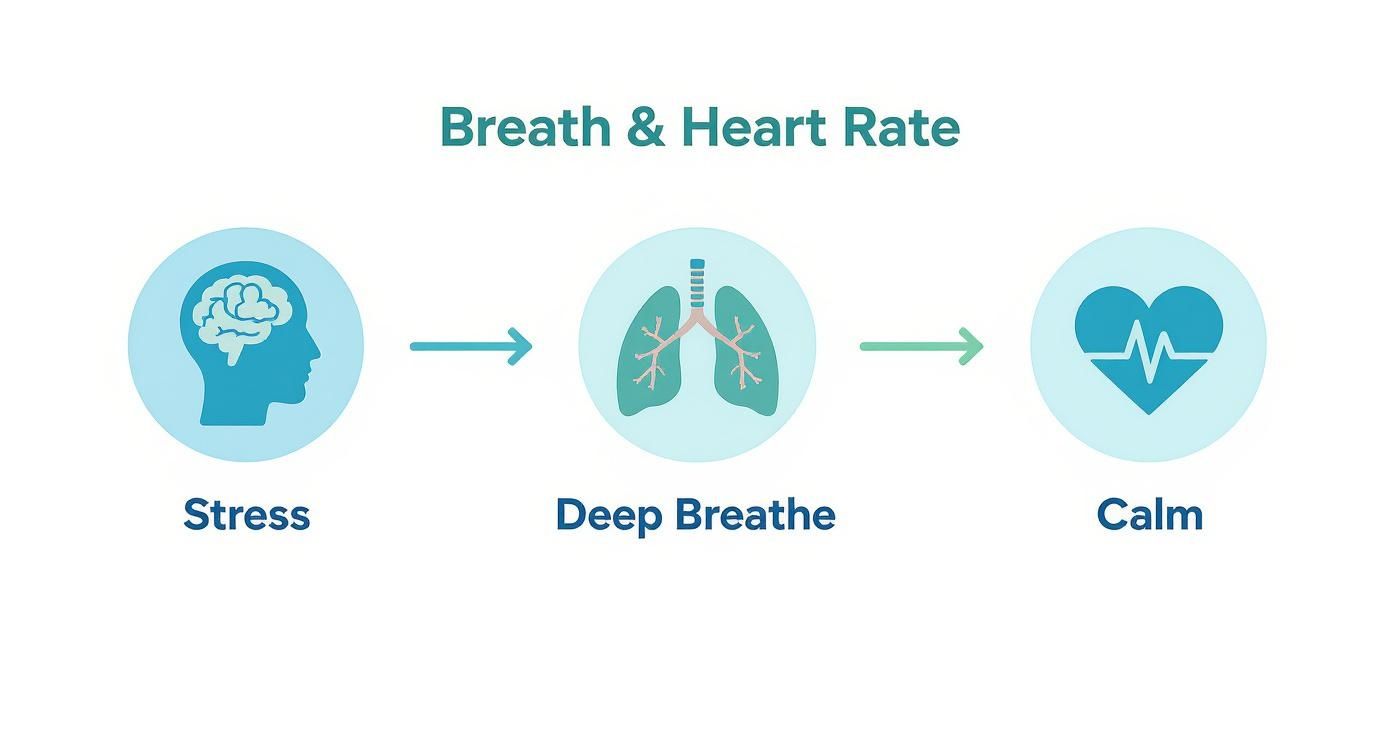
The most empowering part? You have direct, conscious control over this entire process. That simple, intentional breath is the switch that flips your body from a state of stress to one of calm.
Diaphragmatic “Belly” Breathing: The Foundation
This is ground zero for all effective breathing. Most of us, especially when we’re stressed, are “chest breathers.” We take shallow, quick sips of air that only serve to keep our fight-or-flight system on high alert.
Diaphragmatic breathing, or belly breathing, is all about retraining your body to use its primary breathing muscle—the diaphragm—for a much deeper, more efficient, and calming breath.
Actionable Steps:
- Find a comfortable position, either sitting or lying down. Place one hand on your chest and the other on your belly.
- Inhale slowly through your nose for a count of four. Your goal is to make the hand on your belly rise while the hand on your chest remains still.
- Exhale slowly through your mouth for a count of six. Feel your belly fall as you gently push the air out.
- Repeat this for 5-10 breath cycles, focusing on the physical sensation of your belly moving up and down.
Real-World Scenario: Try this while lying in bed before you go to sleep. The physical sensation of your hand rising and falling with your breath gives your mind something gentle to focus on, pulling it away from the day’s racing thoughts and easing your body toward rest.
Coherent Breathing: The Rhythm of Balance
Coherent breathing, sometimes called resonance breathing, is all about finding a state of equilibrium. The goal is to breathe at a steady rhythm of about five to six breaths per minute. This means your inhale lasts for about five or six seconds, and your exhale lasts for the same.
This specific cadence has been shown to maximize heart rate variability (HRV), a key marker of how well your body can adapt to stress. It strikes a perfect balance between your “go” (sympathetic) and “slow” (parasympathetic) nervous systems.
Actionable Steps:
- Sit upright in a comfortable chair with your feet flat on the floor.
- Set a timer for three minutes.
- Inhale gently through your nose to a mental count of five.
- Without pausing, exhale gently through your nose for a count of five.
- Continue this smooth, even rhythm until the timer goes off.
What I love about this technique is that it’s completely discreet. No one around you has to know you’re doing it. You can use it to ground yourself during a tense meeting, on a crowded train, or while stuck in a long line, all without drawing any attention.
The 4-7-8 Technique: A Natural Tranquilizer
Developed by Dr. Andrew Weil, the 4-7-8 technique is an incredibly potent exercise for inducing deep relaxation. It’s especially effective for quieting a racing mind, making it a go-to for those nights you can’t seem to switch off before bed.
Actionable Steps:
- Sit with your back straight and place the tip of your tongue against the ridge of tissue behind your upper front teeth. Keep it there for the entire exercise.
- Exhale completely through your mouth with a gentle whoosh sound.
- Close your mouth and inhale quietly through your nose for a mental count of four.
- Hold your breath for a count of seven.
- Exhale completely through your mouth, making that whoosh sound again, for a count of eight.
- This is one breath. Inhale again and repeat the cycle three more times for a total of four breaths.
The magic is in that extended exhale. Holding your breath lets your body absorb more oxygen, and the long, slow release powerfully activates your parasympathetic nervous system. It’s like hitting the brakes on your heart rate. For moments of intense stress, learning specific breathing techniques for anxiety attacks can offer profound and immediate relief.
Box Breathing: The Focus Finder
Popularized by Navy SEALs, Box Breathing is as much about sharpening mental focus as it is about creating physiological calm. It’s a fantastic tool for steadying your nerves and clearing your head before a high-pressure situation, like giving a presentation or having a difficult conversation.
The structure is simple and easy to remember—just like the four equal sides of a box:
- Inhale slowly through your nose for a count of four.
- Hold your breath at the top for a count of four.
- Exhale slowly through your mouth for a count of four.
- Hold your breath at the bottom for a count of four.
Actionable Scenario: Before your next important Zoom call, turn off your camera for one minute. Close your eyes and complete five rounds of Box Breathing. Notice how it clears your mind and steadies your voice, allowing you to start the meeting with confidence and composure.
The Simple Prolonged Exhale: Your Instant Reset
If you take away just one thing from this guide, let it be this: your exhale controls your calm.
The fastest, simplest way to lower your heart rate is to make your exhale longer than your inhale. That’s it. This directly stimulates the vagus nerve and sends a clear signal to your body that it’s safe to relax.
Actionable Steps:
- Inhale gently through your nose for a count of three.
- Exhale slowly through your mouth as if you’re breathing out through a straw, for a count of six.
- Repeat this 3-5 times whenever you feel a surge of stress.
Real-World Scenario: A stressful email lands in your inbox, and you feel that familiar jolt and your heart starts to pound. Before you even think about how to reply, just take two or three of these long, slow exhales. This tiny intervention can halt the stress response in its tracks, giving you the mental space to respond thoughtfully instead of just reacting.
For more ideas on how to weave these moments into a packed day, check out this great guide on taking a 5-minute breathwork break to completely reset.
Weaving Breathing Exercises Into Your Daily Life
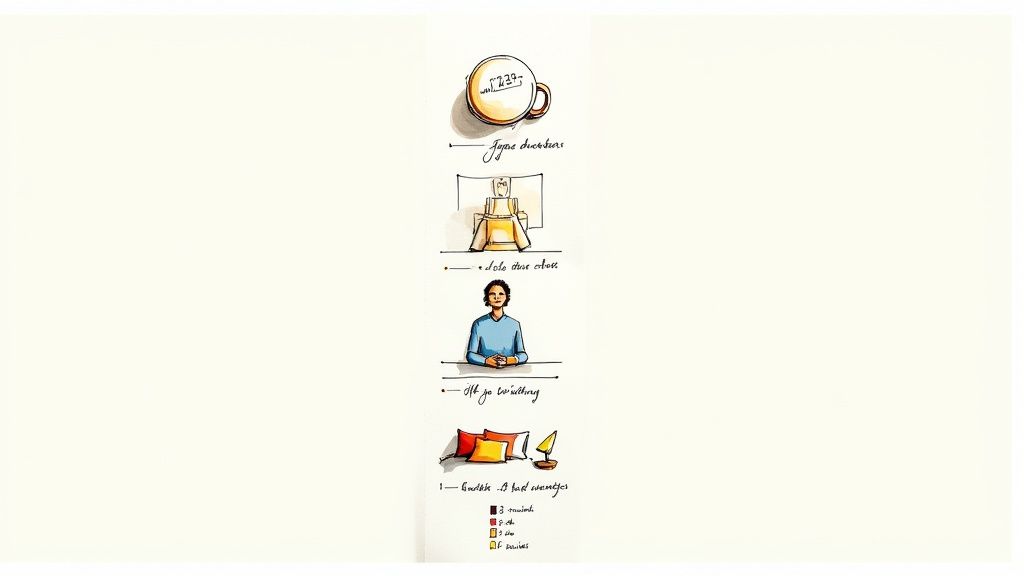
Knowing how to do these breathing exercises is one thing, but the real magic happens when you master the when. The aim isn’t to cram another task onto your overflowing to-do list. It’s about making these powerful techniques a natural, almost instinctual, part of your day.
You don’t need to carve out a huge chunk of time to see results. The trick is to “habit stack”—tying a new breathing practice to a routine you already do on autopilot. Look for those small, empty moments in your day and fill them with intention.
Attaching Breathwork to Habits You Already Have
Think about your daily rituals. Making your morning coffee, waiting for your computer to boot up, sitting at a red light. These are the perfect hooks for a new breathing habit. Remember, consistency beats intensity every time.
Practical Action Plan:
- While your coffee brews: Instead of scrolling on your phone, stand by the counter and do one minute of Box Breathing. It’s a simple way to ground yourself before diving into the day.
- Before a tough conversation: Excuse yourself for a moment. Find a quiet space (even a restroom stall works) and take three long, slow exhales. This tiny action can completely shift your mindset from reactive to responsive.
- At a red light: Use that unexpected pause for some Coherent Breathing. It’s a quick reset that can defuse commuting stress before it builds.
- Actionable Challenge: Pick one of these moments and commit to doing the exercise for the next three days. Notice how it feels.
These small “micro-doses” of breathwork add up. They effectively train your nervous system to find its way back to a calm state faster and more easily.
Quick Start Breathing Routines for Any Schedule
To make it even simpler to get started, here are a few practical routines designed to fit into even the tightest schedules. Think of these as your go-to templates for a calmer day.
Quick Start Breathing Routines for Any Schedule
| Routine (Duration) | Recommended Exercise | Best Time to Practice |
|---|---|---|
| 1-Minute Morning Reset | Prolonged Exhale (Inhale 3, Exhale 6) | Right after waking up, before your feet hit the floor. |
| 3-Minute Midday De-Stress | Box Breathing (4-4-4-4 count) | At your desk between meetings or during a quick break. |
| 5-Minute Evening Wind-Down | Diaphragmatic “Belly” Breathing | Lying in bed to quiet your mind before sleep. |
Even these short, consistent practices make a real, measurable difference. In fact, a major review of 15 clinical trials revealed that people who regularly practiced breathing exercises saw their heart rate drop by a statistically significant average of 2.41 beats per minute. This isn’t just a feeling; it’s a physiological shift.
“The best routine is the one you actually stick with. Start with just one minute a day. That consistency builds momentum, and momentum is what turns a practice into a lifelong habit.”
These routines are fantastic for dialing down your body’s stress response. But what about when you need the opposite? For those times you’re feeling sluggish and need a boost, check out our guide on breathing for energy. The ultimate goal is to build a versatile toolkit, so you can consciously choose your state—whether that means calming down or powering up.
Beyond the Basics with Advanced Breathwork
Once you’ve gotten comfortable with the foundational breathing exercises for lowering your heart rate, you’ll find there’s a whole other world of practice waiting for you. Those simple, rhythmic techniques are your entry point. More advanced methods can unlock deeper physiological and emotional benefits, turning your practice from a quick stress-management fix into a powerful tool for personal exploration.
Think of it like this: the basic breathing exercises are like daily stretching for your nervous system. Advanced breathwork is more like strength training—it actively builds resilience and expands your capacity over time.
Strengthening Your Breath with IMST
One of these more advanced approaches is something called Inspiratory Muscle Strength Training (IMST). This technique isn’t about counting or rhythms; it’s about using a specialized handheld device that provides resistance as you breathe in. By forcing your breathing muscles to work harder, you’re literally strengthening your diaphragm and other respiratory muscles, which can lead to some pretty significant cardiovascular improvements.
And the results are impressive, going far beyond simple stress relief. Research has shown that practicing high-resistance IMST for just 30 breaths a day over six weeks led to an average drop in systolic blood pressure of 9 millimeters of mercury (mm Hg). These findings really highlight how targeted breathing exercises can have a direct, powerful impact on your heart health. You can read more about these health benefits on heart.org.
IMST is a fantastic example of how breathwork can be used proactively, not just reactively. It shifts the focus from calming down in a stressful moment to building a more robust physiological foundation that’s better equipped to handle stress in the first place.
This kind of structured training makes your body more efficient at the simple act of breathing. That means your heart doesn’t have to work as hard during daily activities or when you’re under pressure. It’s a real investment in your long-term cardiovascular well-being.
Exploring Deeper States with Somatic Breathwork
Beyond just the physical training, advanced breathwork can take you into emotional and psychological territory. Modalities like somatic breathwork use conscious, connected breathing patterns—often guided and set to evocative music—to access deeper layers of the nervous system. The whole point is to release stored tension, process stuck emotions, and interrupt the ingrained physiological patterns that keep us in a state of chronic stress.
This is where the breath becomes a tool to get at the root causes of an overactive stress response. Practices like Holotropic Breathwork, a specific type of somatic therapy, use accelerated breathing to induce a non-ordinary state of consciousness, which allows for profound self-exploration. By moving past simple relaxation, you can start to understand and rewire the very triggers that cause your heart rate to spike in the first place. For anyone curious, you can learn more about how to do Holotropic Breathwork and its unique approach.
Stepping into these advanced methods isn’t about becoming some kind of guru. It’s simply the next logical step in the journey—using your breath not just to manage your state, but to fundamentally change it for the better.
Safety Guidelines and When to Talk to a Doctor
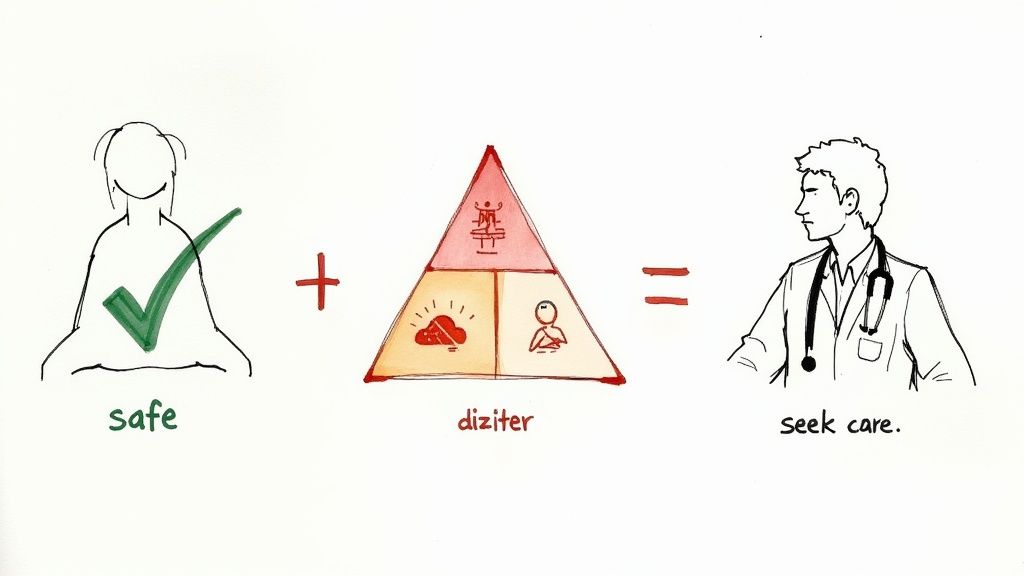
While the breathing exercises we’ve covered are generally very safe, it’s important to remember they are powerful tools. Think of them as a way to support your body’s natural state of calm, not as a substitute for professional medical advice. The key is to always practice with awareness and listen to what your body is telling you.
Your well-being is the absolute priority. So, if you have a pre-existing health condition, it’s wise to approach any new practice with a bit of mindful caution.
When to Proceed with Caution
Certain health situations definitely warrant a conversation with your doctor before you jump into a regular breathwork routine. I always recommend checking in with a healthcare professional first if you have:
- Very low blood pressure (hypotension), as deep relaxation techniques can sometimes lower it further.
- A diagnosed heart arrhythmia or other serious cardiovascular issues.
- Severe respiratory conditions like chronic obstructive pulmonary disease (COPD) or advanced asthma.
- A history of seizures, fainting, or severe dizziness.
This isn’t about creating fear; it’s just about practicing responsibly. A quick chat with your doctor can give you the peace of mind that you’re choosing techniques that are perfectly suited and safe for your unique situation.
The goal is to feel better, not worse. If an exercise ever makes you feel lightheaded, dizzy, or short of breath, stop immediately. Your body’s signals are your most trustworthy guide.
Red Flags to Watch For
As you practice these breathing exercises to lower your heart rate, pay close attention to how you feel. It’s normal to feel a gentle sense of calm or even a slight, pleasant tingling sensation.
However, you should stop right away if you experience any of the following:
- Chest pain or tightness
- Significant dizziness or feeling faint
- Sudden shortness of breath or difficulty breathing
- An unexpected spike in anxiety or panic
These symptoms are clear signs to pause and consult a professional. Remember, you’re building a positive relationship with your body, and that requires both trust and attention.
Common Questions About Breathing and Heart Rate
As you get started, you’ll probably have a few questions pop up. Let’s tackle some of the most common ones I hear so you can feel confident in your practice.
How Quickly Will These Exercises Actually Work?
This is usually the first thing people ask, and for good reason. For a quick reset during a stressful moment, you can feel a noticeable shift—a real sense of calm washing over you—in as little as 60 to 90 seconds, especially with a simple technique like the Prolonged Exhale. It’s an incredible tool for managing stress in real-time.
But the bigger prize is lowering your overall resting heart rate, and that’s more of a long game. Consistent daily practice is what really strengthens your parasympathetic nervous system, creating lasting change. Think of it less like a quick fix and more like building a foundation, one breath at a time.
What If I Have Asthma? Can I Still Do This?
If you have a respiratory condition like asthma, the golden rule is to check with your doctor before starting any new breathing routine. Your health comes first, always.
That being said, many people with asthma find gentle diaphragmatic breathing to be incredibly helpful. It strengthens your main breathing muscles without causing strain. I’d just be mindful of any techniques involving long or forced breath holds. The goal is to feel supported and relaxed, never stressed or short of breath. Listen to your body—it will tell you what it needs.
Don’t aim for perfection; aim for consistency. Starting with just five minutes a day is far more effective than trying for a 30-minute session once a week and burning out.
What’s the “Right” Amount of Time to Practice?
Honestly, the best routine is the one you’ll actually do. It’s easy to get caught up in finding the “ideal” duration, but what truly matters is integrating this into your life in a way that feels easy and sustainable.
My advice? Start small. Just five minutes a day is a fantastic starting point. Once that becomes a natural part of your routine, you can always build on it.
Ready to explore a much deeper connection between your breath, mind, and body? 9D Breathwork takes these foundational techniques and amplifies them with sound, music, and guided coaching. It’s designed to help you release deep-seated stress, clear out emotional blocks, and truly rewire your nervous system from the inside out. You can discover your next level of well-being at https://9dbreathwork.com.
Article created using Outrank