In today’s competitive landscape, the old playbook for employee engagement is obsolete. Pizza parties and generic perks fail to address the core human needs for purpose, growth, and connection that truly drive performance. Disengaged employees are not just a morale issue; they represent a significant drain on productivity and innovation, with Gallup reporting that low engagement costs the global economy trillions annually. True, sustainable motivation is an outcome of a thoughtfully designed ecosystem, not a series of superficial incentives.
This is where modern, science-backed staff motivation strategies come into play, creating environments where employees feel psychologically invested and empowered. To move beyond superficial perks, it’s essential to understand the modern drivers of engagement and explore 10 Proven Ways to Increase Employee Satisfaction, fostering a truly motivated workforce. Building on that foundation, this comprehensive guide provides a tactical roadmap for leaders ready to cultivate a resilient, high-performing culture. We will move past the obvious and into actionable frameworks that blend sophisticated management practices with holistic wellbeing interventions.
This article details 10 powerful strategies, each supported by research and broken down into practical implementation steps. You will learn how to:
- Connect daily tasks to a larger organizational mission.
- Build recognition programs that genuinely resonate.
- Foster autonomy and mastery through structured empowerment.
- Integrate wellness practices that measurably reduce stress.
Each section offers concrete examples, sample scripts, and metrics to help you track your impact. Get ready to implement strategies that unlock your team’s full potential and build a workplace where people don’t just work-they thrive.
1. Purpose-Driven Work Alignment
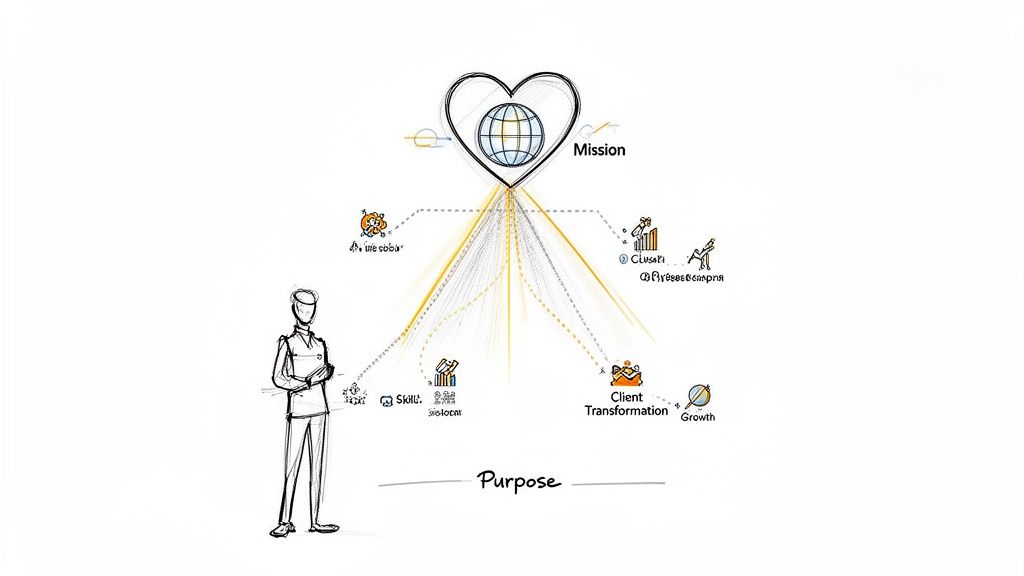
Purpose-driven work alignment is one of the most powerful staff motivation strategies, focusing on connecting an employee’s personal values and sense of purpose with the organization’s overarching mission. When employees see their daily tasks contributing to a meaningful impact beyond profit, their intrinsic motivation, engagement, and loyalty increase dramatically. This strategy moves beyond financial incentives to tap into the human need for meaning.
A study in the Journal of Career Assessment found a significant positive correlation between employees perceiving their work as a “calling” and their overall job satisfaction. The key is to make the organizational mission tangible and personal for every team member, regardless of their role.
Why This Strategy Is Effective
This approach is highly effective because it addresses a core psychological need. Research published in Administrative Science Quarterly highlights that employees who find their work meaningful are less likely to leave their jobs and report higher levels of well-being. A 2018 study in the Journal of Business Ethics reinforced this, showing that purpose-driven work directly enhances employee engagement by fostering a sense of significance. By aligning individual roles with a greater purpose, companies like Patagonia cultivate an exceptionally committed workforce.
How to Implement Purpose-Driven Alignment
Implementing this strategy requires consistent and intentional communication that reinforces the company’s “why.”
- Share Transformation Stories: Regularly circulate customer testimonials and success stories that vividly illustrate the company’s impact. Actionable Step: Create a dedicated Slack channel called
#mission-momentswhere anyone can post a client win or positive feedback. - Connect KPIs to Impact: Frame individual and team Key Performance Indicators (KPIs) in terms of the mission. Instead of just tracking “sales,” track “lives transformed” or “communities supported.” Actionable Step: In your next team meeting, reframe one key metric. For example, change “customer support tickets closed” to “customer problems solved.”
- Conduct Purpose Discussions: Integrate purpose-alignment questions into one-on-one meetings. Managers can ask, “How have you seen your work contribute to our mission this month?” or “What part of our mission resonates most with you right now?” This helps individuals find their personal connection. For those exploring their own purpose, here are some tips on how to discover your passion.
- Enable Direct Interaction: Whenever possible, create opportunities for staff to interact directly with the people they serve. Actionable Step: Invite a satisfied customer to speak for 10 minutes at your next all-hands meeting to share their experience.
2. Recognition and Celebration Programs
Recognition and celebration programs are a systematic staff motivation strategy designed to acknowledge and reward employee achievements, milestones, and contributions. This approach goes beyond simple praise by creating a formal structure for validating effort, which boosts intrinsic motivation and fosters psychological safety. When employees feel seen and valued, their commitment and performance levels rise.
Research from Gallup consistently shows that employees who do not feel adequately recognized are twice as likely to say they will quit in the next year. The power of this strategy lies in its ability to reinforce desired behaviors and connect individual accomplishments back to the team and company’s success.

Why This Strategy Is Effective
This strategy is effective because it taps into the fundamental human need for appreciation. A study in the Journal of Personality and Social Psychology found that expressions of gratitude increase prosocial behavior, meaning recognized employees are more likely to help their colleagues. Furthermore, a 2019 study in the Journal of Business and Psychology found that timely recognition was a stronger predictor of employee engagement than the monetary value of the reward itself. Companies like Salesforce and Google have built powerful cultures around recognition, leading to higher engagement and retention.
How to Implement Recognition and Celebration
Effective implementation requires a program that is timely, specific, and authentic. A generic “good job” is far less impactful than specific, value-aligned praise.
- Implement Peer-to-Peer Recognition: Create a system where colleagues can nominate each other for awards. Actionable Step: Use a free tool like a dedicated Google Form or a premium platform like Bonusly to allow staff to submit “shout-outs” for their peers. Read them aloud at the start of weekly team meetings.
- Share Success Stories Widely: Dedicate a portion of team meetings or a monthly newsletter to highlight specific achievements. Share how an employee’s work led to a positive client outcome or solved a difficult problem.
- Tie Recognition to Core Values: When giving praise, explicitly connect the employee’s action to a company value. Actionable Step: Instead of saying “Great work on that report,” try “The way you dug into the data for that report truly embodies our value of ‘Thoroughness.’ Thank you.”
- Offer Choice in Rewards: Not everyone appreciates public praise. Allow employees to choose how they are recognized, whether it’s a private thank you, a public shout-out, or a small tangible reward like a gift card for coffee or lunch.
3. Professional Development and Continuous Learning
Investing in professional development and continuous learning is a foundational staff motivation strategy that signals an organization’s commitment to its employees’ long-term growth. This approach focuses on providing clear opportunities for skill acquisition, career advancement, and personal enrichment. When employees see a pathway for growth within the company, their motivation and loyalty are significantly enhanced.
Research from Gallup’s State of the American Workplace report confirms that opportunities to learn and grow are among the top factors that millennials consider when staying with a job. For a specialized organization like 9D Breathwork, this translates to offering access to advanced breathwork certifications, NLP training, and business development courses.
Why This Strategy Is Effective
This strategy directly addresses the human need for competence and achievement. A study in the Journal of Applied Psychology found a strong link between the availability of training opportunities and an employee’s organizational commitment and job satisfaction. Moreover, a 2017 study in Human Resource Management demonstrated that employees who participate in development programs report higher levels of intrinsic motivation because they feel more capable and confident in their roles. Companies like Deloitte have demonstrated that fostering employee growth drives both innovation and retention.
How to Implement Professional Development
A successful learning culture requires a structured and personalized approach that aligns employee aspirations with organizational needs.
- Create Individualized Development Plans (IDPs): Work with each team member to create a tailored growth plan that outlines their career goals. Actionable Step: During your next one-on-one, ask your team member: “What skill would you like to develop in the next six months that would help you in your role and career?” Document it and create a plan.
- Offer Diverse Learning Tracks: Provide development in multiple areas: technical training, business acumen, and personal growth. Actionable Step: Offer a small annual learning stipend (e.g., $500) that employees can use for books, courses, or certifications of their choice, pending manager approval.
- Tie Learning to Career Progression: Clearly link the completion of training programs to opportunities for promotion or increased responsibility. This makes the value of learning tangible.
- Encourage Peer Teaching: Implement “lunch and learn” sessions where employees can teach their peers new skills. Actionable Step: Ask a team member who recently completed a course to present a 15-minute summary of their key takeaways at the next team meeting. For more on building these skills, explore comprehensive leadership development training programs.
4. Autonomy and Empowerment in Decision-Making
Granting autonomy and empowerment is a core staff motivation strategy that gives employees meaningful control over their work. This approach is deeply rooted in Self-Determination Theory, which posits that autonomy, competence, and relatedness are fundamental psychological needs. When employees can choose how, when, and where they do their work, their intrinsic motivation, accountability, and sense of ownership skyrocket.
A meta-analysis published in the Journal of Applied Psychology covering over 200 studies confirmed that job autonomy is positively linked to job satisfaction, performance, and motivation, while being negatively related to stress and exhaustion.
Why This Strategy Is Effective
This strategy works because it shifts the dynamic from compliance to commitment. Instead of merely following instructions, employees become active agents in solving problems. Research in The Leadership Quarterly shows that empowering leadership styles foster higher levels of employee creativity and proactive behavior. This sense of control is a powerful mitigator of workplace stress. Companies like Netflix have famously built their culture on “freedom and responsibility,” trusting employees to make impactful decisions.
How to Implement Autonomy and Empowerment
Empowering your team requires clear boundaries and a foundation of trust. The goal is to provide direction, not directions.
- Define Clear Guardrails: Establish non-negotiable standards, such as brand guidelines or safety protocols. Actionable Step: Create a simple, one-page document outlining the “guardrails” for a specific project, clearly stating the objectives and constraints, then let the team determine the “how.”
- Establish Decision-Making Frameworks: Create simple rules to guide autonomous decisions. Actionable Step: Implement a rule like, “Any team member can approve an expense under $500 without managerial sign-off if it directly supports a team goal.”
- Focus on Outcomes, Not Processes: Shift performance management from micromanaging tasks to evaluating results. Set clear, collaborative goals and trust your team to determine the best path to get there.
- Implement Feedback Loops: Replace traditional approval gates with regular, constructive feedback sessions. Actionable Step: Instead of asking “Can I see a draft for approval?”, try asking “Can you walk me through your progress and where you’d like feedback?” This shifts the conversation from permission-seeking to collaborative improvement.
5. Wellness-First Organizational Culture
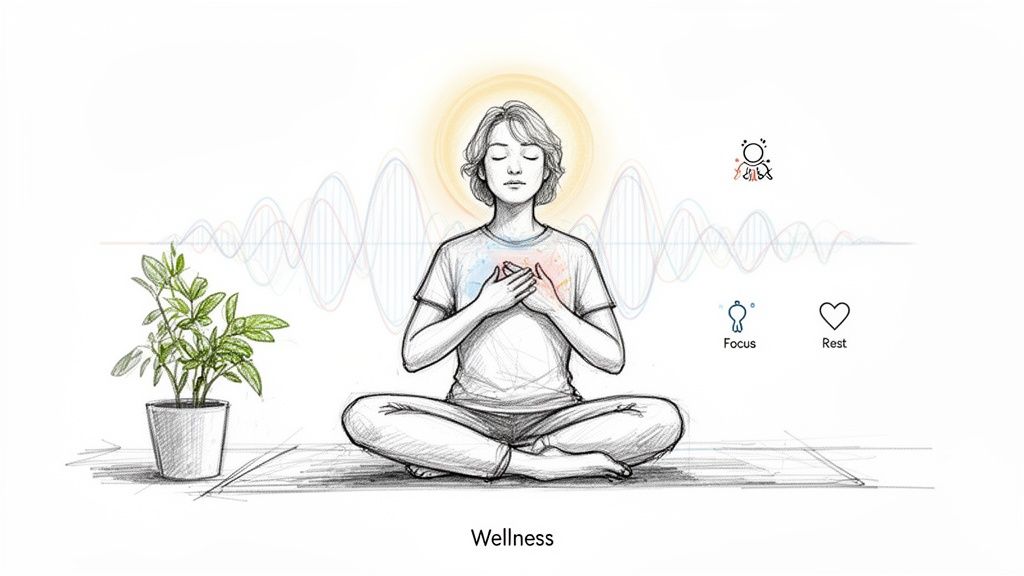
A wellness-first organizational culture is a powerful staff motivation strategy that embeds employee well-being directly into the company’s operational fabric. This approach goes beyond standard benefits by making wellness practices an active, integrated part of the workday. When employees experience genuine care for their health, their motivation becomes intrinsically tied to the supportive environment their employer provides.
This strategy is grounded in the idea that for a company to thrive, its people must thrive first. A meta-analysis published in the Journal of Occupational and Environmental Medicine confirmed that comprehensive workplace wellness programs lead to significant reductions in absenteeism and improvements in employee health, which directly fuels productivity.
Why This Strategy Is Effective
This approach works because it directly mitigates burnout, a primary driver of demotivation. Research from The Lancet has shown a direct link between high job demands, low employee control, and adverse health outcomes. A 2020 study in the Journal of Applied Psychology found that supervisor support for employee well-being was directly linked to lower emotional exhaustion and higher job satisfaction. By proactively providing tools to manage stress, companies build resilience and demonstrate genuine care.
How to Implement a Wellness-First Culture
Building this culture requires intentional, consistent actions that normalize self-care within the professional setting.
- Integrate Micro-Wellness Practices: Start small by incorporating 5-minute guided breathwork or mindfulness sessions at the beginning of team meetings. Actionable Step: Next week, start every virtual meeting by having all participants take three deep, slow breaths together before diving into the agenda.
- Create Dedicated Wellness Spaces: Designate a quiet room for meditation, breathwork, or simple disconnection. This physical space signals that the company formally sanctions restorative activities.
- Empower Staff with Tools and Time: Provide access to wellness resources, such as subscriptions to mindfulness apps, subsidized gym memberships, or even a dedicated wellbeing day to help staff recharge. Actionable Step: Block 30 minutes of “no-meeting” time on everyone’s calendar after lunch to encourage a mental break.
- Share Success Stories Internally: Encourage staff to share their personal wellness journeys and the positive impact of these initiatives. This peer-to-peer validation is a powerful motivator for others to participate. For more ideas, explore some of the best employee wellness programs currently being implemented.
6. Transparent Communication and Feedback Loops
Transparent communication is a core staff motivation strategy that builds a culture of trust and psychological safety. It involves openly sharing information about organizational performance and decisions, while establishing consistent, two-way feedback loops. When employees feel informed and heard, they are more engaged and aligned with company goals.
A study in the International Journal of Business Communication found that transparent internal communication is directly linked to higher levels of employee trust in leadership and overall job satisfaction. The goal is to eliminate uncertainty and create a space where honest dialogue thrives.
Why This Strategy Is Effective
This strategy is effective because it fulfills the fundamental human need for security and belonging. When employees understand the “why” behind decisions, they feel respected. Research in the Journal of Leadership & Organizational Studies shows that perceived organizational transparency reduces employee cynicism and improves commitment. A 2016 study in the Journal of Management also found that when leaders are transparent, teams perform better because they feel safer to take risks and innovate.
How to Implement Transparent Communication
Implementing this strategy requires a commitment from leadership to be open, consistent, and receptive to dialogue.
- Establish Structured Feedback Channels: Implement regular, structured one-on-one meetings with clear agendas that dedicate time for feedback. Actionable Step: Add a standing agenda item to your one-on-ones called “What’s one thing I could do better as your manager?” to actively solicit upward feedback.
- Share Company Performance Openly: Hold regular all-hands meetings to share key metrics, financial health, and strategic challenges. Actionable Step: In the next all-hands meeting, share one key challenge the company is facing and invite ideas from the team on how to address it.
- Train Managers in Coaching: Equip managers with the skills to deliver constructive feedback effectively. Emphasize coaching techniques like reflective listening and asking powerful questions.
- Act Visibly on Feedback: The most crucial step is to demonstrate that feedback is heard. Actionable Step: After making a change based on an employee suggestion, publicly acknowledge it: “Based on feedback from Sarah, we are now changing our reporting process. Thank you, Sarah.” This closes the loop. You can learn more about how to give effective feedback by exploring these coaching principles.
7. Flexible Work Arrangements and Work-Life Integration
Flexible work arrangements are a critical staff motivation strategy that acknowledges the diverse needs of modern employees. This approach focuses on empowering staff with control over when, where, and how their work is completed. By trusting employees to manage their own time, organizations can significantly reduce stress, prevent burnout, and boost commitment.
A global study by the International Workplace Group found that 85% of businesses report an increase in productivity as a direct result of greater flexibility. This strategy is not about working less; it’s about working smarter and creating an environment where employees can integrate their professional responsibilities with their personal lives.
Why This Strategy Is Effective
This approach directly addresses the growing demand for autonomy and work-life balance. A study published in the Journal of Applied Psychology revealed that employees with greater schedule flexibility exhibit higher levels of engagement and organizational commitment. A more recent study from Stanford University on remote work found that it not only increased productivity but also reduced employee attrition rates by 50%. By giving employees control, companies demonstrate trust, which fosters loyalty and accountability.
How to Implement Flexible Work Arrangements
Successful implementation hinges on clear policies, effective communication, and a focus on outcomes rather than hours clocked.
- Define Flexibility Tiers: Offer various options, such as hybrid models, fully remote work, compressed workweeks, or core hours (e.g., 10 a.m. to 3 p.m.). Actionable Step: Survey your team to understand which type of flexibility is most valuable to them before creating a formal policy.
- Leverage Asynchronous Tools: Effectively use platforms like Slack, Asana, or Notion to reduce the need for constant, real-time meetings. Actionable Step: Mandate that all non-urgent project updates be posted in a project management tool rather than discussed in a meeting, freeing up calendars.
- Focus on Results, Not Presence: Shift management focus from tracking hours to evaluating performance based on clear, pre-defined goals. This is the core principle of a Results-Only Work Environment (ROWE).
- Set Clear Boundaries: Proactively establish communication boundaries to prevent an “always on” culture. Actionable Step: Implement a “no internal emails after 6 p.m.” policy and use a scheduling tool for any communications that need to be sent after hours.
- Regularly Assess Work-Life Balance: Use one-on-one meetings to check in on how employees are managing their schedules. Ask questions like, “How is your current work arrangement supporting your well-being?”
8. Competitive Compensation and Tangible Rewards
While intrinsic factors are critical, competitive compensation and tangible rewards form the essential foundation of any effective staff motivation strategy. This approach ensures that employees feel valued for their skills and contributions. When compensation is fair and aligned with market rates, it removes a primary source of dissatisfaction, allowing employees to focus on higher-level motivators.
A meta-analysis published in the Journal of Vocational Behavior affirmed that while pay is not the sole driver, pay level satisfaction has a significant positive relationship with job satisfaction. Neglecting this fundamental aspect can demotivate even the most mission-driven employees.
Why This Strategy Is Effective
This strategy addresses an employee’s basic needs for security and fairness, as described in Equity Theory. Research from The Quarterly Journal of Economics on CEO compensation highlights how performance-contingent pay can powerfully align actions with goals. A study in the Academy of Management Journal found that pay transparency can reduce the gender pay gap and increase employee motivation when processes are perceived as fair. This shows that the organization is invested in sharing its success with those who create it.
How to Implement Competitive Compensation
Proper implementation requires transparency, market awareness, and a clear connection between performance and reward.
- Conduct Market Research: Regularly benchmark salaries against industry standards using data from firms like Radford or Glassdoor. Actionable Step: Commit to reviewing salary bands annually and adjust them based on market data to ensure you remain competitive.
- Link Rewards to Impact: Tie bonuses and incentives to meaningful outcomes, not just revenue. For a company like 9D Breathwork, this could mean linking facilitator bonuses to client transformation metrics. Actionable Step: Define 1-2 clear, measurable impact metrics (e.g., customer satisfaction scores) that will be tied to a quarterly bonus.
- Offer Comprehensive Benefits: Go beyond base salary. Provide robust wellness benefits that align with your company values, such as mental health support, fitness stipends, and continuing education funds.
- Ensure Transparency: Clearly communicate the compensation structure, including how raises are earned and how bonuses are calculated. Actionable Step: Create a simple document that outlines the different job levels within the company and the salary range associated with each, making the path for financial growth clear.
9. Team Connection and Community Building
Team connection and community building is a vital staff motivation strategy centered on fostering genuine relationships and a strong sense of belonging among colleagues. By creating an environment where employees feel connected and supported, organizations can significantly boost morale, collaboration, and loyalty. This is particularly crucial in remote work models where isolation can be a challenge.
Research from Gallup consistently shows that employees who have a “best friend” at work are more engaged and productive. Building these social bonds transforms the workplace from a collection of individuals into a cohesive team united by shared goals.
Why This Strategy Is Effective
This approach is powerful because it addresses the fundamental human need for belonging, a key component of psychological well-being as noted in a study published in the Journal of Personality and Social Psychology. A study in the Journal of Applied Psychology found that strong social connections at work can buffer against stress and burnout. Furthermore, research in Organization Science revealed that dense social networks within a company lead to faster knowledge transfer and improved team performance.
How to Implement Team Connection and Community Building
Building a strong community requires creating intentional opportunities for both professional and social interaction.
- Launch Peer Learning Circles: Establish monthly connection calls where team members can share challenges and learn from one another. Actionable Step: Organize a voluntary monthly “Case Study Circle” where a team member can present a problem they are facing and get advice from their peers.
- Create a Private Community Platform: Use tools like Slack or Circle for informal communication. Actionable Step: Create non-work-related channels like
#pets,#hobbies, or#good-newsto encourage personal connections. - Implement a Buddy System: Pair new hires with experienced team members to accelerate their sense of belonging and help them navigate the culture.
- Facilitate Shared Experiences: Organize activities that build bonds, such as virtual coffee chats or team-building events. For more ideas, explore these methods on how to boost team morale.
- Host Annual Gatherings: Bring key team members or franchisees together for an annual in-person conference or retreat to solidify relationships and align on future goals.
10. Impact Visibility and Outcome Measurement
Impact visibility is a powerful staff motivation strategy that makes the tangible results of an employee’s work visible. It moves beyond tracking tasks to focus on the real-world difference an employee’s efforts make. When staff can see the direct, positive outcomes of their labor, it fuels a profound sense of accomplishment and intrinsic motivation.
This concept is supported by research in the Journal of Personality and Social Psychology, which found that even small acts of prosocial impact can significantly increase happiness and job satisfaction. The key is to create systems that regularly feed this impact data back to the individuals responsible for it.
Why This Strategy Is Effective
This strategy is effective because it directly answers the question: “Does my work matter?” A study published in The Quarterly Journal of Economics demonstrated that when university fundraisers were connected with a scholarship recipient, their weekly fundraising revenue increased by over 170%. Seeing the outcome provided a powerful motivational boost. A 2017 study in the Academy of Management Journal also showed that end-user contact, where employees meet the people who benefit from their work, increases persistence and effort.
How to Implement Impact Visibility
Implementing this strategy involves creating consistent feedback loops that translate daily work into measurable, human-centered outcomes.
- Develop Simple Outcome Metrics: Go beyond traditional KPIs. Track metrics that reflect real-world impact, such as “client anxiety scores before and after a session” or “improvements in breath-holding capacity.” Actionable Step: Identify one customer outcome metric you can start tracking this month and create a simple dashboard to visualize it.
- Create Impact Reports: Share a monthly or quarterly impact report that aggregates and visualizes these outcomes. Use visuals to show collective achievements, like “This quarter, our facilitators guided 1,000 people through transformative breakthroughs.”
- Share Success Stories and Testimonials: Systematically collect and circulate client success stories. Actionable Step: Start a weekly email digest called “Client Wins of the Week” featuring 1-2 powerful, anonymized testimonials.
- Implement Client Feedback Loops: Use tools like Net Promoter Score (NPS) or simple post-session surveys to gather direct feedback. Share this data transparently with the team to highlight successes and identify areas for growth.
Top 10 Staff Motivation Strategies Comparison
| Strategy | Implementation Complexity | Resource Requirements | Expected Outcomes | Ideal Use Cases | Key Advantages |
|---|---|---|---|---|---|
| Purpose-Driven Work Alignment | Medium–High: needs cultural change and leadership buy-in | Medium: time, storytelling, leadership communication, training | Increased intrinsic motivation, engagement, and retention | Mission-oriented organizations and franchise scaling | Aligns personal values with mission; creates advocates |
| Recognition and Celebration Programs | Low–Medium: program design and consistency required | Low: platforms, meeting time, non-monetary rewards | Improved morale, psychological safety, and short-term engagement | Teams needing quick wins and behavioral reinforcement | Low-cost, high-impact, encourages desired behaviors |
| Professional Development and Continuous Learning | Medium–High: curriculum and career pathways needed | High: training budgets, mentors, external providers | Skill growth, higher service quality, internal talent pipeline | Growth-stage orgs investing in expertise and retention | Builds capability, reduces external hiring, improves quality |
| Autonomy and Empowerment in Decision-Making | Medium–High: requires trust frameworks and boundaries | Low–Medium: training, governance, performance metrics | Greater creativity, ownership, accountability and engagement | Roles requiring creativity or local adaptation (facilitators) | Boosts intrinsic motivation and innovation |
| Wellness-First Organizational Culture | Medium: cultural adoption and program integration | Medium–High: time, space, wellness tools, facilitators | Lower burnout, authentic advocacy, improved mental health | Wellness brands and service organizations selling health benefits | Staff become credible advocates; reduces stress and turnover |
| Transparent Communication and Feedback Loops | Medium: regular cadence and training required | Low–Medium: meeting time, feedback tools, training | Increased trust, clarity, and improved performance | Organizations needing alignment and psychological safety | Builds trust and early problem detection |
| Flexible Work Arrangements and Work-Life Integration | Low–Medium: policy design and manager training | Low–Medium: communication tools, scheduling systems | Higher satisfaction, retention, and productivity for many | Remote/hybrid models and caregiver-diverse teams | Attracts diverse talent; reduces commute-related stress |
| Competitive Compensation and Tangible Rewards | Medium: market benchmarking and pay structure setup | High: salary budgets, benefits, bonuses, equity | Prevents dissatisfaction; attracts and retains talent | Competitive labor markets and revenue-mature franchises | Baseline fairness; aligns incentives with goals |
| Team Connection and Community Building | Medium: programs and events to foster belonging | Medium: platforms, events, facilitation time | Stronger belonging, knowledge sharing, reduced isolation | Distributed networks and franchise communities | Strengthens retention and peer support networks |
| Impact Visibility and Outcome Measurement | Medium–High: tracking systems and privacy safeguards | Medium: analytics, dashboards, data collection effort | Increased meaning, motivation, and evidence of effectiveness | Service organizations focused on client outcomes | Makes impact tangible; drives purpose-led motivation |
From Strategy to Culture: Your Next Steps
We’ve explored ten powerful and distinct staff motivation strategies, moving beyond generic advice to provide a comprehensive toolkit for today’s dynamic workplace. From fostering a deep sense of purpose and championing employee autonomy to implementing robust wellness programs and ensuring transparent communication, each strategy offers a unique pathway to unlocking your team’s full potential. The common thread weaving them together is a fundamental shift in perspective: motivation is not something you do to people, but rather an environment you cultivate with them.
It’s about creating a system where recognition is a daily habit, not an annual event; where professional development is a continuous journey, not a static requirement; and where wellbeing is a core business metric, not an afterthought. The most effective leaders understand that these strategies are not isolated tactics but interconnected elements of a thriving organizational ecosystem.
Synthesizing Strategy into Action
The key takeaway is that sustainable motivation is holistic. You cannot offer flexible work arrangements while simultaneously fostering a culture of presenteeism and expect to see results. Likewise, a recognition program will fall flat if not supported by competitive compensation and clear opportunities for growth. The goal is to build a cohesive framework where these elements reinforce one another.
A study published in the Journal of Applied Psychology found that the combination of autonomy and clear, meaningful feedback had a significantly stronger impact on intrinsic motivation than either factor alone. This highlights the synergistic power of combining strategies like Autonomy and Empowerment with Transparent Communication and Feedback Loops. Instead of a piecemeal approach, view these ten strategies as a menu from which you can build a customized, multi-layered cultural initiative.
Your Implementation Roadmap
Embarking on this journey can feel overwhelming, but progress is made through intentional, incremental steps. Avoid the temptation to launch a dozen new initiatives at once. Instead, adopt a focused, iterative approach to implementing new staff motivation strategies.
Here is a practical, three-step plan to get started:
- Assess and Identify: Start by gathering feedback. Use anonymous surveys or small focus groups to understand your team’s most pressing needs. Are they craving more recognition, clearer career paths, or better work-life integration? Let their input guide your initial focus.
- Pilot and Measure: Select one or two high-impact strategies to pilot with a specific team or department. For example, you could introduce a peer-to-peer recognition platform (Strategy #2) and measure its impact on team morale and engagement scores over one quarter. A 2018 study in the International Journal of Hospitality Management confirmed that targeted recognition programs directly correlate with lower employee turnover intentions.
- Iterate and Expand: Analyze the results of your pilot. What worked? What didn’t? Use these learnings to refine the program before rolling it out to the wider organization. This data-driven approach, supported by research from journals like Personnel Psychology, ensures your efforts are both effective and efficient.
Remember, the ultimate goal is to transition from implementing isolated strategies to embedding these principles into your company’s cultural DNA. This is a marathon, not a sprint. The consistent, authentic application of these ideas is what transforms a good workplace into an extraordinary one, creating a resilient, engaged, and highly motivated workforce that becomes your greatest competitive advantage.
Ready to build a resilient, focused, and motivated team from the inside out? Discover how 9D Breathwork can serve as a powerful pillar in your wellness-first culture, providing a scientifically-backed tool to reduce stress, enhance focus, and unlock peak performance. Visit 9D Breathwork to learn how you can integrate this transformative practice into your corporate wellbeing program.